fbpx

ellesse

A Style Icon Stands the Test of Time

Once a key influencer of tennis’ colourful past, ellesse powers boldly forward into a new era.

For tennis fans, sports enthusiasts and stylish citizens of the world, Wimbledon is the centre of the universe on the first weekend in July, and 1981 is no exception. On this perfect Saturday, the third of July, Centre Court’s Royal Box is packed with luminaries – the elegant Princess Diana among them – as champagne corks can be heard popping while fans file in for the spectacle.

Here we are at the nexus of can’t-miss tennis and cutting-edge tennis fashion. Chris Evert and Hana Mandlíková have an appointment for a Ladies’ Singles final which promises to be magical in more ways than one. The 26-year-old American, World No.1 and already a transcendent figure in the sporting world, will battle a rising 19-year-old Czechoslovakian in the seventh episode of a rivalry that will play out 26 times by the time all is said and done.

For several months now, the racy striker Mandlíková has invited herself to the table of the greats, those of the icon Evert and her fellow phenomenon Martina Navratilova. These two superpowers of women’s tennis have held sway over women’s tennis since the mid-1970s, but Mandlíková is a serious contender for the crown. In 1980, the spirited Czech reached the semi-finals at Roland-Garros, the final at the US Open (both times beaten by Evert), then won the Australian Open. That triumph turned out to be just the beginning. When Mandlíková triumphed at Roland-Garros in 1981, by beating Evert in the semi-finals, the tennis world could no longer consider her an up and comer – she had already arrived! Therefore, the 1981 Wimbledon final was indeed a pivotal showdown between the world’s best player and an ambitious youngster who dreamed of shaking the sport’s foundations to the core.

But we must, for the sake of perspective, see this conflict from another angle… In Perugia, Italy, this duel is experienced as an epic not just in tennis terms, but in terms of tennis fashion. This capital of Umbria, a region linking the South and the North of the country, is the home of ellesse. The iconic sportswear manufacturer, created in 1959, has the honour of outfitting both Wimbledon finalists; it is a momentous date for ellesse, just as it is for the two bright talents who will play for the title.

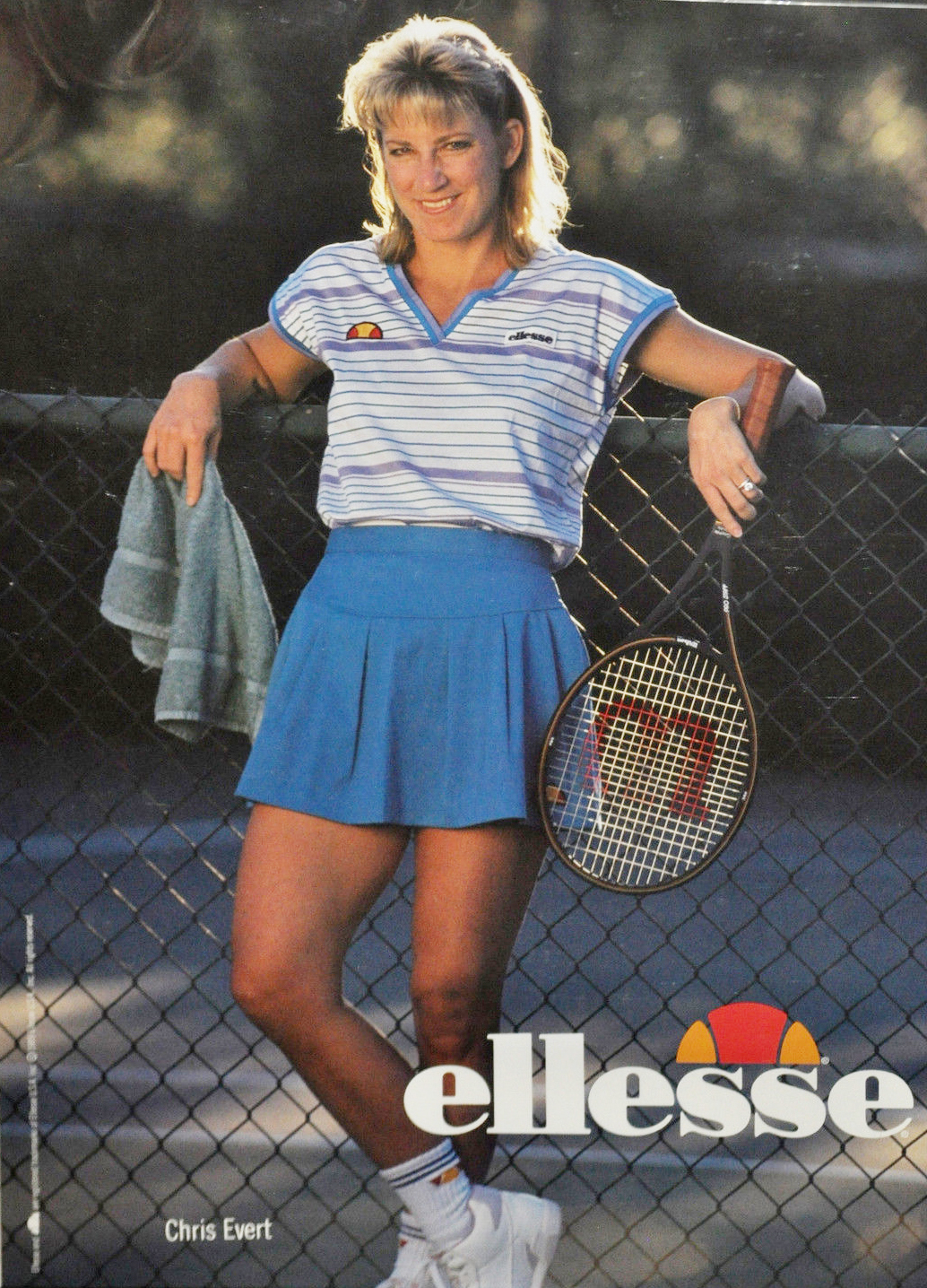
Leonardo Servadio, ellesse’s founder, got it right when in 1980 he set his sights on the young Mandlíková. The young talent had already become the first world junior No.1 in history in 1978, the year of her Girls’ Singles title at Roland-Garros. ellesse had also recently begun its productive partnership with Evert, just over a year prior. It was an exciting time for ellesse and the legendary American – they were in the honeymoon period of a relationship that was already sending signals across the sporting world. ellesse wasn’t just a brand, it was the brand. 

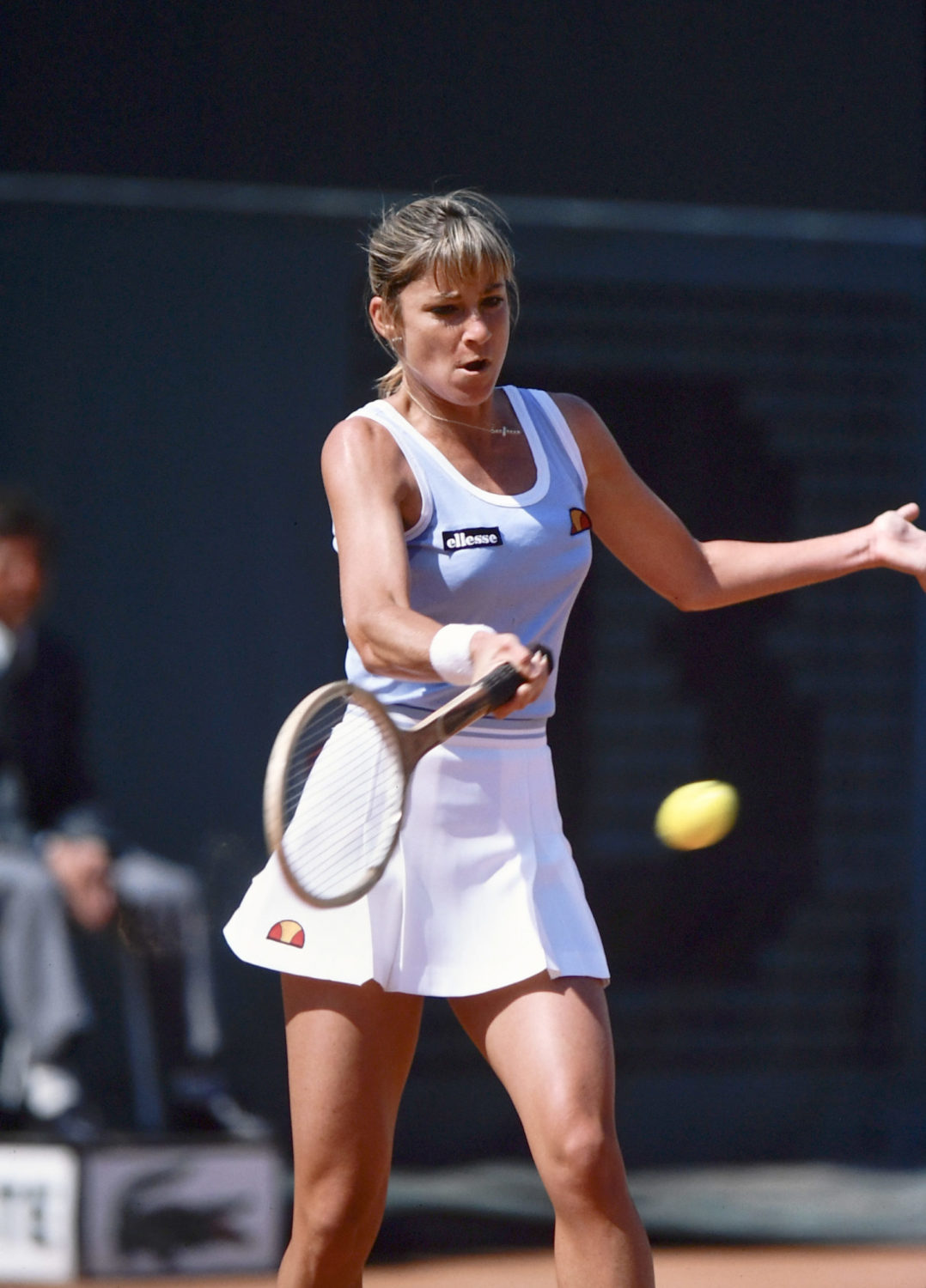
The bold style of the Czech – wearing a pleated skirt with subtle colour stitching and a daring headband with splashes of hue – contrasting the inspiring elegance of Evert – classic white skirt, belted, and a form-fitting sleeveless blouse – in the hushed surroundings of Wimbledon’s Centre Court: ellesse could not ask for better publicity! The match would not live up to expectations – ruthless Evert triumphed 6-2, 6-2 – but it represented a definitive starting point of an undeniable synergy between the American and the Italian label. 

© Ray Giubilo

A long-term success story, until the champion hung up her rackets, Evert and ellesse were an obvious match. The union is so successful, permeates the retinas so strongly, that you almost forget that the American had not conducted her entire career dressed in ellesse. Evert’s iconic link to the brand also contrasts with the stylistic journey of Navratilova. The American’s other big rival, also an 18-time major singles champion when all is said and done, perpetually seeks her stylistic match, moves from partner to partner, but despite her immense career, will never be an icon of one house.

ellesse came into being 22 years before the 1981 Wimbledon final, born from the imagination of Leonardo Servadio. This mountain enthusiast followed in the footsteps of his parents, who were tailors and shop owners in Perugia. The young Leonardo took it into his head to create ski outfits, especially trousers that combined both comfort and style. In this Italy, which is recovering from the traumas of the Second World War and the Mussolini years, there is once again a freedom and a need for creativity. Servadio, like others, is part of this movement. Aided by local entrepreneurs, he succeeded in 1959 in launching his own house: LS, his initials, soon become ellesse, with the first L and the first S in bold. 

The creations of Servadio, which were ins-pired by the work trousers worn by artisans, gradually hit their marks, and gained popularity among sports enthusiasts and fashionistas alike. Ten years later, the Jet model appeared for the first time on the slopes of the Aosta Valley and the Dolomites. The trousers lengthen the leg and flatter the figure. It’s a masterstroke. The red version – colour which would become one of the brand’s signatures – is a must-have for skiers in the early 1970s. Servadio’s approach is based on common sense thinking: “We are much better if we feel good in our clothes,” he explained. 

In 1969, ellesse sponsored the Italian alpine ski team which featured Gustav Thöni, the Giant Slalom World Cup champion. A growing international reputation did not prevent Servadio from continuing to innovate: his lace-up trousers, with knee pads and elastic waist, offered in 1971, helped establish ellesse even more in the marketplace.

Why, therefore, not open up to other disciplines? In a country with a strong reputation for textile tradition, the fashion industry has become a major player in the economy. There is an opportunity to make a splash in the sports sector, which has notably been dominated by Fila (founded in 1911), Lotto (1939), Diadora (1948) and even the much younger Tacchini (1966). Servadio, who like the swiftest tennis players, possesses the gift of perfect timing, joined the battle, and dipped his toes into tennis in 1974. The first player equipped by the Perugia brand was the young Corrado Barazzutti. A perfect choice! Winner of Roland-Garros juniors and the Orange Bowl three years earlier, Barazzutti’s game is an intoxicating cocktail of talent and character. A zesty Italian player is Barazzutti, whose artful game is wonderfully expressed on the picturesque red clay. His first big splash on the senior circuit was a victory over Ilie Nastase, then World No.1, in the quarter-finals of the prestigious Monte-Carlo tournament. Barazzutti delivers the message to the chic country clubs of the world and the people watching. The Italian gains notice and ellesse with it. Barazzutti would rise to seventh in the world, with semi-final appearances at the US Open (1977) and Roland-Garros (1978) as well as five ATP titles. 

© Ray Giubilo

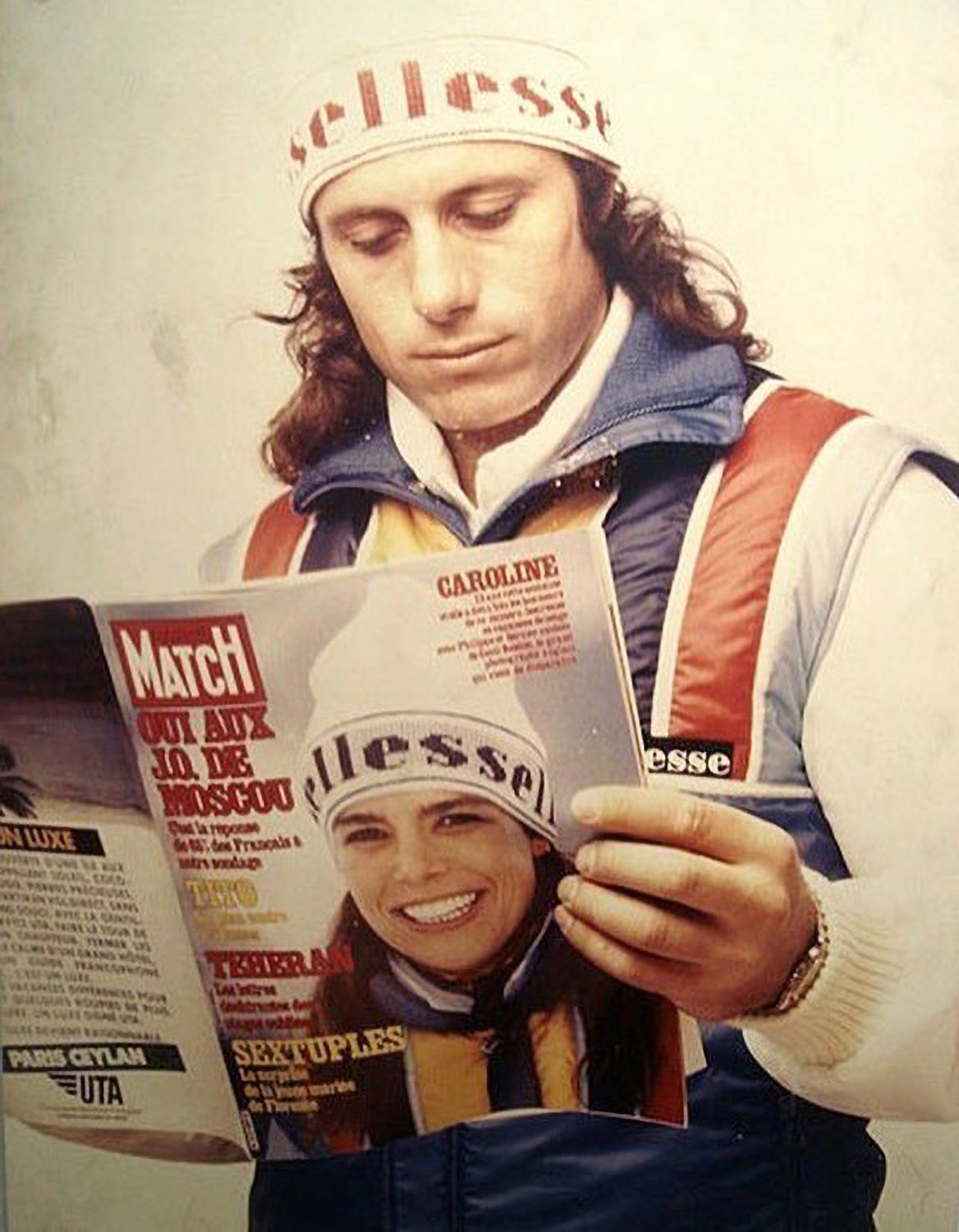
For Servadio, it is also important from a marketing perspective to underline this diversification: There is no great brand without a strong visual footprint. Thus, the logo of ellesse was born in 1975. A landmark creation, marrying the two emblematic sports of the firm: two skis, red – naturally – surrounding a half-dome yellow tennis ball. Fortunes improved further in 1980. At Roland-Garros, Virginia Ruzici, tournament winner two years earlier, is dressed in vibrant, eye-popping red skirt and playful multi-striped blouse in Paris, as she makes her way to the final. Vintage ellesse. 

Trailing the arrival of the elegant Romanian champion at ellesse, we find a bemusing character by the name Ion Tiriac. The former player, in the process of reinventing himself as a coach, promoter and entrepreneur, would take charge of the career of Guillermo Vilas at the end of the 1975 season. Approached by then fledgling American firm Nike, which wishes to procure the services of the charismatic Argentinian, Tiriac balks and chooses the more fashionable frontier: ellesse. 

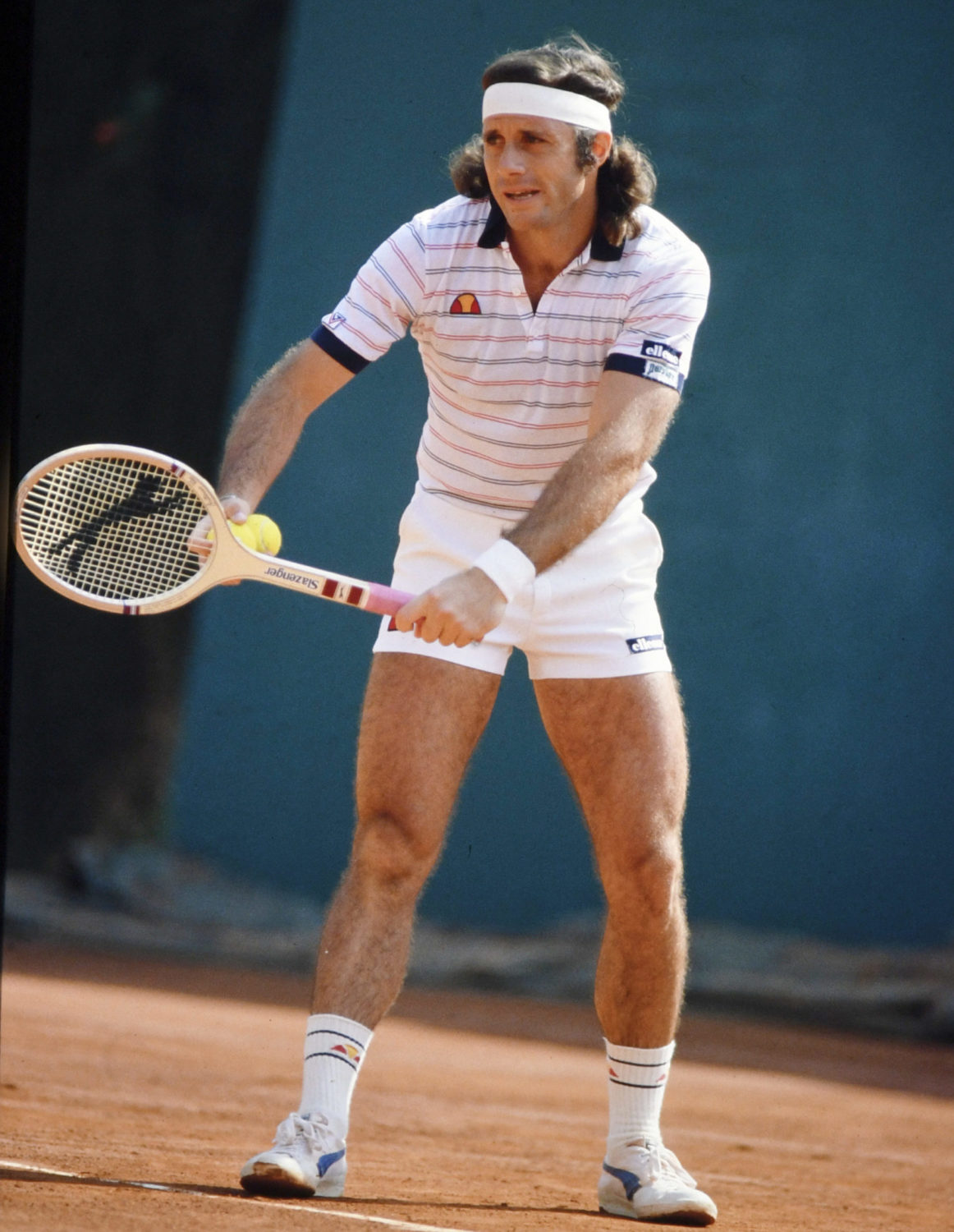
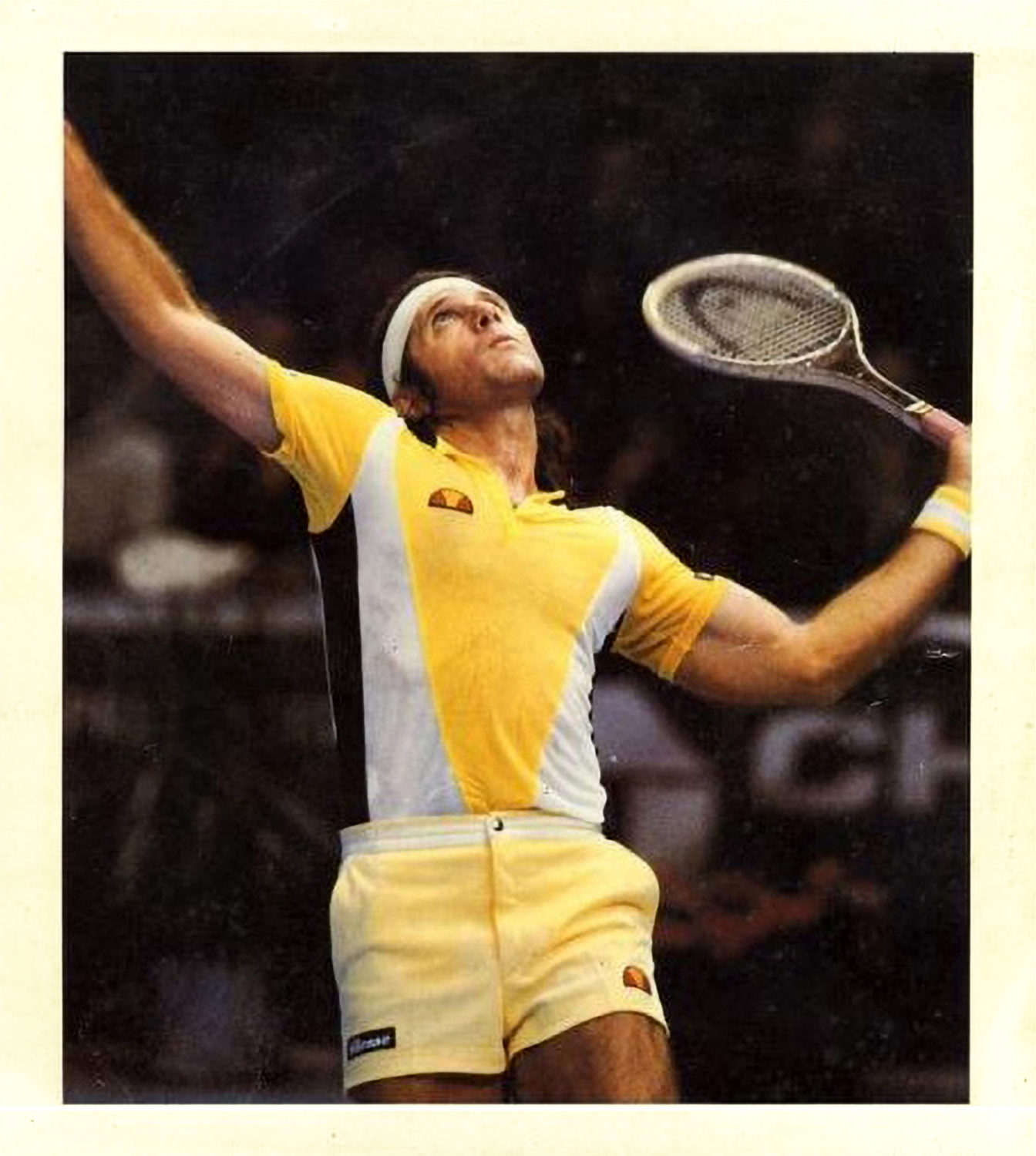
Vilas, the original King of Clay, before Nadal came around and redefined the term, will remain decked out in ellesse until the end of his career. And he will do it in style. The Argentine southpaw is a swashbuckling figure. He is vibrant, masculine, moody, and sometimes irreverent. He is a mystery to many, but not in his desire to achieve great victories – at his core Vilas is combative and hungry for the biggest prizes, a lion-hearted generational leader who will take tennis to a new dimension. In turn, the ellesse style sticks to his skin and builds his image just as it helps augment the brand. 

Footloose, free, and more colourful than the creations of its competitors, ellesse has never been shy about its desire to break stereotypes, and thus the legend has grown. With the brand on his back, Vilas won 16 titles and contested 20 finals, including his swan song at Roland-Garros in 1982. Vilas lifted his 62nd and final trophy on the clay courts of Kitzbühel in July 1983 in a 100 percent ellesse final against Henri Leconte. A splendid showpiece and a thrilling transfer of power: the young Frenchman had joined ellesse the previous year and would proudly boast the colours for the next three seasons. It was in ellesse that Leconte scored his maiden title, in Stockholm, in 1982. 

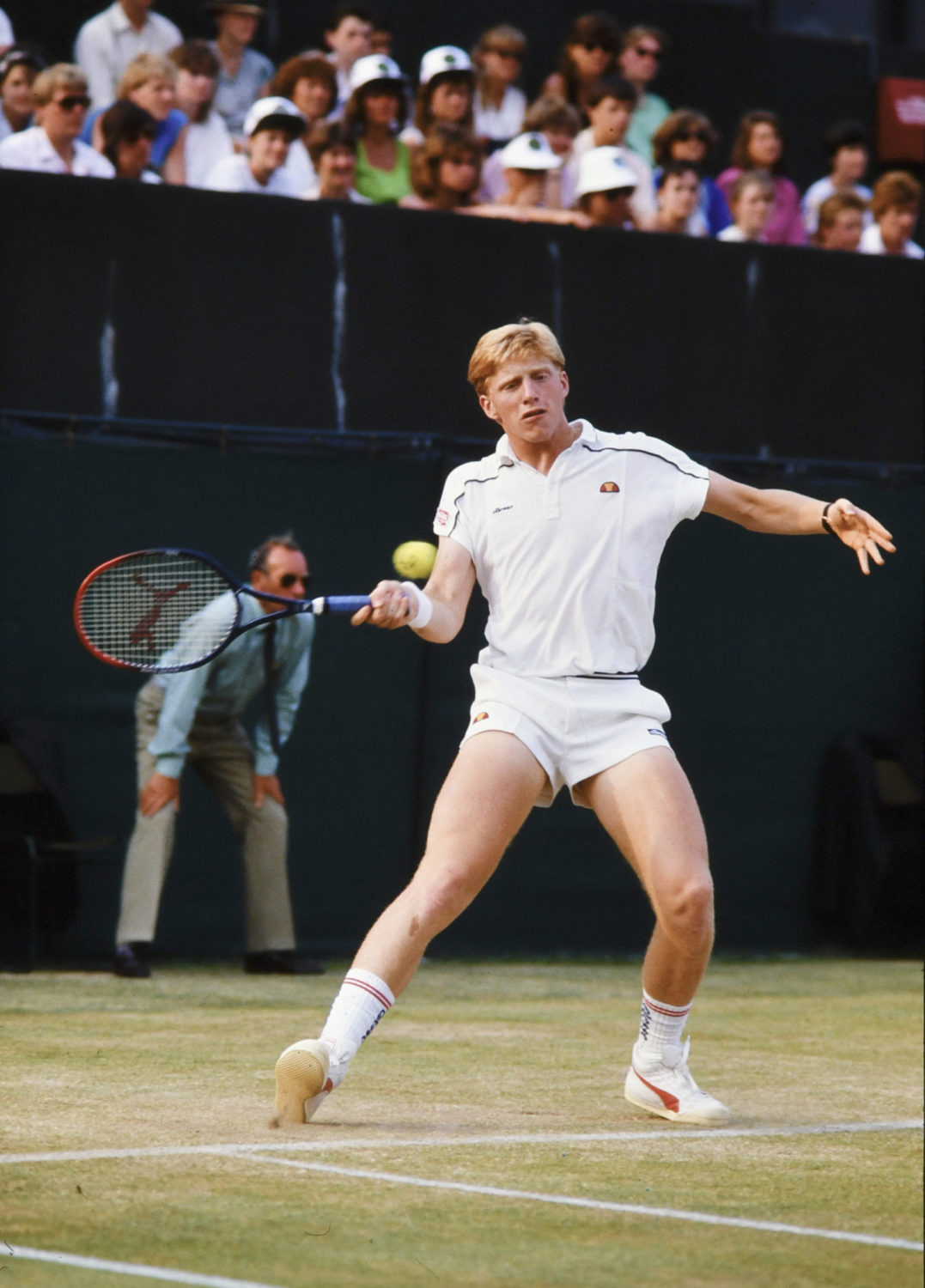
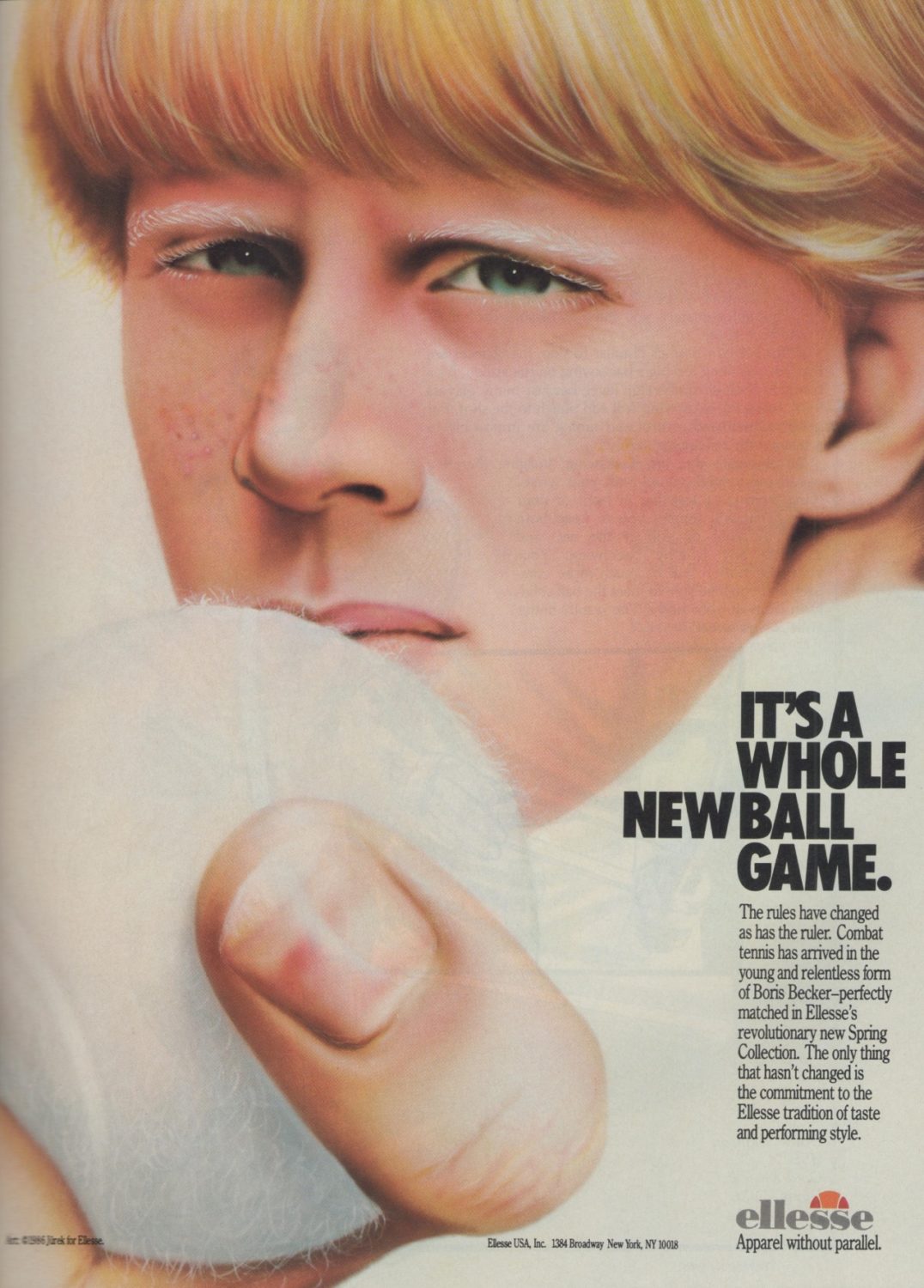
Italy’s juggernaut was not finished causing sparks. The new kid on the block is named Boris Becker, and he’s impossible to ignore. He is a brash, pugilistic German who uproots everything in his path and will revolutionise the sport with his mind-bending serve and head-first dives on the Wimbledon grass. In 1985, at age 17, Becker stunned the tennis world by becoming the youngest ever men’s singles champion at the All England Club. Frozen in time are iconic photos of the wunderkind, parallel to the ground, the ellesse logo adorning his snug-fitting polo as he sails through the air. The day before Becker’s maiden triumph, Chris Evert played the final against Navratilova at Wimbledon. Once again, ellesse is at the peak of its powers. Becker, in the same kit, will repeat his feat the next year. Along with the emergence of “Boom Boom” Becker, Evert’s chic and magnetism continue to push the envelope and take her on-court style into the mind of the collective subconscious. Under the banner of ellesse, the American added seven Grand Slam trophies to her record, bringing her total to 18. Evert’s number of titles on the WTA circuit is beyond comprehension: 154. She won the last one in October 1988, in New Orleans, a few months before her retirement. 

© Ray Giubilo

Could a brand dream of a better standard bearer? It was during the Vilas and Evert era that ellesse had its most dynamic period. In 1983, the turnover reached a record 139 billion lire (about 71 million Euros), also driven by the success of Italy at the 1982 Football World Cup, in ellesse shorts and jerseys. 

After a few transitional years, ellesse re- turned to its perch as style maven in the 1990s. On the tennis side, the colours sing as new talent lends fresh character to contemporary styles. Anna Kournikova, Arantxa Sanchez, Tommy Haas and Feliciano Lopez join the family. Pat Cash, winner in 1982 of the junior titles at the US Open and Wimbledon in ellesse, would return in 2014. The Puerto Rican Monica Puig made history as well, her Cinderella story captures the imagination of the sporting world when she wins Gold at the Rio Olympics in 2016, thus becoming the first Olympic champion of her country, all sports and all sexes combined. Pica Power! 

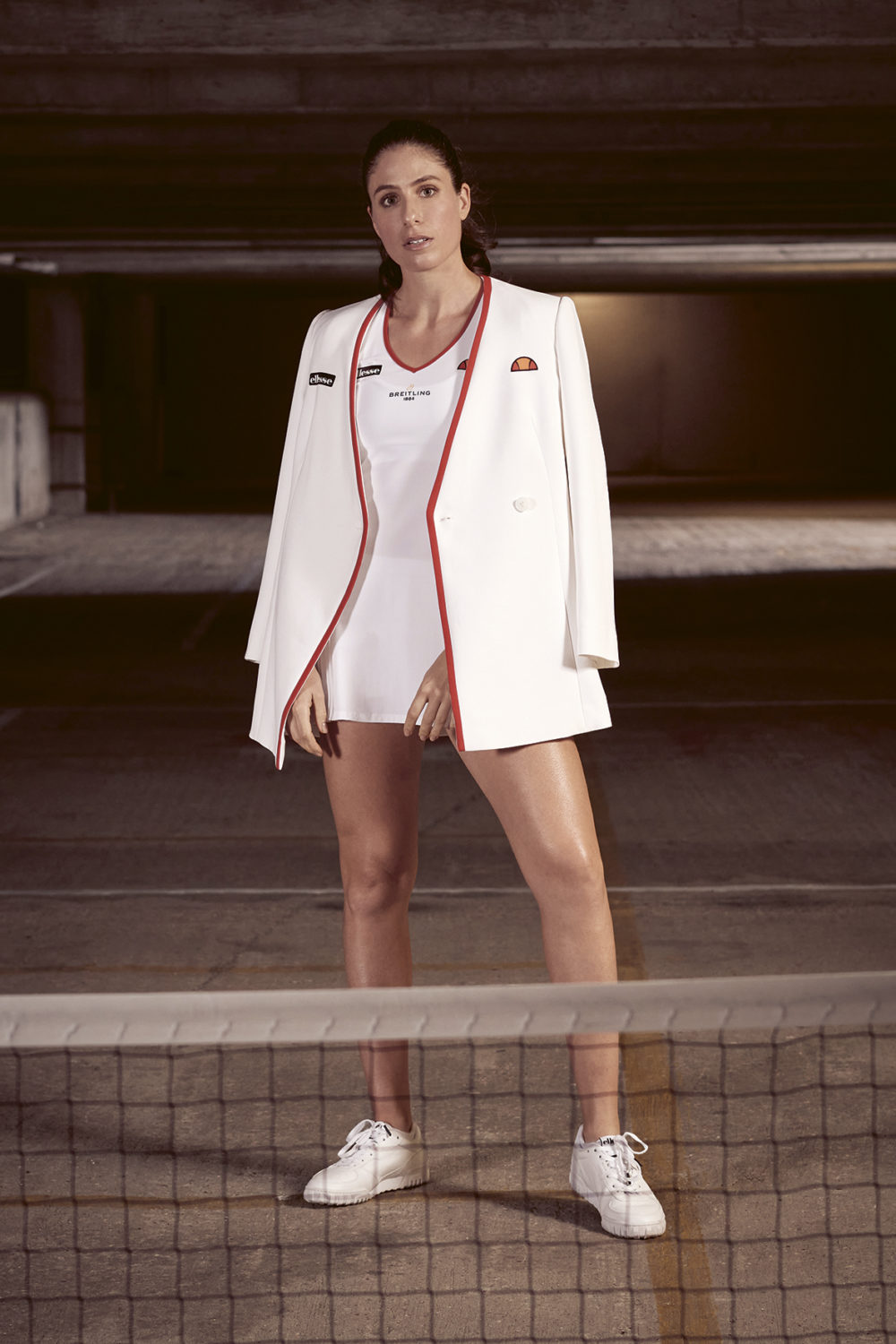
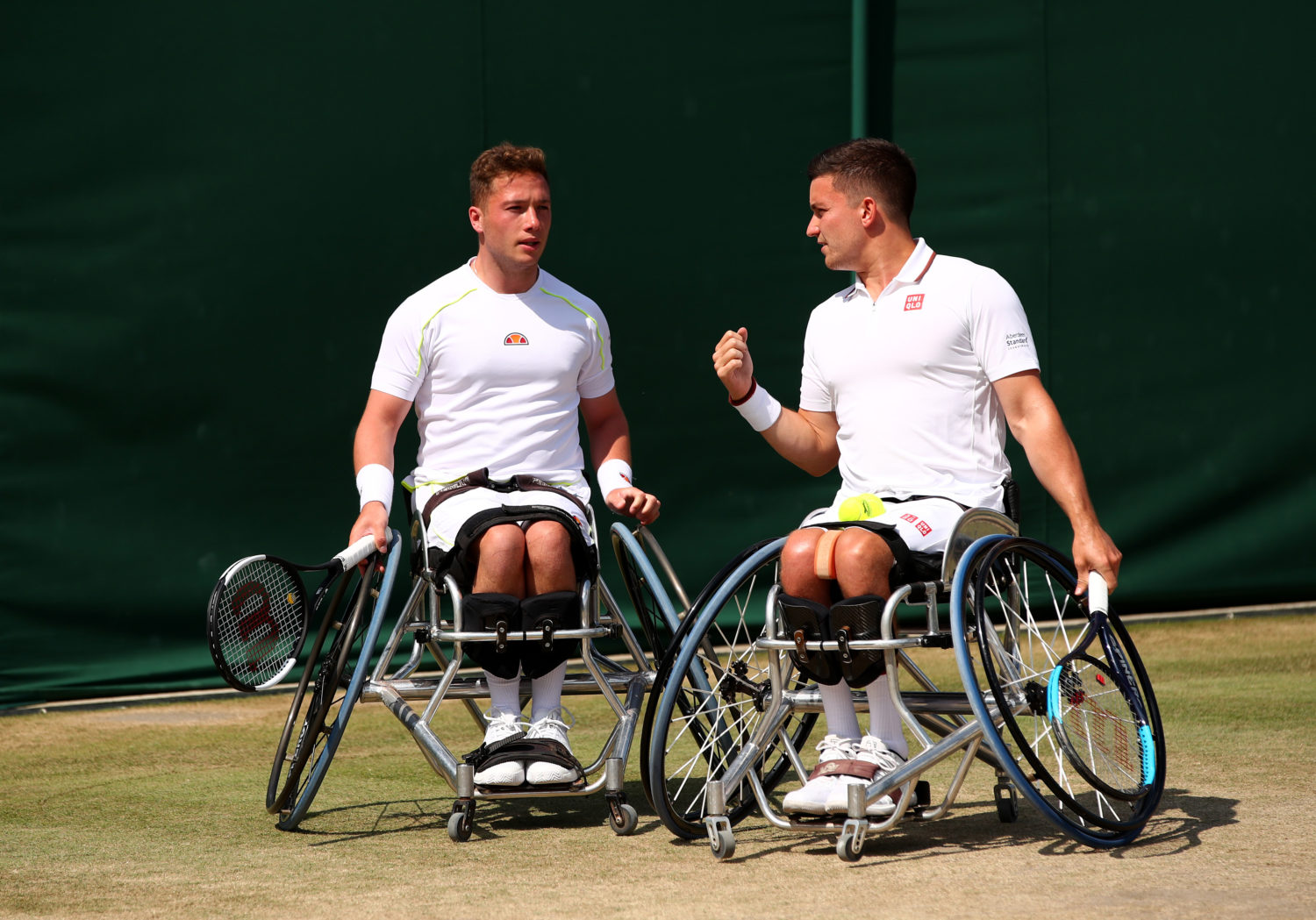
In recent years, British No.1 Johanna Konta has lent her aesthetic to the brand. A proud, resilient independent thinker, Konta is the perfect embodiment of ellesse in the modern era: Sure of herself, quick to the punch, and always elegant. Joining Konta from the Brit pack are Alfie Hewett, World No.1 in wheelchair tennis, and former NCAA champion Paul Jubb. 

Just as ellesse founder Leonardo Servadio backed young talent with Mandlíková in 1980, the modern day ellesse is immersed in making tennis more accessible and seeking out the talent of tomorrow. From signing the first British NCAA men’s singles champion Paul Jubb in 2020 when he turned pro, to creating a PATTA partnership in order to regenerate urban tennis facilities in London and beyond, the brand is committed to opening up the sport to a wider, more diverse audience.

The future is bright, and the tradition is time-honoured. The legacy lives on in all these heroes, past and present, as they wear with pride this testament to a most sacred heritage. 

Story published in Courts no. 1, summer 2021.

A Date With the Past

You never forget your first time

For Richard Jones, that magical moment took place in the summer of 1969, when he was 17 years old. As most people do, he found it an exhilarating experience.

Richard wasn’t a complete beginner – he had tried it in school and watched a fair bit on television – but he still wasn’t ready for the real thing.

When Richard Jones sat down to watch a semi-final of his first Wimbledon Championships, he had a basic grasp of what was going to happen. He knew the rules, he understood the scoring system, and he knew that the players – Rod Laver and Arthur Ashe – would come out on court and serve and rally and volley and try to outsmart and outlast each other, as he and his friends did many times playing on run-down, knee-scraping school courts, until one of the players, the better one, defeated the other, the slightly weaker of the two, as Richard had seen happen many times on television.

In this case, the better player was 30-year-old Rod Laver. With a Hollywood-style combover and sparkling eyes that hardened like steel when he stepped out on court, the Australian was an absolute superstar at the time – a player so regal, 47 years later, Roger Federer would name a tennis tournament after him.

During that time, the tournament’s top seed, Laver was the reigning Wimbledon champion, and coming off the back of two Slam wins earlier in the year, he was en route to completing his second Calendar Slam, an unmatched record that stands to this day.

His opponent that day, Arthur Ashe, was seeded fifth in the tournament. Cool and composed, the bespectacled American would offer no challenge to Rod Laver, Richard thought. 

Watching professional tennis on television is to watching it live what seeing Federer’s serve is to being hit by one – you experience it in a more visceral way.

When the match started, Ashe – in Richard’s mind the far inferior player – began raining bombs on Laver. His shots were like cannonballs, echoing around the stadium with a thunderous thwack, as he raced off to a 6-2 start in what seemed like ten minutes. 

Richard, with his basic grasp of what was going to happen, did not expect this.

In the end, Rod Laver prevailed, winning the match 2-6, 6-2, 9-7, 6-0, and going on to claim the Championship, but however much the win meant to Laver, it might have meant just as much, if not more, to Richard Jones. The hyper charged rollercoaster of emotions he had just witnessed, kickstarted a lifelong passion for tennis and Wimbledon in particular.

“It’s just a coincidence that one of the most amazing things was also the first thing,” he would later recall of watching the match live. “I’ve been to hundreds of days [of Wimbledon] since. The only year I didn’t go was in 1971. I had a girlfriend then, and she didn’t like tennis.”


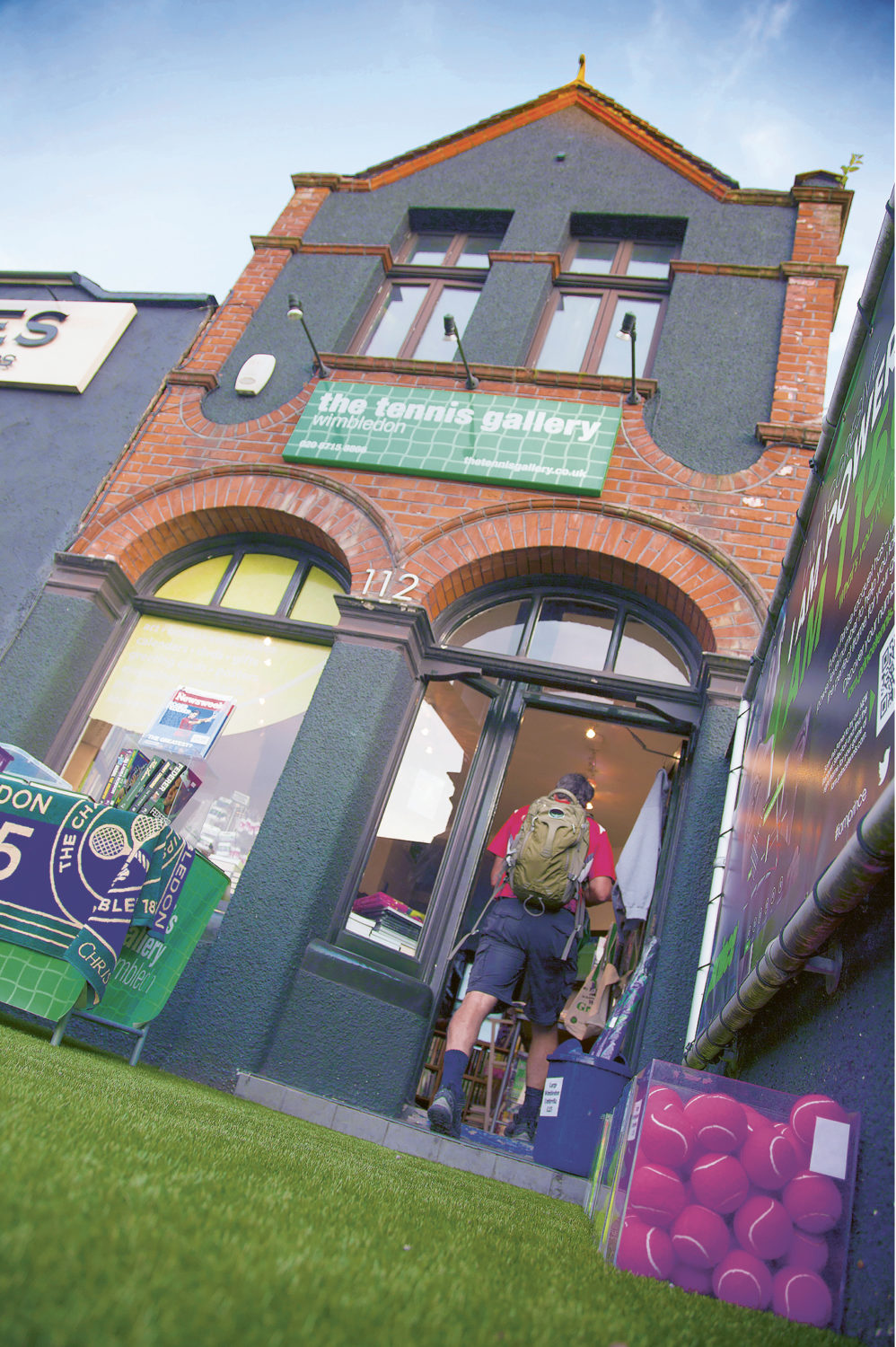
In the coming years, Richard’s passion grew – between 1973 and 1988 he did not miss a single day of Wimbledon – until it finally took on a physical, brick and mortar form when on the 1st of October 1999, Richard and his wife, Chris, opened the Tennis Gallery, a bookshop and art gallery dedicated purely to tennis. The little shop, located right next to the Wimbledon Park station (in 2007, the Tennis Gallery moved to a bigger locale next door where it is still located today), served as a natural extension of their love for the game.

That love is evident from the moment one sets foot inside the shop. The place is small, barely spacious enough to swing a forehand, and yet it possesses a certain hallowed quality. The light shines in through a big window and falls upon bookshelves crammed together, filled to the brim with tennis books and programmes – new, second hand, signed. In between, posters of past tournaments adorn the walls.

What Richard and Chris have created over the past 20 years is in equal parts a bookshop and a temple dedicated to the sport. Everywhere you look, something tennis-related is there for you to look at, leaf through, admire, or trip over. The overall effect ends up being somewhere between quirky and cosy – it’s the kind of a place you’d imagine a protagonist walking into in search of the next clue or a crucial piece of information.

The passion of Richard Jones imbues the very walls the shop is located in. He is not only a collector but also a raconteur. He welcomes every visitor with the same kind of warmth, be it a casual fan or a tennis celebrity (and over the years, the list of people who have visited the Tennis Gallery includes such names as Rod Laver, Maria Bueno, Ken Rosewall, Betty Stove, John Lloyd, Christine Truman, and Mansour Bahrami), and if you give him the chance, he will talk your head off. Richard’s knowledge of Wimbledon and tennis in general is encyclopaedic. He is a walking treasure trove of tennis information – always telling a story or an anecdote or bringing up a little-known fact. When we spoke about his first Wimbledon Championships, he rattled off the score of the match between Laver and Ashe with barely a thought.

As the Tennis Gallery gained more customers, Richard kept himself busy. Eventgoers at Eastbourne and Birmingham could find his pop-up bookshop on the tournament grounds, tucked in between racquet and tennis gear vendors – tradition versus progress. Although it lacked the glitz of the latest tech, the Tennis Gallery pop ups, with their collection of memorabilia, offered a glimpse of the Old-World tennis – the cardigans and long dresses of Wimbledon, the romance of clay courts on the Côte d’Azur, the triumphs and victories of players long forgotten. 

“Those spaces are awfully expensive to have a shop. I have to sell ten books to make the same profit as someone selling a racquet, but it is much more fun. Anywhere you go, people love a bookshop,” Richard says.

Richard’s relentless pursuit of the next adventure means that, at any given time, he is involved in multiple projects. Over the years, he has co-authored books, written for a tennis magazine, Ace, and interviewed players and tennis personalities. 

When on the 29th November 2015, the Great Britain tennis team achieved the near-impossible feat of winning their tenth Davis Cup title, the first one since 1936, Richard approached the Lawn Tennis Association about writing a book celebrating the event. For the next few months, Richard threw himself into the editorial waters and became a full-time project manager – he wrote the text, hired a designer, chose the paper, the bindings, and arranged the printing. The book went on sale just three months later. 

Richard explains, “As you get older, you get much more confident in your ability. When you’re younger, you might say, ‘That’s risky. I won’t do that. It might go wrong.’ But when you’re older, you get more confident because you’ve been around.”

In 2016, Richard was given access to the Wimbledon Museum and started spending his days examining their tennis ephemera collection. For three years, every Monday, Richard could be seen at the museum hunched over a ticket stub or an old programme. In total, he examined over 6,000 items: magazines, postcards, tickets, programmes, badges, wristbands, catalogues from tennis racquet manufacturers, advertising signs, newspaper cuttings – all pieces of tennis history. He wrote a paragraph about each item, creating a detailed description of the historical meaning behind it. 

In Richard’s mind, the very existence of such a collection was a paradox. Ephemera – things meant to exist or be used for a short period of time – by their pure definition are not supposed to be kept. And yet here he was, surrounded by thousands of items that outlived their usefulness, and despite that were being kept for sentimental values.

In 2019, Richard Jones was invited to speak about his research at a Tennis History Conference organised by the Kenneth Ritchie Wimbledon Library. Daunted by the stature of the audience –  the room was filled with professors and academics – Richard decided to open with an icebreaker. He put on the screen three Wimbledon programmes: from 2018, the 1960s, and the 1930s, and asked the audience to identify the items which they correctly did. Then he asked for a show of hands of how many people had an old programme at home. A forest of arms shot up. 

“You see,” said Richard, “almost every one of you has a tournament programme at home, but you’re not meant to.” The tennis ephemera have long stopped being ephemeral and are enjoying a collectible level of permanence, he explained to the gathered audience.


While researching the miscellanea kept at the Wimbledon Museum, Richard began jotting down memories from customers of the Tennis Gallery, and from players, coaches, and journalists with a deep connection to the tournament. Richard had always wanted to share the collection of images he and his wife had accumulated over the years, but in order to present them as a complete project, he felt they needed a common thread. 

The more Richard talked about his idea to Alan Little, a friend and, for many years, a librarian at the Wimbledon Museum, the more that thread started to reveal itself. In the end, it was Alan’s idea that Richard write an illustrated book combining people’s memories of Wimbledon and Wimbledon-related tennis memorabilia – a class of items Richard dubbed Wimbledonia.

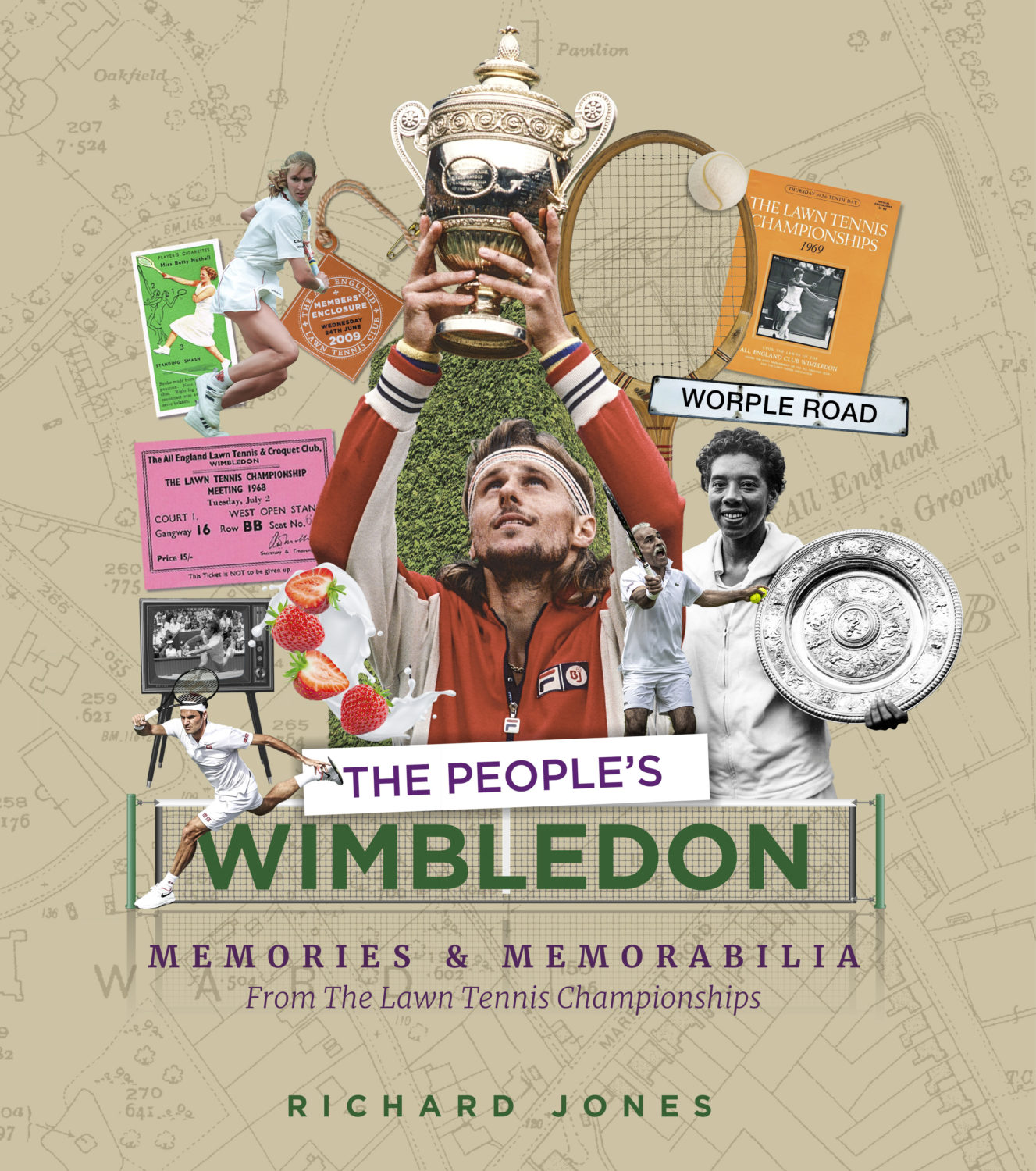
The idea of the book, aptly titled The People’s Wimbledon, was born. As Richard waded through the vast waters of the source material, aided by his friend Amisha Savani, the manuscript slowly took on an exciting shape. While Richard wrote, Amisha sourced stories of Wimbledon from social media and contributed parts about digital memories.

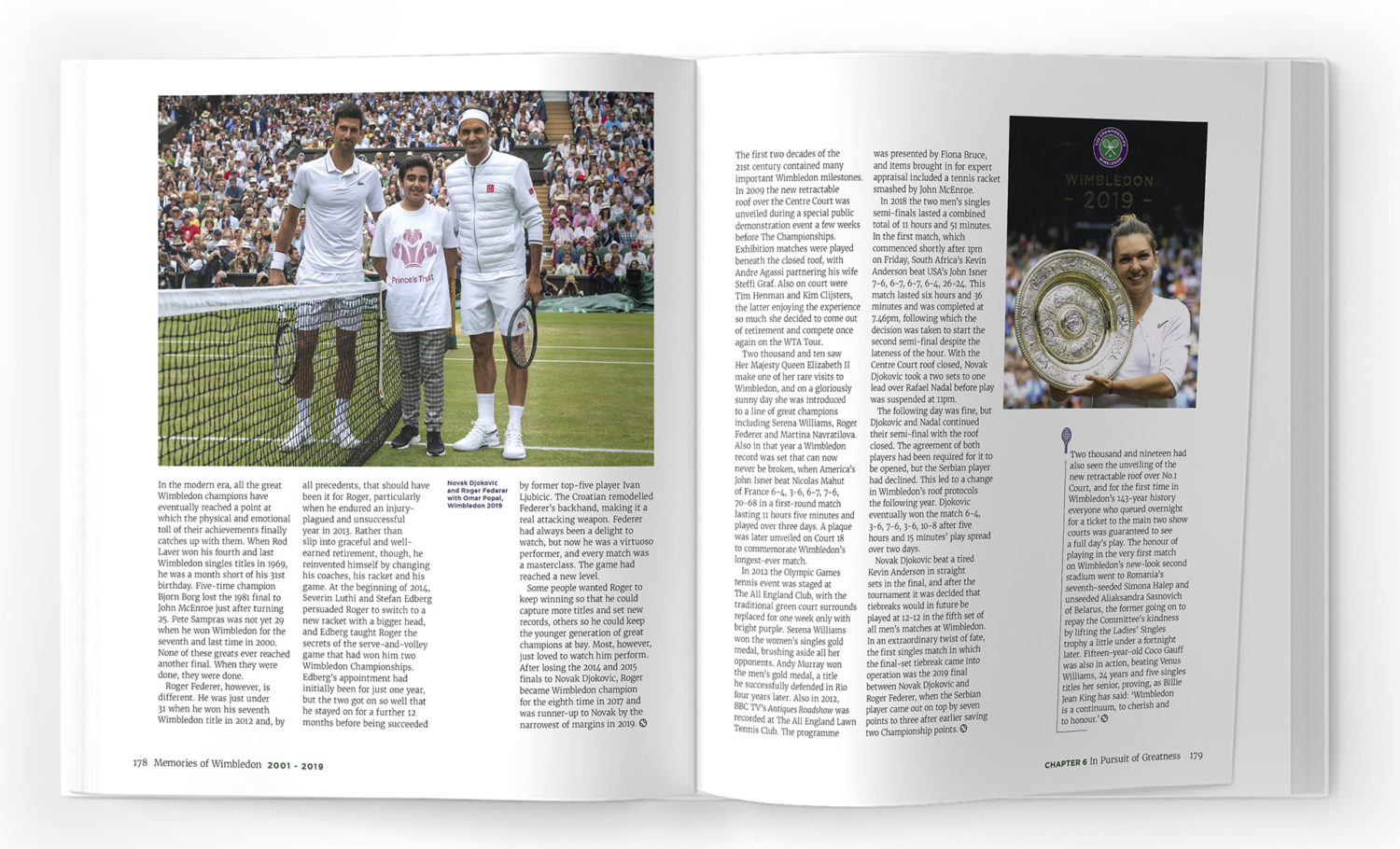
The book was split into two main parts: Memories of Wimbledon and Wimbledonia. Fans who have met star players such as Chris Evert, Pat Cash, Martina Navratilova, and many others, contributed over 120 stories of Wimbledon – their memories have been interspersed with recollections of the early years of Wimbledon which Richard uncovered in old books and magazines during his research. The finished product became a joyful celebration of Wimbledon from 1877 through to the most recent shot hit on the Centre Court in 2019.

When Richard speaks about The People’s Wimbledon, beams with pride – his eyes light up and an almost-involuntary smile appears on his face. In many ways, the upcoming publication of the book is the crowning achievement and a culmination of a decade’s work. And yet, Richard, ever the romantic, is already looking towards the future – with the past very much on his mind.

“People in the tennis world are focused on the now. The thing many don’t realise is how history informs the present,” Richard says. “In The People’s Wimbledon, I didn’t put any of my own memories. I’m saving mine for the future.” 


Story published in Courts no. 1, summer 2021.

Wimbledon

ou l’art de faire la file

Quel est le point commun entre un concert de musique, un bureau de vote et le tournoi de Wimbledon ? Un même mal pour un bien : la file d’attente. Coup de projecteur sur un livre qui s’empare d’un phénomène culturel so british : Standing in Line, 30 years of Obsessive Queuing at Wimbledon (Faire la file, 30 ans d’attente acharnée à Wimbledon), de Ben Chatfield. 

Dans une société allergique à l’attente, synonyme de temps perdu et de vide, ennemie de la productivité et des moyens de communication instantanée, une tradition persiste aux abords du site de Wimbledon, sur une surface aussi verdoyante que les terrains de gazon foulés par les joueurs mais bel et bien chasse gardée des spectateurs : The Queue. C’est pourtant là aussi, à l’abri des caméras, que se joue le tournoi de Wimbledon (organisé par le All England Lawn Tennis and Croquet Club), l’un des plus grands événements sportifs annuels en Angleterre et dans le monde entier, où affluent des milliers de passionnés pour braver des heures, voire des jours, d’attente et décrocher enfin le graal : un ticket d’entrée.


A gift that keeps on giving

Ben Chatfield cristallise cette expérience unique dans un ouvrage composite à la croisée des genres : récit-témoignage de 30 années d’histoire du tennis et de matches légendaires ; mode d’emploi pour réussir l’épreuve de la file d’attente et accéder au prestigieux tournoi ; déclaration d’amour au tennis, à des joueurs (e.a. Boris Becker) et des joueuses (e.a. Chris Evert), à la culture anglaise et à Wimbledon ; autobiographie où l’histoire personnelle se mêle intimement à l’histoire d’un sport et d’un pays. Le tout non dénué de micro-réflexions sur la culture et la sociologie. L’amour de l’auteur pour son sujet d’écriture ne se départissant néanmoins jamais d’un recul critique savamment trempé dans l’encrier d’un humour omniprésent et piquant :

« Pas question de quitter la file. Ma mère n’était pas du genre à lâcher l’affaire. Comme lorsque, pour me faire passer l’envie de sécher une journée d’école en prétextant une maladie, elle m’assénait une réplique qui, il faut le reconnaître, s’avérait diablement efficace : “Qu’est ce que Jimmy Connors ferait à ta place ?” Rétrospectivement, l’idée qu’un joueur de tennis multimillionnaire puisse fréquenter mon école n’était pas dénuée d’une certaine dose de surréalisme. Il n’empêche qu’avec moi ce stratagème marchait à tous les coups. »

Le style et le ton du livre s’avèrent aussi légers et fluides que les prouesses d’un serveur-volleyeur né sur gazon. Quant aux dessins de Zebedee Helm, aussi humoristiques que les mots qu’ils illustrent, ils confèrent un visage humain aux acteurs du récit. 

Cependant, derrière une apparence de divertissement et de détachement, le livre recèle un trésor d’informations pour tout mordu de tennis, ainsi qu’une profonde humanité. Chatfield écrit sur un sujet qui a lui-même écrit sa propre vie. Il rend à Wimbledon ce que ce lieu de magie lui a donné pendant si longtemps.


Loving is waiting

Pour pénétrer dans le Saint des saints londonien, plusieurs options s’offrent au public : le saut en parachute (déconseillé), l’inscription à un tirage au sort (the public ballot) plusieurs mois avant l’événement, un partenariat avec l’instance du tournoi en tant que sponsor ou VIP, la revente de tickets, l’achat en ligne et… la file d’attente.

Matinal dans l’âme, vous atteignez l’aire de camping aux alentours de 7 heures du matin. Des tentes se dressent à perte de vue, aux allures de camp militaire la veille d’une bataille. À y regarder de plus près, le paysage évoque davantage un festival vu le nombre de participants et l’ambiance enjouée. Ces deux impressions mettent à vrai dire chacune le doigt sur un aspect différent de The Queue : la culture de l’ordre, des codes et de la discipline y côtoie en toute harmonie la culture de la détente et du divertissement. Quelques heures après votre installation, vous recevez une queue card, carte datée et numérotée indiquant votre place dans la file ainsi que les terrains auxquels celle-ci vous donne droit une fois à Wimbledon. À l’issue d’une nuit poivre et sel rythmée par les bruits des nouveaux arrivants et les discussions à la belle étoile de vos voisins, un responsable vous tire de votre torpeur à 6 heures du matin pour procéder au début de votre transhumance. Moyennant encore quelques heures d’attente dans une autre file, vous voilà aux portes de la Terre Promise, à 10 h 30. 

Loin de toute idéalisation, l’auteur souligne la relation d’amour-haine qui l’a uni à cette tradition. Encore aujourd’hui, l’attente semble parfois aussi infinie que la passion vouée par le spectateur à ce qu’il attend. Le rituel se répète ainsi chaque jour du tournoi, brassant entre 5 000 et 10 000 personnes en moyenne. Le principe d’organisation se base sur la répartition des tickets d’entrée par tranches/vagues de 500 personnes. Les 1 500 premiers arrivés bénéficient, par exemple, de l’accès aux courts principaux. Plus prestigieux le terrain convoité, plus longue l’attente. Pour réussir cette épreuve, le public doit lui-même faire preuve de qualités tout aussi nécessaires aux joueurs professionnels pour faire carrière : patience, rigueur, adaptation, volontarisme et foi dans le but ultime à atteindre. 

L’attente sur place se révèle cependant moins contraignante quand elle est attendue durant toute l’année : non seulement on s’attend à attendre, mais on attend même (avec impatience) d’attendre. La deuxième phase, à savoir la file d’attente proprement dite, possède alors le goût de la réussite. Cette première file en annonce pourtant d’autres, à l’intérieur de la zone de camping (files pour les toilettes, la nourriture, les boissons, les journaux) et, ensuite, au sein du site de Wimbledon. 


The Queue’s Life Lessons

Le phénomène de la file d’attente pose une question essentielle : à quel point veut-on ce que l’on veut ? Qu’est-ce qui est digne d’être attendu par nous ? Au fond, The Queue incarne la conception de la liberté proposée par l’homme de théâtre Jean-Louis Barrault : « La liberté, c’est la faculté de choisir ses contraintes. » The Queue est une contrainte, mais moins grande que la liberté à laquelle elle prépare. 

Au fil du temps, un faux paradoxe n’a cessé de s’affirmer. D’un côté, le temps d’attente augmente en raison du succès grandissant de l’événement. D’un autre, le sentiment d’attente diminue grâce à l’amélioration de l’organisation et à sa dimension de plus en plus événementielle et festive : activités périphériques (barbecues, sports de raquette improvisés, espaces de restauration, musique) et cadeaux distribués par les stewards. 

Enfin, l’art de faire la file, de vivre aussi bien le voyage que la destination, trouve sa plus belle expression dans la bouche du grand-père de Ben Chatfield : « La vie se trouve dans les moments entre les moments. » 


Article publié dans COURTS n° 5, été 2019.

Gordon and Alfie

The Last Five Years in Their Own Words

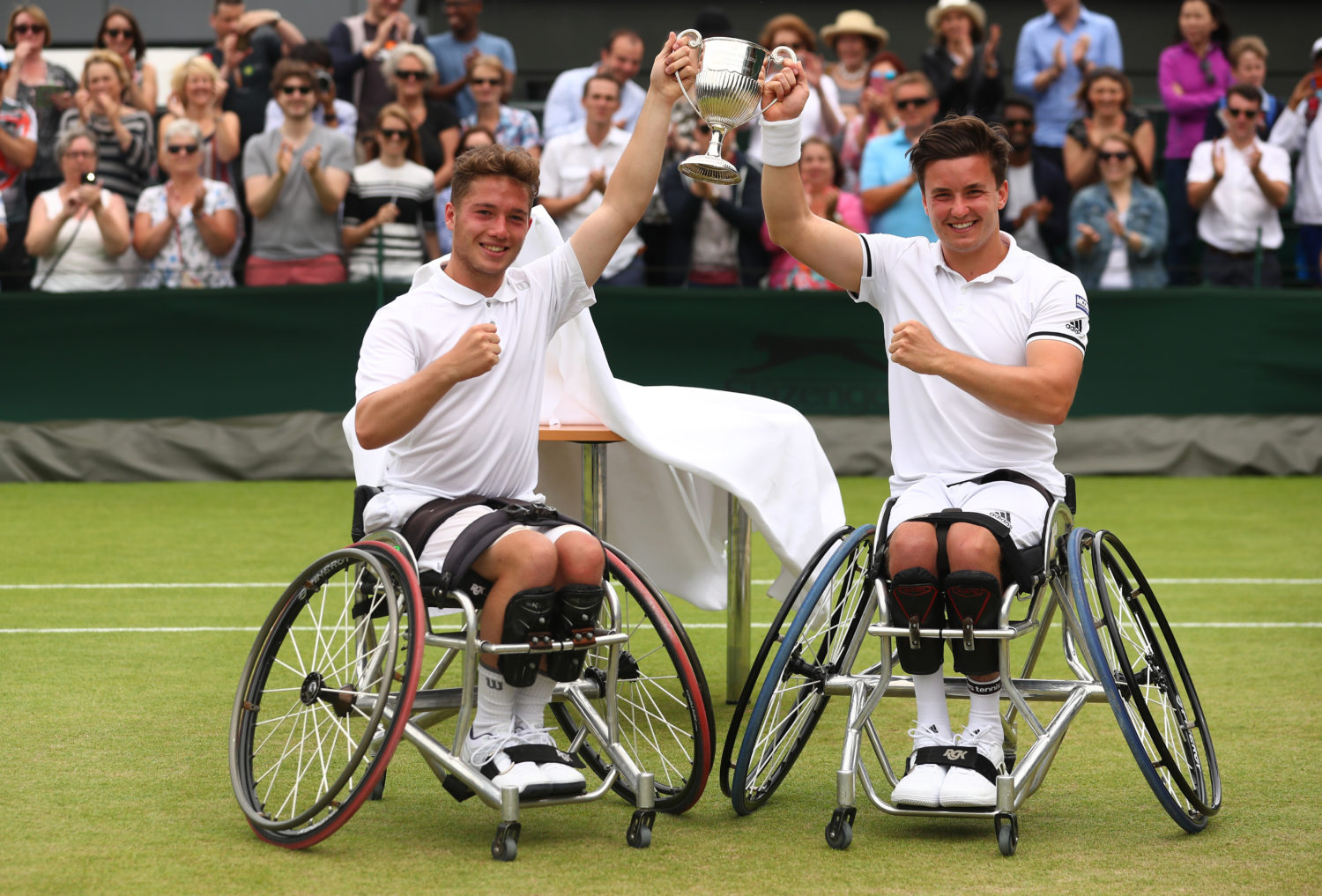
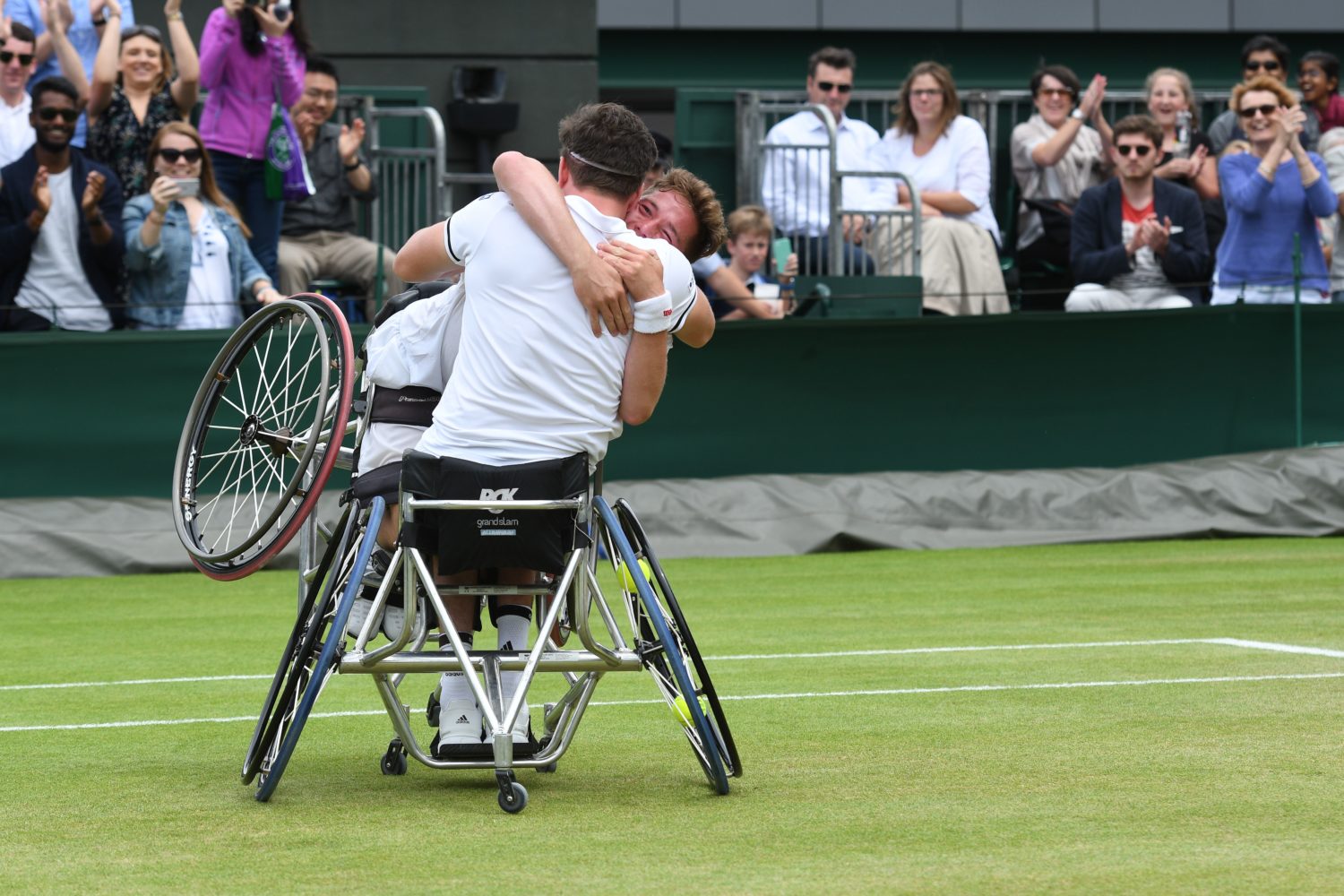
LONDON, ENGLAND - JULY 09: Gordon Reid of Great Britain (R) and Alfie Hewett of Great Britain (L) celebrate victory during the Men's Wheelchair Doubles Final against Stephane Houdet of France and Nicolas Peifer of France on day twelve of the Wimbledon Lawn Tennis Championships at the All England Lawn Tennis and Croquet Club on July 9, 2016 in London, England. (Photo by Julian Finney/Getty Images/LTA)

After storming to victory in the Roland Garros doubles final and claiming their 11th Slam title together Gordon Reid and Alfie Hewett became the most successful all-British doubles partnership at the Grand Slams. And this year at Wimbledon they’ll celebrate five years since winning their first in that impressive run, as well as it marking five years since Reid won the first ever Wimbledon men’s open division wheelchair tennis singles title.

We take a trip down memory lane with Team Heid and look at their highlights, lowlights and the developments they’ve seen at the Championships over those years.

ON BREAKING THE RECORD

Me personally I think it’s quite difficult to compare records in the past with now and also then the able-bodied side and the wheelchair side of tennis, so for me the most pleasing thing is that me and Alfie are creating our own records, bringing home the trophies one by one and winning together.” – Gordon Reid on becoming the most successful all-British doubles partnership at the Slams

ON HOW THINGS HAVE CHANGED

GORDON:I think there’s just a bit more weight placed on the wheelchair event, it’s become a little bit more highly respected and there’s more interest in it. If you think back to 2016 our doubles final and my singles final were played on Court 17 and it wasn’t really an event it was just kind of another match. Whereas now we’re playing those finals on Court 3, it’s packed out and it’s live on TV and there’s a bigger deal made out of it which is exactly where we want to be moving forward.

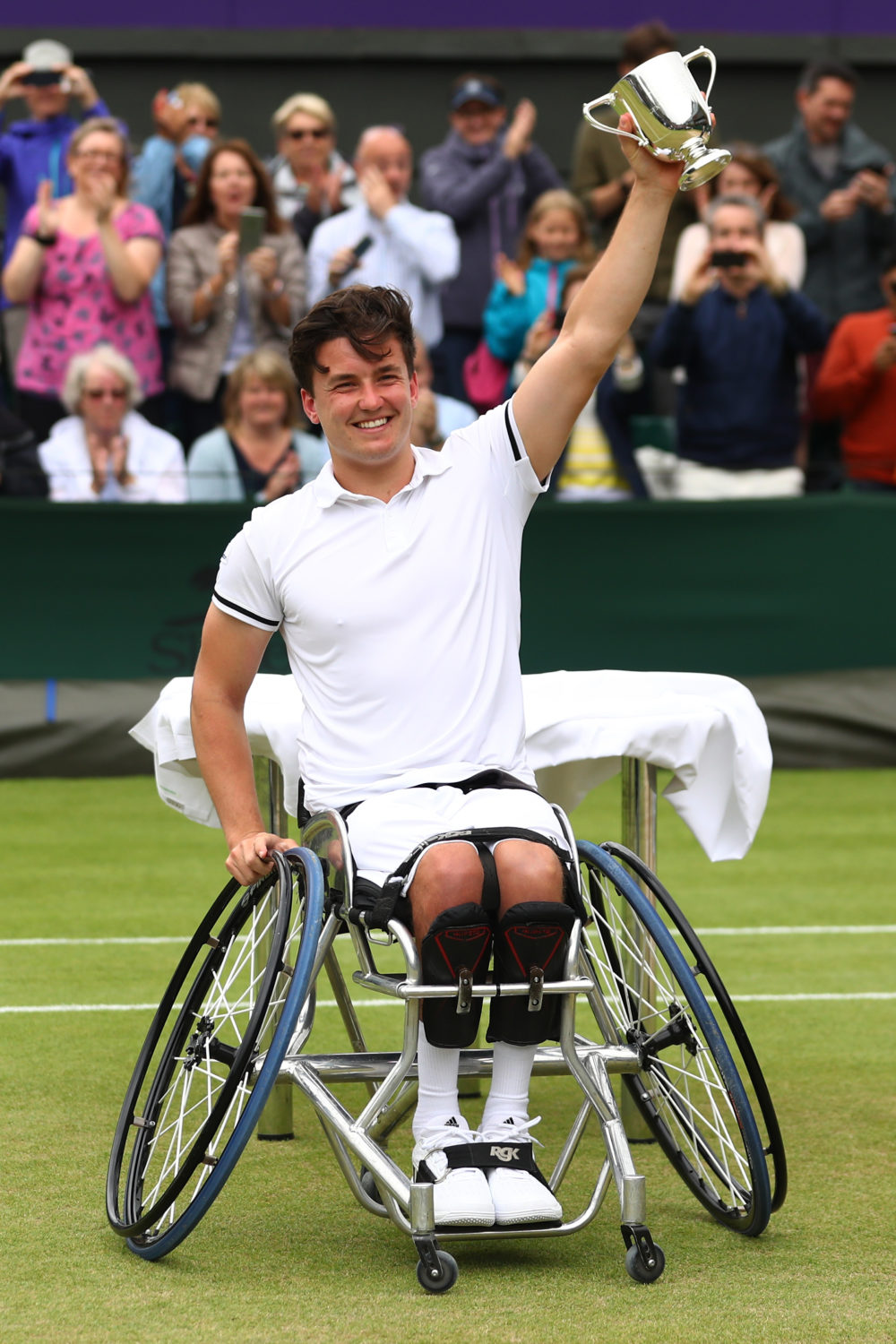
LONDON, ENGLAND - JULY 10: Gordon Reid of Great Britain lifts the trophy as he celebrates victory during the Men's Wheelchair singles final against Stefan Olsson of Sweden on day thirteen of the Wimbledon Lawn Tennis Championships at the All England Lawn Tennis and Croquet Club on July 10, 2016 in London, England. (© Julian Finney/Getty Images/LTA)

FUNNIEST MOMENT

ALFIE:For me it’s Court 3 again and we’re playing in the final and there’s Gordy’s lot in one corner and my lot in the other one and they are just chanting at each other. My grandma was absolutely going for it so it was quite funny to watch.”

GORDON:Yeah I don’t know which year it was maybe 2017 or 2018 there’s a clip of us winning the match point and then the camera pans to my friends and family in the crowd and my best mate is just having a full on hug with the stewardess.

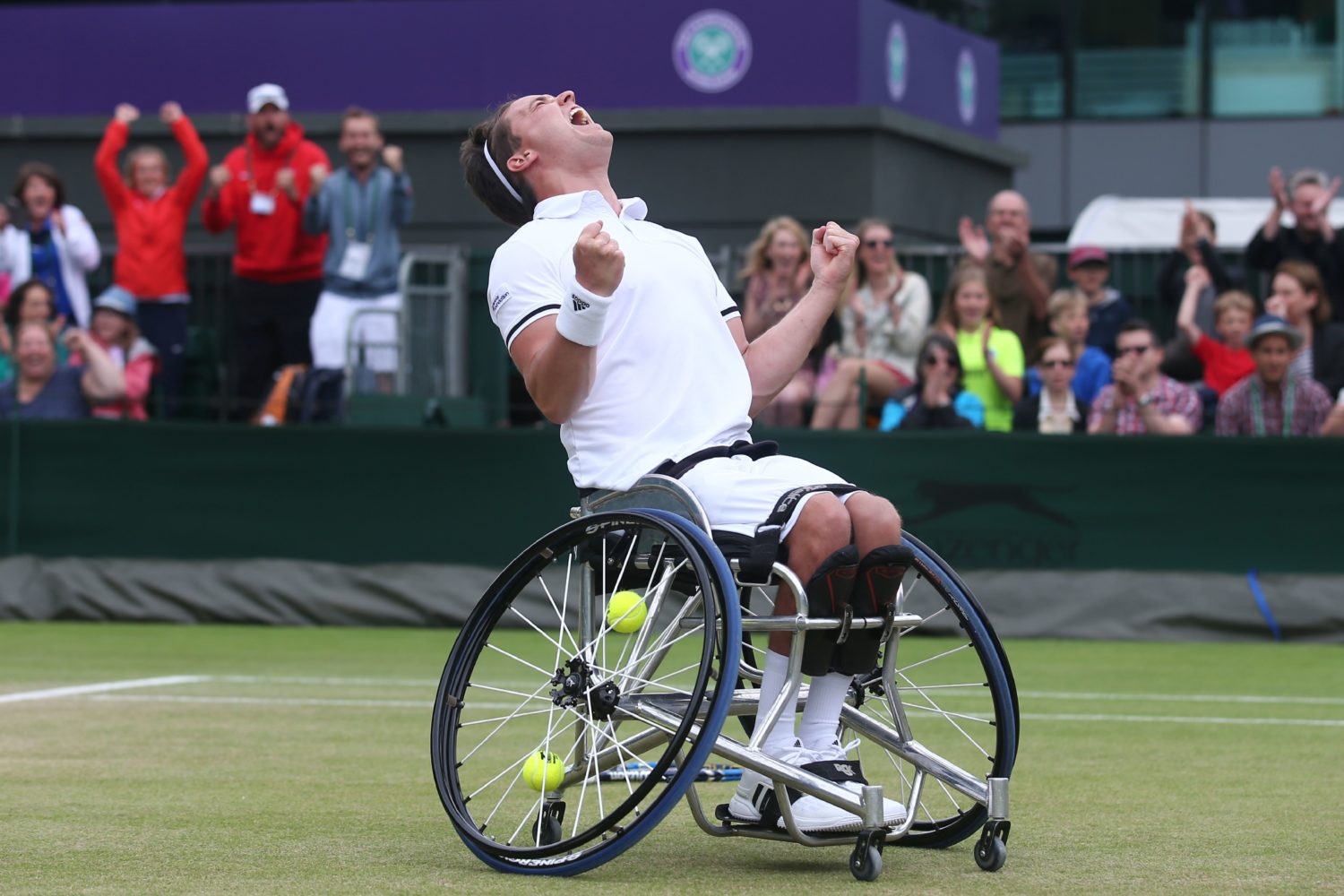
Britain's Gordon Reid celebrates beating Sweden's Stefan Olsson to win the men's wheelchair singles final match on the last day of the 2016 Wimbledon Championships at The All England Lawn Tennis Club in Wimbledon, southwest London, on July 10, 2016. / AFP / JUSTIN TALLIS / RESTRICTED TO EDITORIAL USE (© JUSTIN TALLIS/AFP/Getty Images/LTA)

FAVOURITE MOMENT

GORDON:For me it’s got to be when I nearly snapped Alfie’s back at the end of our first doubles final. It was a big moment for both of us. Our first Grand Slam together, our first Wimbledon title there was so much on that match and it was such a close one – that was a really special one.

ALFIE:Court 3 and being there on that big stage for a couple of finals that has to be up there too. It’s rare for us to be playing in those sorts of matches and feeling like we’re in the limelight. It was a whole new level.

Britain's Alfie Hewett (L) and Gordon Reid (R) celebrate beating France's Stephane Houdet and Nicolas Peifer in the final of the men's wheelchair doubles on the thirteenth day of the 2016 Wimbledon Championships at The All England Lawn Tennis Club in Wimbledon, southwest London, on July 9, 2016. / AFP / LEON NEAL / RESTRICTED TO EDITORIAL USE (© LEON NEAL/AFP via Getty Images/LTA)

MOST CONTROVERSIAL MOMENT

ALFIE:I know I’ve blasted a few balls at Henman Hill but that’s not very controversial is it?

GORDON:It’s got to be when Stefan Olsson fell out of his chair and got his racket passed to him by the ball kid. Yeah it looked good on the highlight reels but technically we should have won the point.

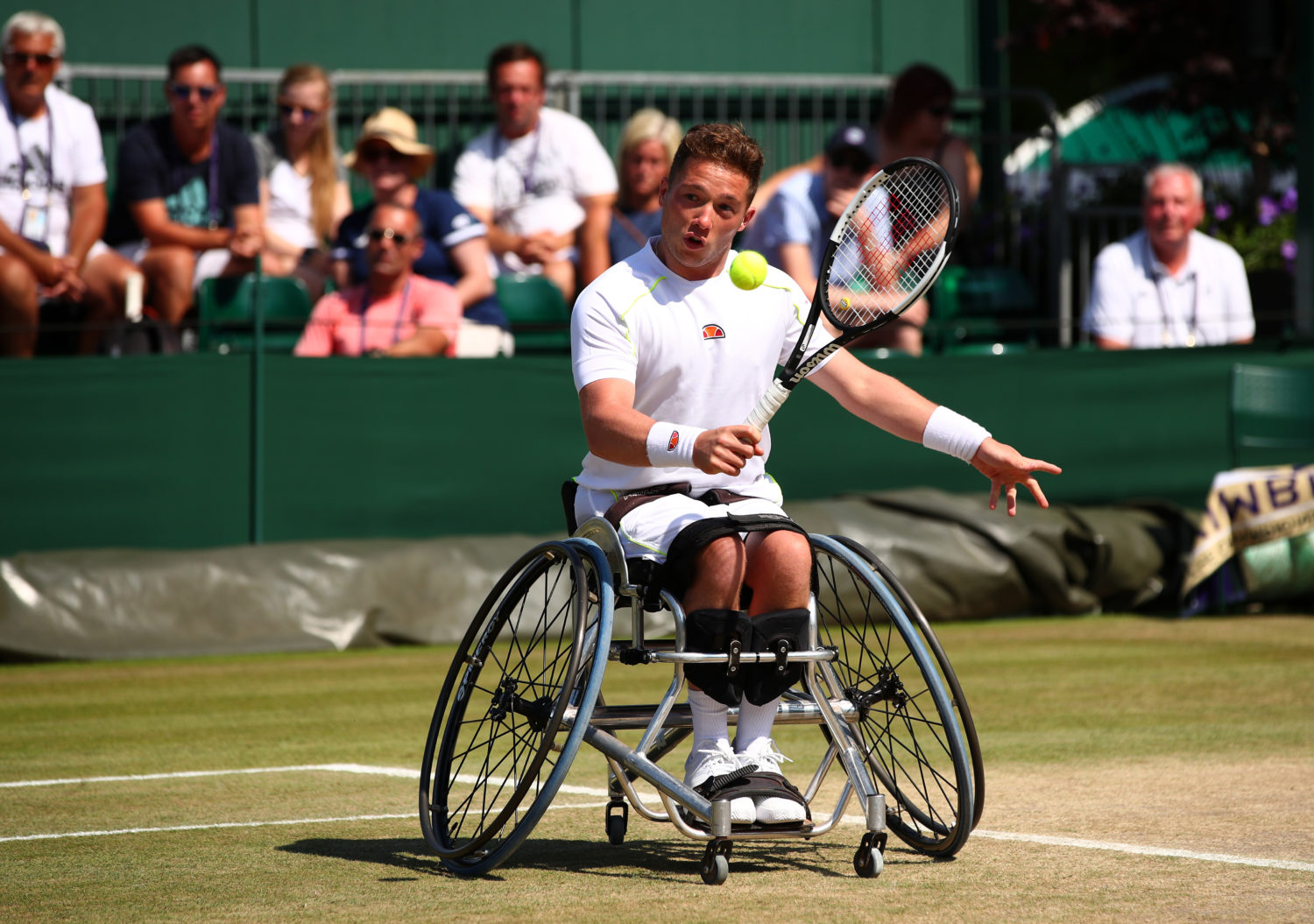
LONDON, ENGLAND - JULY 12: Alfie Hewett of Great Britain, partner of Gordon Reid of Great Britain plays a backhand in their Men's Wheelchair Doubles Semi-Final match against Stephane Houdet and Nicolas Peifer of France during Day eleven of The Championships - Wimbledon 2019 at All England Lawn Tennis and Croquet Club on July 12, 2019 in London, England. (© Clive Brunskill/Getty Images/LTA)

WORST MOMENT

GORDON:Me personally probably going out first round in the singles in 2017. Obviously after winning the title the first year and then going in to defend and falling at the first hurdle it was tough.”

ALFIE:Well I’ve not reached a singles final so that’s a difficult one. 2019 was a pretty rough one though. Obviously losing the doubles final and getting pretty torn apart in the singles by Gustavo Fernandez in the semis, it was definitely one to forget.

LONDON, ENGLAND - JULY 12: Alfie Hewett and Gordon Reid of Great Britain celebrate in their Men's Wheelchair Doubles Semi-Final match against Stephane Houdet and Nicolas Peifer of France during Day eleven of The Championships - Wimbledon 2019 at All England Lawn Tennis and Croquet Club on July 12, 2019 in London, England. (© Clive Brunskill/Getty Images/LTA)

BEST POST-MATCH CELEBRATION

ALFIE:Oh the third set tie-break against Gustavo and Shingo (Kunieda) in the doubles semi-finals, well it was both years really but there was one of the years, I think it might have been 2017, and I’ve never screamed so loudly after a match. It was just so tight and could have gone either way. I think I popped a vein I screamed so hard and in the pictures you can see it just bulging.

GORDON:I’ll always remember the push from Court 17 to the media centre after I’d won the singles title in 2016. I had about ten of my friends just walking by me, singing songs and pouring champagne over my head so I turned up to the press conference absolutely soaked and stinking of champagne.

“Vive la différence”

© Ray Giubilo

England and France. The French and the English. Two countries and cultures separated only by 20.7 British imperial miles of the English Channel, or 33 French metric kilometres of “la manche”. One small time zone separates them, one long tunnel joins them. Wars have divided them, and “l’entente cordiale” has then reunited them depending on which century it is. Distant cousins, old lovers, near neighbours, take your pick.

It’s basically a love-hate thing.

Until a few years ago, even their respective Grand Slam tournaments, Roland-Garros and Wimbledon, were only two weeks apart  (as they are again this year) and yet they could not be more different in just about every single way possible for a tennis event. And those differences reflect beautifully, well… “la différence”.

Let’s start with the basics. Roland-Garros, sometimes called the French Open, is more accurately known in France as “les Internationaux de France de tennis”. There is something very egalitarian and municipal sounding about that title, fitting for a republic and her “citoyens”, her citizens. It takes place at the “Stade Roland-Garros”, a site in the west of Paris named after a renowned French aviator. The tournament is hosted and run by the national tennis federation, “la Fédération Francaise de Tennis”, the FFT. In that respect it is like the US and Australian Opens. 

In sharp contrast to all that, Wimbledon is simply named after the suburb of South West London where it takes place. It has recently branded itself as “The Championships”, which is how it is known to the locals of its SW19 post code. There is no recognition in its title of it being a national tennis tournament. And there’s a very good reason for that, because this Grand Slam is hosted and run by a private members’ club – the All England Lawn Tennis & Croquet Club (yes, croquet), the AELTC. It is sometimes said that it is easier to become a member of the AELTC, which has about 300 full members, by winning the men’s or women’s singles event and becoming an honorary member, than being admitted to the club after a long wait on its hugely selective 20-year waiting list. Not very egalitarian or municipal, but that is perhaps fitting for a country that has a monarchy and where its citizens are in fact “subjects”. The club and its committees run the event, and boy, do they like their traditions, and perhaps for good reason. More of that later.

© Art Seitz

If you lose track of the summer tennis calendar, just switch on the TV at home and you will know immediately if you are watching Roland-Garros or Wimbledon. The colours alone give it away in a second. 

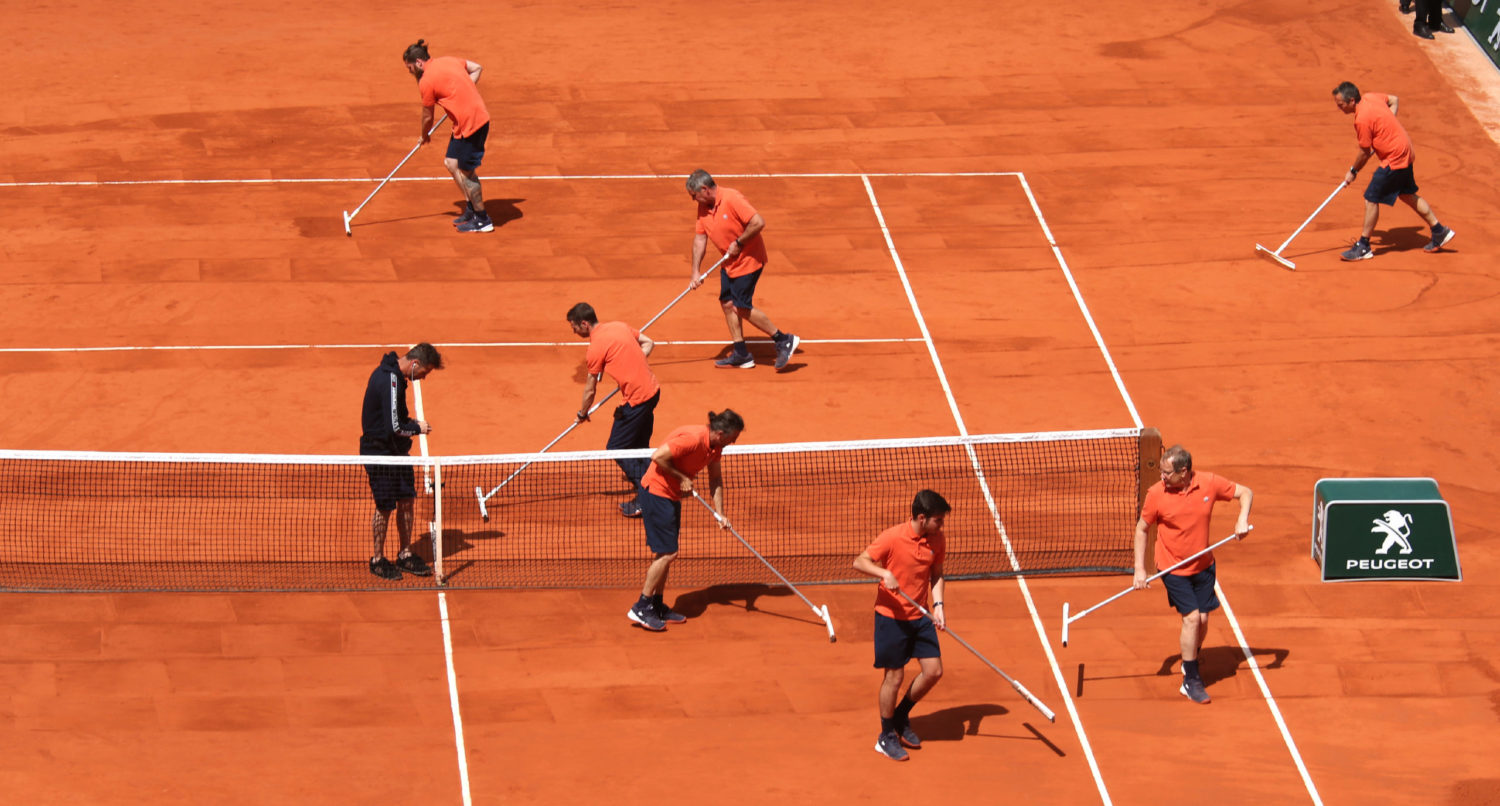
The terracotta-coloured French red clay, “la terre battue”, is made from crushed red bricks. Dusty and dirty, it either gets whipped up in the Parisian wind or provides stained evidence on a player’s clothing of a long, hard afternoon battling brutal shoulder high balls from the baseline and sprinting to the net to salvage feathery drop shops. Nothing stains your clothes like red clay. And then there are those instantly recognisable light green advertising boards that have been a feature of what is now known as Court Philippe-Chatrier, for decades catching our eyes with the likes of “Orangina” or “Perrier” slogans. 

Equally eye-catching is a signature feature of the French television production that is transmitted globally – the French cameraman instructed to locate in the crowd the most attractive men and women (mainly the latter, this is French coverage after all) who are then the close-up focus of attention on our screens each time the players sit down. 

Alternatively, a few weeks later you might be forgiven for thinking you have tuned in to watch a sporting event taking place in the 1930s at a beautiful English manor house. Wimbledon conjures up such a specific image of tennis and its heritage. It’s called ‘tradition’ and the players and spectators alike love it. The beautiful green lawns that fade over the fortnight, the dark green “advertising” boards that barely display any advertising at all: ’Slazenger’ in the faintest of black lettering. The ‘tennis whites’ clothing rule that forces the clothing brands to manufacture and sell a line of clothes that is worn by the professionals for maybe three weeks of the year. It also has the Royal Box on Centre Court, a club members’ area and military personnel guarding all entrances leading to Centre Court – all very English. 

The instructions to the English cameraman are to focus on ladies from the ‘shires eating strawberries and cream or anyone wearing a loud Union Jack outfit. It all still has a feel of Dad’s Army about it, and we are all very fond of it. It is a part of the English social fabric – ‘Wimbledon Fortnight’. There is wall to wall coverage on BBC1 and BBC2 for those 2 weeks when everyone in England becomes a tennis fan. And if (a big if these days) a British player gets into the second week, the country grinds to a stop when the match is on.

And that takes us to the spectators in the crowd, those lucky enough to get tickets through public ballots, their tennis clubs or corporate hospitality to sit and watch the best players at these most prestigious of tournaments steeped in history. If you’ve been fortunate enough to experience the show courts of both tournaments, that is when you really feel and hear “la différence”. National identities could not be more clearly defined and delineated. Take out the international visitors, press, sponsors, and tennis people, and you are left with the local domestic crowds. The home fans. 

© Ray Giubilo

The Parisian crowd is sophisticated on a number of levels. Dare we say that there is a touch arrogance to it, but it is well merited. Let’s not forget that this crowd’s ancestors once revolted and turned their country from being an absolute monarchy into a republic that has never looked back. Even today, when the Parisians are not happy, they don’t march peacefully and achieve nothing, they riot at night and usually get what they want. The Parisian crowd is not to be messed with. Just ask Martina Hingis who suffered mercilessly at its hands in 1999, breaking down in tears in the women’s final against Steffi Graf when the crowd reacted to her “Swiss Miss” petulance. The boos and whistles were deafening. 

But its sophistication is not borne out of its emotions or how effortlessly elegant everyone is; it’s not all rive gauche Serge Gainsbourg chic. Yes, by all means grab yourself a “baguette jambon et fromage”, some sunglasses, and blend in, just don’t try too hard. In fact, the crowd’s sophistication comes about because in France, red clay is still a dominant surface at many clubs and local courts, including the hundreds of indoor facilities. What that means is that the Parisian crowd understands the match it is watching because it is played on the same surface and that is the case all year round. You can overhear the conversations about the finer points of what is happening on court, the tactics, and the strategies. These folk understand heavy topspin, slice, drop shots, the effect of the weather conditions and sliding into the ball, because it’s the same game they play at their local clubs, it’s what they were brought up on: building the point on a slow, high bouncing surface; dealing with the frustration of the irregular bounce when the ball hits the line tape nailed into the court or a small mound of powder, and then the contrast of the Zen-like experience of sweeping and watering the court after your match. 

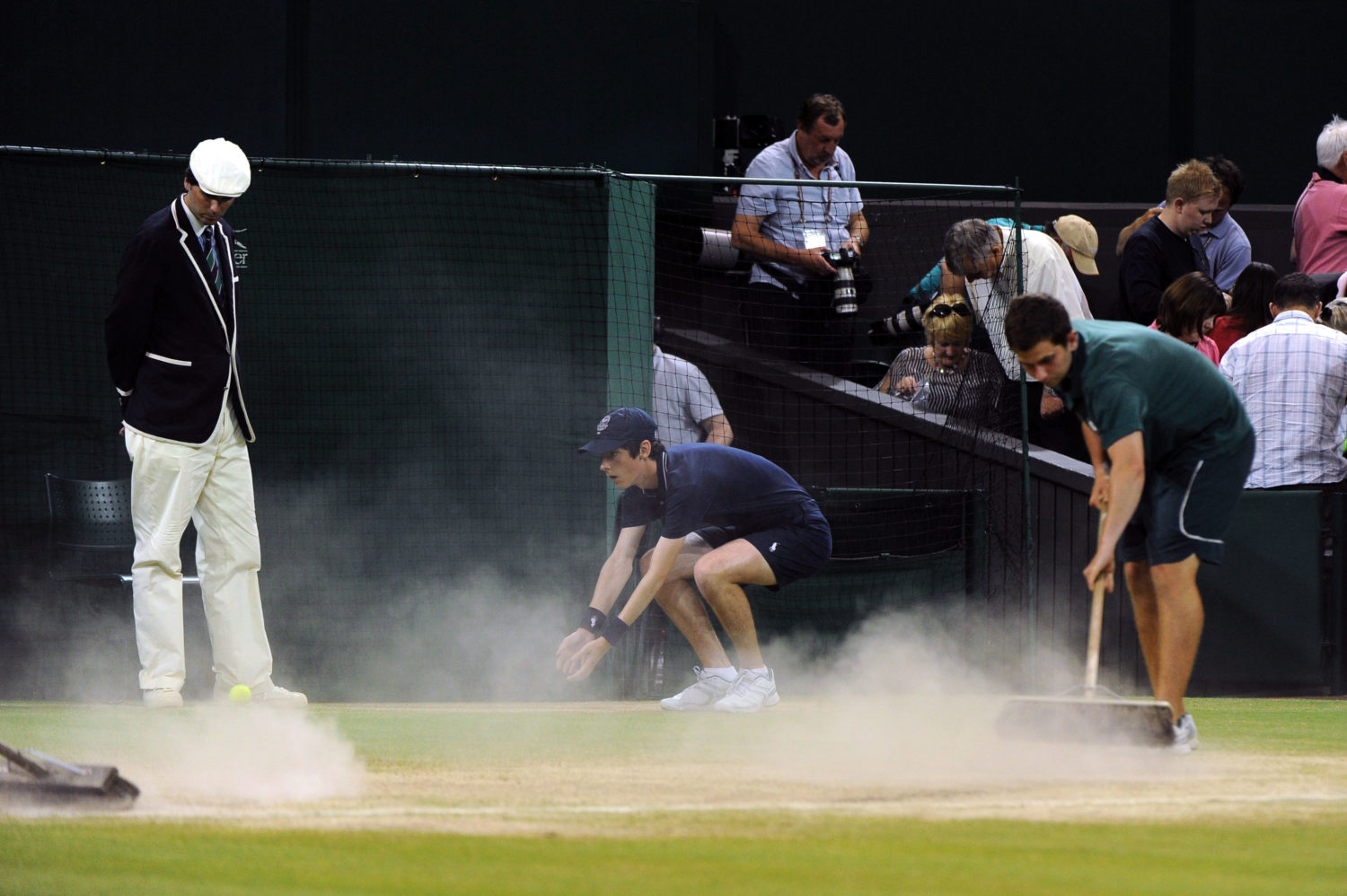
Grass court tennis, on the other hand, is a vastly different game of tennis and one that very few people actually have the opportunity to learn to play, or to adapt their game to. There are many good reasons for that. First, it’s very seasonal – it is, after all, grass and has to be outside and dry. Second, a grass court requires huge maintenance and that is prohibitively expensive other than for wealthier clubs. Third, there are grass courts and there are grass courts – a bad one is like playing on a bed of marbles. It is therefore a minor part of the tennis calendar these days, and likewise a minor part of club tennis in England. Apparently, the best grass court in France is at the British Embassy in Paris. But it might also be the only one.

© Ray Giubilo

There are of course some grass court warm- up tournaments before Wimbledon, and some exhibition events too, but that’s it. So, when you take a surface that has limited exposure in the tennis calendar and also at the local clubs in the country which hosts the major event on that surface, there is always going to be an element of just spectating for enjoyment’s sake, rather than really, truly understanding what is happening on court. The Powers That Be in tennis have tried to align the professional grass courts to play more like hard courts, but they are still a very distinct breed. Of course, you don’t need to play grass court tennis to enjoy the spectacle of Wimbledon, to appreciate the tennis on display, it’s just that you’re missing a key piece of the experience. 

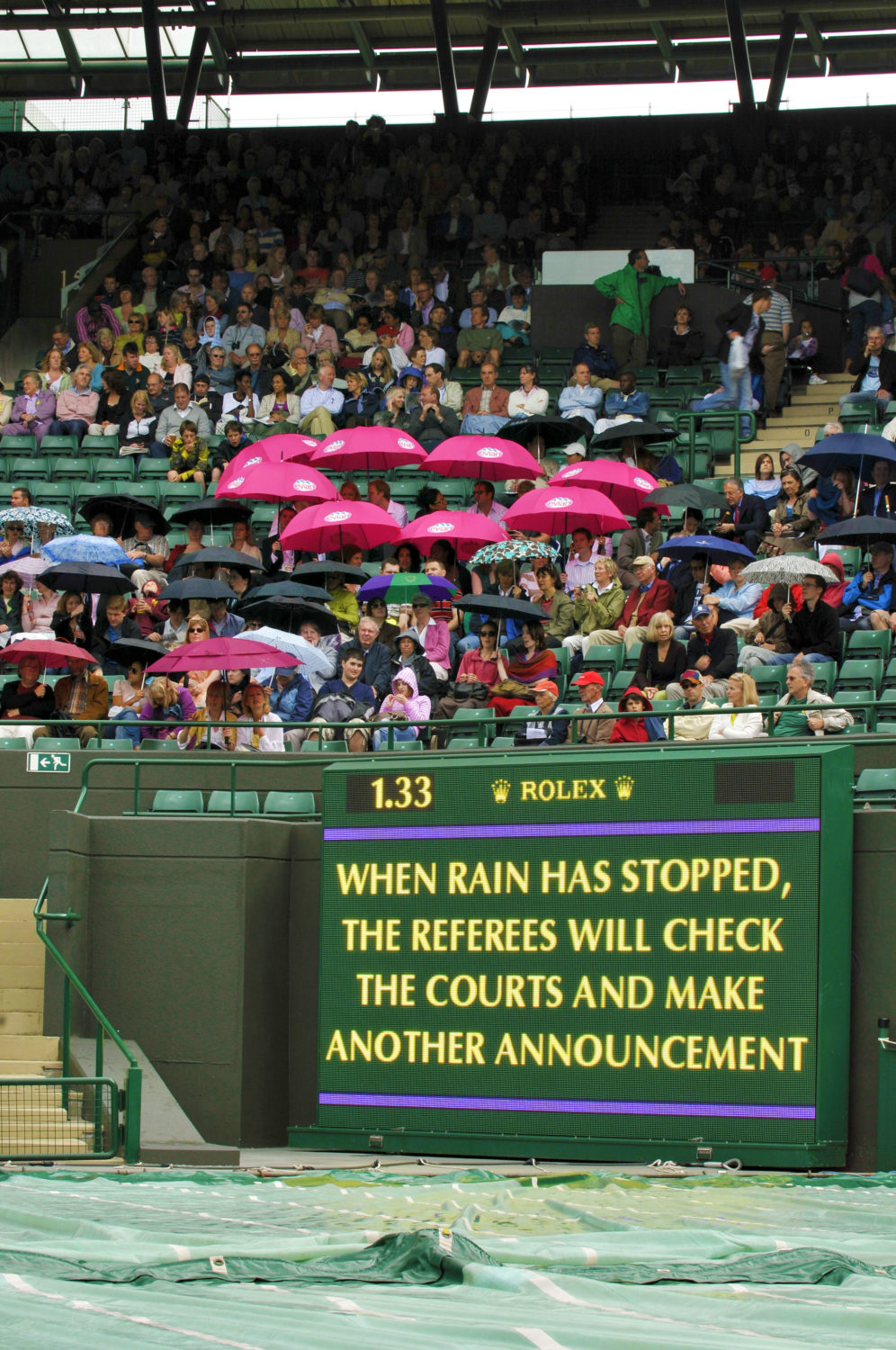
Getting back to the Wimbledon crowd, the conversations you overhear on the courts of SW19 are therefore understandably quite different to those you overhear in Paris. And I don’t mean the language. The Wimbledon crowd provides plenty of polite, joyful enthusiasm, a sense of having fun “at the tennis”, of appreciating the finesse on display when the likes of Roger take to the court, the crowd loyalty when half the British players lose on day one (because like the public, they hardly ever play on grass), and an overriding sense of not taking it too seriously, win or lose, rain or shine, roof or no roof. Other than for the die-hard fans, it’s a bit of tennis and a picnic, and there’s absolutely nothing wrong with that. It’s comfortable. 

Unlike in France, tennis is England’s second summer sport. Cricket takes first place and the crowd atmosphere of being at Wimbledon is quite different to being at an international cricket match, for two reasons. First, while there is still a pervasive Englishness about it that really captures one stereotypical view of the country’s national identity, an important international ‘test’ match is much more like a Davis Cup tie: partisan, irreverent and loud – very unlike Wimbledon. Second, cricket at all levels in England is only played on grass in the summer months and so the crowd’s knowledge level and understanding of what is happening ‘at the crease’ is elevated because of that shared experience. In that respect, it is more like the Parisian crowd at Roland-Garros. Equally, put that Parisian crowd at Lord’s Cricket Ground for England v Australia and there would still be the Parisian whistles and boos, but also a riot from the boredom of not having a clue what is going on. The baguettes and Perrier-branded sunhats would be thrown all over the pitch. An international cricket match between England and France is a difficult concept to imagine.

The four Grand Slams are said to showcase the game of tennis internationally, and they certainly do that very well. Eight wonderful weeks of tennis. There are of course differences between the Australian Open and the US Open for sure, but there is something romantic about the two contrasting European events and the cultures in which they take place that for four of those weeks, make those differences as entertaining as the tennis itself. 

And this article has not even mentioned Brexit once… Doh!


Story published in Courts no. 1, summer 2021.

Sport as Life: 

Tennis in American Fiction

© Véronique Hariga

He was born to an aristocratic noble family in Czarist Russia, but his best-known novel, Lolita, captures the quintessential post-war United States, a very tawdry side of it. The setting and milieu of the brilliant, funny — and scandalous — book that made the name “ Lolita ” recognized by all are at complete odds to the elegant St. Petersburg in which Vladimir Nabokov grew up, but two core elements are essential to both worlds. They are universal passions that transcend issues of location or wealth or background. One is sexual lust. Another is the sport of tennis.

Humbert Humbert meets the teenage girl who will obsess him to delirium when he decides to progress from living in “ prefabricated timber cabins ” with “ chemical toilets ” to a rooming house run by the mother of the nymphet whose name has become a household word. He is appalled by the tackiness of his new digs at first glance, the clutter of objects he describes as “ Mexican trash in a corner cabinet ” and the like. Born in Paris to a father of Swiss, French, and Austrian blood and an English mother, when he enters that hideous house, he needs, to steady himself, “ to stare at something. ” The single reassuring object on which he can focus is “ an old gray tennis ball that lay on an oak chest. ” 

No wonder it calms him. The fuzzy sphere — in the 1950s, when this scene takes place, it would have been felt-covered rubber, white before it grayed, in the era before today’s bright yellow was even considered — was the one thing in the house familiar to him, since as a boy growing up at an English day school on the French Riviera, where his father ran a fancy resort hotel, he had played tennis. In France in that earlier epoch, the ball might well have had a nucleus of cork and been wrapped in wool. But, still, the size and shape of the tennis ball in Lolita’s mother’s house were a comfort to him, to the racy Humbert, providing the one link to his own past.

Rereading Lolita even if only to find the tennis scenes again, you might still be as shocked as people were when the novel came out in America in 1956. Humbert is as fired by desire as just about anyone in the history of literature, troubling even the most liberal of readers because of the age of the girl he has taken from her home on a journey where they tryst amorously in motel after motel across the American landscape. He hides nothing about his “ dazzling romps. ” Even the way he decides to teach his inamorata tennis and other sports as if to give her a chance of normalcy has a twist. When we see “ Lo on horseback ” and then in a chairlift at a ski lodge, she is sheer allure. Although Humbert acts as if he cares only for the girl’s education and her becoming a well-adjusted young woman, every time he introduces her to a new sport, it provides him with a new vantage point of the body for which he chronically lusts. “ I freely advocated whenever and wherever possible the use of swimming pools with other girl-children. ” This gives him a chance to leer: “ There I would sit, with … nothing but my tingling glands, and watch her gambol … smoothly tanned, as glad as an ad, in her trim-fitted satin pants and shirred bra. Pubescent sweetheart! ” But tennis is the sport that, more than any other, is vital to the love of Humbert Humbert for Lolita.

Humbert, “ a good player ” in his prime, decides to teach the teenage girl “ to play tennis so that we might have more amusements in common. ” But, a “ hopeless ” teacher himself, he pays for “ very expensive lessons with a famous coach, a husky, wrinkled old-timer, with a harem of ball-boys. ” Those of us who have had tennis lessons in offbeat places can picture the “ awful wreck ” of a formerly great tennis player, even though few of us are old enough or rich enough to have been taught by anyone who had all those ball-boys. When Nabokov describes Lolita’s costly pro showing how good his forehand once was, we see just how well the high-spirited writer knew the game of tennis: “ He would put out as it were an exquisite spring blossom of a stroke and twang the ball back to his pupil. That divine delicacy of absolute power made me recall that, thirty years before, I had seen him in Cannes demolish the great Gobbert! ” 

This is both as good a description of a winning shot as has ever been written, and an evocation of the world of tennis where a retiree in California can still hit the ball the way he did when he beat a giant on the French Riviera three decades earlier. André Gobbert is real, a splendid dose of actual history in a masterpiece of fiction; a Parisian, he won the French Championships in 1911 and 1920 when you have to be a member of a French tennis club to play. Picture him holding four wooden rackets, smiling at the camera in his boldly striped jacket over his whites - long white trousers, of course - which is how he sported himself when he won Olympic medals as well as the International Lawn Tennis Federations’s World Covered Court Championship in 1919. It is with tennis that Nabokov triumphantly links that world to middle America.

Other sports appear only once in the novel; tennis is a leitmotif. We see Lolita play it in California, southern Arizona, and, ultimately, in a typically Nabokovian invention: a “ Colorado resort between Snow and Elphinstone. ” This time the tennis scene is told as a memory, after Humbert’s illicit girlfriend has freed herself from him forever. Of all the ways Lolita gets described in this novel that is in fact sheer fantasy - not the ramblings of a dangerous pedophile but the quirky musings of a brilliant writer intoxicated with language and with human reach, within the safe confines of one’s mind, absent any agenda of real danger — the images of the beguiling teenager playing tennis the last time he saw her on the court epitomize all that obsesses him. If you fear the eroticizing of tennis, and mistake inventive and larky flights of thought for actual perversion, don’t read on. But if you can enjoy it as the stuff of humor and imagination, and as unequaled linguistic virtuosity, as skillful and magical as one of Roger Federer’s backhands that exceeds all expectations of the possible, continue:

She was more of a nymphet than ever, with her apricot-colored limbs, in her sub-teen tennis togs ! … the white wide little-boy shirts, the slender waist, the apricot midriff, the white breast-kerchief whose ribbons went up and encircled her neck to end behind in a dangling knot leaving bare her gaspingly young and adorable apricot shoulder blades with that pubescence and those lovely gentle bones, and the smooth downward-tapering back. Her cap had a white peak. Her racket had cost me a small fortune! 

I don’t know about the rest of you, but I cannot picture the cap; on the other hand, I totally understand the jump from reverie to the distress over what one has spent on a tennis racket. 

And when I - like many of you, I imagine - read Maria Bueno’s obituary this past June, I understood why the spell cast by Lolita in whites seemed so real to me. The first time my father took me to Forest Hills, in the days when the US Open was played on grass at the West Side Tennis Club, in the late 1950s, we watched the Spanish player on center court. She was a balletic player; she also was enchantingly beautiful, and she knew it. At age eleven, what was also clear to me was her impact on my seemingly Puritanical father; Dad looked as if he might pass out with pleasure just seeing her from those nice old wooden seats.

Humbert’s observations of Lolita actually playing the sport evoke not just her dexterity, but also her coyness. Most significantly, he renders a game of tennis what it is for many of us: a source of unequivocal joy, a respite from worries in life:

She would wait and relax for a bar or two of white-lined time before going into the act of serving, and often bounced the ball once or twice, or pawed the ground a little, always at ease, always rather vague about the score, always cheerful as she seldom was in the dark life she led at home. Her tennis was the highest point to which I can imagine a young creature bringing the art of make-believe. …

The exquisite clarity of all her movements had its auditory counterpart in the pure ringing sound of her every stroke. The ball when it entered her aura of control became somehow whiter, its resilience somehow richer, and the instrument of precision she used upon it seemed inordinately prehensile and deliberate at the moment of clinging contact. Her form was, indeed, an absolutely perfect imitation of absolutely top-notch tennis… My Lolita had a way of raising her bent left knee at the ample and springy start of the service cycle when there would develop and hang in the sun for a second a vital web of balance between toed foot, pristine armpit, burnished arm and far back-flung racket, as she smiled up with gleaming teeth at the small globe suspended so high in the zenith of the powerful and graceful cosmos she had created for the express purpose of falling upon it with a clean resounding crack of her golden whip. 

In all that has been written about the game of tennis, from the most adroit sports journalism to players’ own accounts of tournament matches to rhapsodic encomia from the sport’s most enthusiastic aficionados, I doubt if any rivals Vladimir Nabokov’s description of Lolita’s strokes. He begins with the start of all tennis points: “ It had, that serve of hers, beauty, directness, youth, a classical purity of trajectory. ” We see its “ spanking pace ” and “ its long elegant hop. ” Nabokov gets in all the key parts of the game, including footwork. “ Her overhead volley was related to her service as the envoy is to the ballade; for she had been trained…to patter up at once to the net on her nimble, vivid, white-shot feet. There was nothing to choose between her forehand and backhand drives; they were mirror images of one another. ” 

Okay, you, like me, are thinking that no backhand should really start as a mirror image of the forehand. And then you imagine yourself telling her to change her grip. Still, when Humbert says that the costly tennis pro in California had taught her a “ short half-volley ” that was “ one of the pearls ” of her game, we picture it being the perfect length, the moment of contact and angle of the racket ideal. 

Humbert Humbert’s description of Lolita on the tennis court goes on for pages, becoming an elegy to everything he cherishes. At times it is comic, at other moments earnest. At her best, the teenager is, above all, a true athlete: “ She covers the one thousand and fifty-three square feet of her half of the court with wonderful ease, once she had entered into the rhythm of a rally and as long as she could direct that rhythm. ” I will leave it to you to determine if the square footage is accurate. Lolita, the novel, is, after all, like a game of tennis: a mixture of truths and flights of fancy.

Part of the appeal of tennis in novels we love is that there is something reassuring in the knowledge that the sport that obsesses many of us has also gripped some of the greatest creative geniuses of all time. In my own strange case, I also like knowing that the person whose achievement I admire in some domain I revere has the love of the game in common with me. When I was a kid, my mother more than once voiced her delight that Isaac Stern, among the greatest violists of the era, was an avid tennis player; this was especially significant since many musicians are afraid to do anything that might damage their fingers. Beyond that, as an American who lives in Paris, I am proud to show readers from Belgium and France and other Francophile countries that I somehow esteem as culturally superior to my own, that here and there the U.S. has been home to a genius or two. By geniuses I mean those writers who make tennis come alive on the page.

John Cheever has fallen out of fashion, but he was one of the greatest short story writers and novelists of the last century. Cheever played tennis well, but the way he includes it in his writing has to do not so much with the sport itself as with the way tennis figures in family dynamics. And ownership of a private tennis court becomes the mark of a way of life. Consider these two sentences at the start of Cheever’s story “ Goodbye, my Brother ”: “ When I woke the next morning, or half woke, I could hear the sound of someone rolling the tennis court. It is a fainter and a deeper sound than the iron buoy bells off the point - an unrhythmic iron charming -  that belongs in my mind to the beginning of a summer day, a good portent. ” How much we have learned about a style of living in those few words! The family is rich enough to have its own clay court (while grass is also rolled, it scarcely exists on private courts in America no other surface requires a roller.) They can afford to have someone else roll it while the members of the family sleep late. They live near the sea. The person writing is attuned to the nuances of life, in particular the pleasures of a perfect summer day - one where we imagine no one hustling to work, but, rather, a day of tennis and boating.

And then it is tennis that leads us to understand family dynamics. As someone who might benefit from a few years of psychotherapy only to discuss tennis competitiveness - not of the professional sort, but among family members and friends - and the dynamics of family doubles when I was a teenager, I identify, as I imagine many of you do, with what Cheever evokes of the tension, the annoyance, the side-issues that revolve around tennis during summer holidays:

Lawrence came in, and I asked him if he wanted to play some tennis. He said no, thanks, although he thought he might play some singles with Chaddy. He was in the right here, because both he and Chaddy play better tennis that I, and he did play some singles with Chaddy after breakfast, but, later on, when the others came down to play family doubles, Lawrence disappeared. This made me cross  unreasonably so, I supposed  but we play darned interesting family doubles, and he could have played in a set for the sake of courtesy. 

It is remarkable how much we learn about issues among siblings, and the character of the narrator of the story, through this interaction around the sport. Cheever’s world was one in which games loomed large, and sports were highly symbolic. In real life, John Cheever’s father disappointed him by not being more impressed with John’s skill at tennis; the older Cheever thought that the sport was not manly enough, in the way that American football is perceived to be. In his fiction, the writer did a splendid job of portraying human character through tennis — as a way that individuals can show all of our usual needs for admiration, reinforcement, and acceptance.

Another great American novelist named John - this time Updike rather than Cheever - writes of a world where tennis is part and parcel of an entire way of life. We feel the sport as being as central to people’s existence as eating and sleeping. In Delicate Wives, Lisa - of no last name, as if her scandalous behavior requires keeping it secret, as opposed to the situation with her rival Veronica Horst - is described as “ breathlessly fresh from a session of gossip and women’s tennis ” and is “ freckled year round ” thanks to tennis as well as golf, hiking, and skiing. It is only fitting that the moment when something seems more important than the source of her perkiness and good health that the plot thickens. “ One drizzly day in early Spring, instead of going off to her usual Sunday-morning foursome in the indoor tennis facility, she cancelled and called Les into their bedroom. ” In another Updike story, The Full Glass, the location of a town’s four tennis courts makes it the center of all the human drama. This particular balance of life is familiar to many of us; for me, Updike’s world, different though its values are from my own, makes me think of how vital to my own life the location of the nearest courts has been - whether in the park near to my childhood house, on the university campus where I spent a summer in Quito at age fifteen, or in Guangzhou when my wife and I went to China, or in Genoa when I was studying Renaissance painting there; the moment I would arrive at that familiar sight of the straight lines and right angles, always the same measures and proportions, the net straight across the middle, I felt a reassurance; wherever I am in the world, on the tennis court I am at home. 

In the summers, when I worked at a marvelous institution called Tamarack Tennis Camp, in Franconia, New Hampshire, Jack Kenney, the camp director, used to service the Updikes’ red clay tennis court in the southern part of the state. He loved the merging of the game of tennis with the rest of the brilliant writer’s daily experiences, the way that John Updike and his wife Mary would joke playing singles even if their lives were fraught by the issues of other pairings


It is through the eyes of good writers that the true meaning of tennis in some of our lives becomes vivid.

Michael Mewshaw’s review of Lionel Shriver’s Double Fault in The New York Times in 1997 is entitled “ Tightly Strung. ” Those two words are perfect to describe the romance that is the focal point of the novel about a tense romance between a young women ranked Number 437 in the American Women’s Tennis Association and her Ivy League educated boyfriend who is a tennis pro ranked Number 972 in the category. Mewshaw, a sports writer who covered the men’s and women’s tours and also wrote his own novel revolving around tennis, was the perfect person to review Shriver’s gripping book. He captures the essence of the narrative as deftly as a crosscourt backhand that falls hard on target and wins the point:

I play tennis, therefore I am. She’s smart enough to know better, but Willy feels inseparable from her ranking ; her happiness depends on a number and, ultimately, she can’t love unless she’s winning. Although Eric ranks 972 when they meet, his standing rises remorselessly while hers sinks. Before long, he’s beating the top men while she, struck down by insecurity and injury, falls below 1,000 and, consequently, off the computer charts completely. The marriage similarly plunges into crisis as Willy’s court failure calls into question her very identity. 

Shriver’s writing not only makes tennis the crux of the ups and downs of a love affair that becomes a marriage, but does so with searing poetry. 

‘’The serve was into the sun, which at its apex the tennis ball perfectly eclipsed,’’ she writes. ‘’A corona blazed on the ball’s circumference, etching a ring on Willy’s retina that would blind-spot the rest of the point.’’

Mewshaw’s summation evokes the essence of Shriver’s accomplishment in the novel that put her at the forefront of American fiction writers: “ Shriver shows in a masterstroke why character is fate and how sport reveals it. ” [NY Times Sept 14, 1997]

When tennis appears in fiction, we have an experience that is totally different from what occurs when we read any other written account of the sport. It sharpens the portrait of at least one imaginary character; the writer uses a tennis game as a means of entering a human mind. At the same time, for those of us for whom tennis is part of who we are, any well-written reference to the sport in a short story or novel perks our interest, for we have encountered something very personal to our beings. I would be surprised that anyone reading this article would be incapable of putting down a novel or short story at the moment that a tennis match begins. On the contrary, you become riveted to every word -  even if you could easily skim an account of a tennis match on the sports pages of a newspaper, or on line. 

While I was thinking about this article, I stopped by my local tennis shop in Paris on the Rue du Cherche-Midi and was happy to see the premiere issue of Courts displayed prominently. I asked the owner, whom I have known for years, how he liked it. As he strung a racket to just the right degree of tautness, he said, “ Ce n’est pas du tout comme les autres magazines de sport. Ça vous amène plus loin. Vous découvrez ce que vous voulez savoir, pas les petits détails sans importance. ” When I told him I was writing about tennis in American fiction for the next issue, he said, “ Exactement! J’adorerais avoir cette perspective; c’est profond, avec ça on approche le sport d’une autre façon. ”

The characters in Don DeLillo’s Americana play baseball, basketball, and football; they box and wrestle and run. But it is when they play tennis that, in a few short paragraphs, we come to know David Bell, the book’s narrator, more intimately than at any other moment - including what you would call intimate moments. It takes a tennis game to bring him into sharp focus, both physically and mentally, for the reader. Bell is remembering a match he played when he was eighteen, and on summer holiday. For many of us, that’s the age, more than any other, when winning a tennis match is not just a sports victory; it is proof of who you are, in the eyes of others as well as in fulfillment of your own needs. We are on the edge of our seats wondering who will beat whom when Bell takes on “ Big Bob Davidson ” at the suggestion of the beguiling Jane, Bell’s older sister.

First, we get a capsule portrait of Bell’s opponent that, somehow, makes us desperate for Bell to defeat him: 

Bob seemed a nice enough guy. He was tall and heavy. His face was an odd wet pink color, as if a dog had been licking it, and his blond hair was very straight. 

I can’t figure out why this slightly condescending description makes us want to see Bob clobbered, but at least that is what happened to me.

And then they start to play:

My game was better than ever and I thought I’d take it easy at the outset and see what kind of pace Bob had in mind. It soon became clear that he was out to destroy me. He ranged all over the court, grim and dusty, playing in a low cloud of clay, tersely announcing the score before every serve. The harder he tried, the worse he got. His serve was erratic and he had no backhand to speak of. I was just beginning to get bored when I saw my father sitting on one of the benches that lined the courts. 

How often have you had two characters come to life before your eyes in just a few sentences, and felt yourself swayed to take a side? And wondered so eagerly about what would happen next?

So now we get the father-son dynamics. Bell’s father asks him who is winning, to which the son nonchalantly replies that he “ took the first set ” but is not even sure of the score - although it was probably six-one. “ I’m not very involved in this particular match, ” Bell explains.

His father is desperate about the match, though. “ Well, get involved … I want you to whip his ass. ” 

His father does not even know Bob Davidson, but feels that the giant fellow has invaded his house, and might be pursuing Jane. Bob “ might be the sweetest guy in the world, ” but the father is threatened by him. “ Go get him. Go run his ass ragged, ” he instructs his eighteen-year-old son.

Bell’s subsequent victory inspires a pride and camaraderie familiar to many of us for whom sports, and competitiveness, are interwoven with our relationship with at least one of our parents:

I beat him in straight sets, easily, embarrassing him, taunting him with soft raindrop shots which sent him from one end of the net to the other, then drilling a hammer past his ear. When it was over my father clapped me on the back, rubbed my neck, congratulated me on what he called a truly historic blitz, a glorious rout. All at the expense of the interloper, it was one of those strange bursts of bloodlove which are both puzzling and overpowering in their dimensions of joy. 

It takes a scene of what is allegedly fiction to make us feel that intense drama most of us would be afraid to admit in a recitation of facts.

David Foster Wallace is the writer whose name comes up most frequently when one discusses writers and tennis; String Theory, his book devoted to the sport, remains a great favorite. He was, in fact, tennis-obsessed. The sport permeates his fiction as well as his non-fiction, and could describe exchanges across the net with unequaled vivacity.

Wallace’s novel Infinite Jest is set in part at the fictional “ Enfield Tennis Academy. ” An account of players called Hal and Stice battling on the court is a small example of the panache with which Wallace describes the sport; if ever words could have you seeing every muscle flex and hear the ball bounce, it is these:

Hal’s first serve hadn’t Stice’s pace, but it had depth, plus a topspin Hal achieved with an arched back and faint brushing action over the back of the ball that made the serve curve visibly in the air, egg-shaped with spin, to land deep in the box and hop up high, so that Stice couldn’t do more than send back a deep backhand chip from shoulder-height, and then come in behind a return that’s been robbed of all pace. Stice moved to the baseline’s center as the chip floated back to Hal. Hal’s pivot moved him to the right so that he could take it on the forehand, another looper dripping with top, right back in the same corner he’d served to, so that Stice had to stop and sprint back back the same way he’d come. Stice drove the backhand hard down the line to Hal’s forehand, a blazing thing that made the audience inhale… 

We inhale as well, with sheer excitement, and the point still has not ended. 

Fiction? This is tennis itself: exhilarating, diverting, glorious. 


Story published in Courts n° 2, summer 2018.
Sparring-partner

© Les Petits As

CHAPITRE V – Les Petits AS

Chapitre I – Roland
Chapitre II – On achève bien les buffles
Chapitre III – Tragédie racinienne
Chapitre IV – Claudio se prend pour Chang face à Lendl


Le maquillage professionnel, c’est quelque chose. Ça n’a rien à voir avec la chirurgie esthétique ou les déguisements de Cherokee ; une jolie fille vous applique des poudres magiques et vous devenez vous, en mieux. Butler pénétrait au même moment sur le Lenglen pour son match contre Gambill – on entendait les échos des applaudissements tandis que le présentateur annonçait l’arrivée du quatrième mondial – et j’éprouvai une forme de honte à l’idée d’abandonner Claudio pour ce qui serait sans nul doute sa dernière heure et demie de vie consciente. Oui, j’éprouvais une sorte de honte, mais elle était largement compensée par les massages de tempes administrés par la maquilleuse.

A 16h55, j’entrai sur le plateau. Je suis plutôt vieux jeu, concernant le sport en général et le tennis en particulier, mais beaucoup moins vieux jeu que France Télévisions. Si j’admire l’offensive, je ne me répands pas en commentaires désobligés sur la disparition « tellement préjudiciable » du « tennis d’attaque » et sur le « manque cruel de variations dans le tennis contemporain ». Déjà, parce que je demande à voir McEnroe monter à la volée face aux fusées de Iejov ; ensuite parce que les variations se pratiquent plutôt en position d’attaque, et confère ma remarque précédente ; et puis parce que c’est comme ça : le tennis a changé. Je fus par conséquent surpris de constater que ce que je prenais pour de l’ameublement sonore en période creuse nourrissait hors antenne les conversations des journalistes, consultants et commentateurs présents autour de moi. Ainsi s’achevait leur conversation au moment où l’ingénieur du son, une sorte de nain claudiquant, s’ingéniait, les mains dans mes poches, à dissimuler les fils du micro-cravate dont il m’avait gratifié.

– Ne me fais pas dire ce que je n’ai pas dit, Arnaud. Je ne me réjouis évidemment pas de la disparition de Belluci. Ce que je dis, par contre, c’est que ça ouvre le tableau pour les attaquants. Tu es le premier à dire que ce serait beau de voir un attaquant remporter Roland-Garros. On ne peut pas dire que Belluci variait beaucoup, quand même : pan dans la balle, bim, bam, boum, ping, bang bang, pan, boum, vraoum, badibadaboum, pim, pam, prouuuuuuh, on recommence, puis à nouveau ; et au premier qui craque. Stratégiquement, on a vu plus excitant.
– Ce que tu ne comprends pas c’est que les attaquants, sur terre, arrêtent d’attaquer. Ça ne change rien. Regarde Stern : au début de sa carrière, il montait sans arrêt au filet ! Et aujourd’hui ? Nada – Nichts. Belluci, Iejov, Butler et tous les autres ont fait évoluer le jeu : les joueurs ont peur d’être pris pour des cibles. Mais je t’assure que, partout ailleurs, les gens s’en réjouissent ! Il n’y a qu’en France – et un peu en Angleterre, mais on ne va pas se mettre à être d’accord avec les angliches – qu’on regrette ce jeu-là. Ailleurs, plus ça tape fort, plus c’est physique et plus ça fait d’audience.
– Peut-être somme nous en train de devenir des dinosaures.
– Pourquoi crois-tu que les chaines privées internationales veulent obtenir les droits ? Avec les montants qu’elles proposent, elles espèrent pouvoir jouir de l’influence nécessaire pour orienter la programmation et peser sur le jeu, le rendre toujours plus court, plus dense, plus spectaculaire. Nous, on est protégé parce qu’on est en phase avec la direction et la fédération, mais pour combien de temps ?
– Bon, déjà, on peut se rassurer : un mort sur le tournoi, on le saura, ça fait de l’audience. Ah, tiens, parlant de ça, bonjour. Auguste, c’est ça ? Excusez-moi, je ne vous connais pas, je suis plutôt sur le cyclisme, habituellement ; mais le tennis, c’est passionnant ! Hein ? Arnaud ? Tu connais monsieur ?
– Oui, on s’est croisé, aux Petits As : tu avais gagné en 1997 ou 1998, c’est ça ?
– Non, c’est Simon Perreau qui a gagné les Petits As. Moi, je t’ai joué en Interclubs, en 2000. J’avais perdu, je te rassure, c’est peut-être pour ça que tu ne t’en souviens plus.
– Si, je m’en souviens très bien ! Tu jouais pour Garches !
– Non, pour le TCP.
– Ah oui, oui, c’est ça. C’est ça…. Tap, tap, tap sur la table centrale.
– Et vous accompagnez donc la police sur l’enquête ?

« Antenne dans deux minutes ».

– Je tourne comme sparring, sur le tournoi, et l’inspecteur Racine se sert de mon réseau pour obtenir des informations dans un cadre un peu officieux. Mais peut-être vaudrait-il mieux ne pas en parler, afin de ne pas compromettre ma position.
– Ah ! Sparring ? C’est bon, ça ! Vous avez joué Belluci, cette quinzaine ?
– Je suis même la dernière personne à avoir joué avec lui.
– Sensationnel ! On va en parler, d’accord ? Message reçu, pour l’enquête – il prit une voix de robot : Motus et bouche cousue.

Arnaud, autrefois fine fleur du jeu d’attaque, éclata de rire. Mariana, l’ancienne joueuse reconvertie speakerine, failli s’étouffer dans ses gloussements. On se serait cru dans un dépôt-vente avec tous ces anciens, sur qui le maquillage agissait comme une couche de vernis réhabilite un meuble. De la Terrasse, je dominai tout le stade, et ma vue s’étendait sur les canopées du bois de Boulogne. Les bobs et les panamas se déplaçaient, solitaires, dans les allées, petits points blancs et verts dessinant dans le ton des impressionnistes une chorégraphie gentiment bourgeoise. Ce que j’aime Roland-Garros !

Je penchai la tête sur ma droite : 4/0 pour Butler, service à suivre. Jusque-là, tout allait bien.

« Trois, deux, un… »

– Bonjour à ceux qui nous rejoignent sur France 2 et rebonjour à tous ceux qui nous ont suivi depuis France 3. De très belles rencontres à jouer, encore, ici à Roland-Garros où Zach Butler, le Canadien, joue en ce moment même son compatriote Gambill, qu’on connait moins. Et c’est bien parti pour le quatrième mondial, n’est-ce pas, Patrice ?
– Oui, très bien parti même si Butler vient de se faire une petite frayeur sur une glissade mal négociée à l’instant, permettant à son adversaire de reprendre l’un des deux services de retard qu’il avait abandonnés plus tôt dans ce premier set. 4/1 pour Butler qui dispose toujours, donc, d’un break d’avance.
– Merci Patrice. On reviendra vous voir très vite, sur ce court Suzanne Lenglen. Alors on vous rappelle, tout de même, les qualifications d’Adam Stern et de Sergueï Iejov pour les quarts de finale de Roland. Tous les grands sont bien sûr présents, même si ça n’a pas été facile pour Stern, aujourd’hui, Mariana.
– Oui, en effet, beaucoup de vent et des conditions de jeu un peu lourdes qui ont ralenti Adam Stern aujourd’hui. Peut-être aussi était-il perturbé par le maintien du tournoi suite à la mort de Paolo Belluci lui, qui, d’après ce que j’ai appris, avait plaidé pour une suspension. Enfin, il est qualifié et c’est l’important.
– On va revenir sur ce qui est évidemment la grande affaire de ce Roland 2015 avec notre invité, Auguste Loisel, ancien joueur et dernier sparring, comme on dit ici à Roland, à avoir tapé la balle avec Paolo Belluci. Mais d’abord un mot, peut-être, Arnaud, sur la victoire de Iejov, très impressionnant aujourd’hui.
– Oui, Mariana l’a dit, hein, autant Stern ne semblait pas dans son assiette sur le court tout à l’heure, autant on a retrouvé un Sergueï Iejov très déterminé, bien sur ses appuis, très convainquant dans son jeu d’attaque et quasiment indébordable en défense. Pour moi, Iejov est en train de devenir le favori de ce tournoi au vu de ce qu’il a pu nous montrer aujourd’hui.
– Et puis, à suivre, le vétéran, toujours là : Mankelevic, qui jouera Berst. On se souvient qu’il avait été finaliste ici en 2001, et il est encore au niveau, ça fait plaisir de voir ainsi des joueurs qui aiment leur sport et le défendent. Mais on va tout de suite revenir sur la mort suspecte de Paolo Belluci et sur la suite des évènements qui se sont déroulés depuis hier avec vous, Auguste. Alors on a beaucoup hésité, au niveau de la direction sur le maintien ou non du tournoi, et il a finalement été décidé de ne pas suspendre. C’est, évidemment, une décision controversée, mais on ne va pas s’en plaindre puisque ça nous permet, malgré les circonstances, d’avoir et de voir, surtout, du beau jeu. Auguste, vous êtes donc sparring-partner, expliquez peut-être aux téléspectateurs en quoi cela consiste.

Ce n’était ni la première, ni la dernière fois qu’on me le demandait.

– Et vous avez donc joué Belluci le matin de sa mort. Comment était-il ?
– Il était très compétitif, très impliqué.
– Vous avez été surpris d’apprendre qu’il était blessé ?
– Extrêmement surpris, oui. Il m’avait paru plus fort que jamais. Je continue à douter de cette blessure. À mon sens, cet abandon mystérieux est à mettre en relation avec les évènements qui ont suivi.
– Auguste, on se connait un peu…

C’était Arnaud qui parlait. On ne se connaissait pas.

– Je sais que tu es très proche de la police, sur ce dossier, et que tu sondes un peu les joueurs pour elle. Qu’est-ce qu’ils te disent, quand tu les approches ? Moi, je les trouve quand même marqués. Je ne sais pas si c’était une si bonne idée de maintenir le tournoi.

Le mal était fait.

– Je… Marqués, non, pas forcément marqués. Secoués, oui. Mais c’est aussi là qu’on voit ceux qui ont le truc, le virus, la gagne.
– C’est-à-dire ?
– Des mecs comme Butler, par exemple, ne se laissent pas déstabiliser du tout par ce genre d’évènements. Il y voit une vraie opportunité pour lui d’accrocher un Grand Chelem. Enfin, je crois.

Tout le monde était mal à l’aise. Comment rebondir là-dessus sans risquer la diffamation ?

– Auguste, on va un peu revenir sur votre nouveau métier. C’est vrai qu’on connait bien les cadors du circuit et qu’on ne se fait pas trop de soucis pour eux à la fin de leur carrière…
– Ah ça, non ! s’exclama Mariana, hilare.
– Oui, en général, de ce côté-là, ça va : mais le tennis ce n’est pas que dix ou vingt personnes. Même le trois-centième mondial, aujourd’hui joue très, très bien. Quel a été votre meilleur classement à vous ?
– Quatre-cent vingt-six.
– Voilà. Et donc c’est pour tous ces professionnels de l’ombre une vie de voyages aussi, mais également de galères et quand vient le jour de la retraite, ce n’est pas forcément évident, comme ça de se reconvertir. Racontez-nous.

J’estime votre mémoire suffisante pour ne pas recommencer.

– Eh bien, merci beaucoup Auguste Loisel d’être passé sur la terrasse pour nous parler de Belluci et bien sûr de vous ; et puis on vous souhaite le meilleur dans votre nouvelle activité. Avant de se quitter, un pronostic, pour la victoire finale ?
– Oh, le pronostic du cœur, Adam Stern !
– Merci beaucoup.
– Merci à vous.

Et tout de suite on retourne sur le Suzanne Lenglen où Zach Butler grimace, Patrice.

« Oui, il grimace un peu. Butler a été convainquant pour remporter la première manche, 6/2, mais depuis c’est une autre histoire sur ce court Suzanne Lenglen où le Canadien a bien du mal à trouver ses repères face à ce diable de Gambill. Et c’est maintenant au tour de Gambill de… »

– Désolé, on n’a pas trop été intrusif, hein, sur la police ? Simplement pour rassurer un peu les téléspectateurs.
– Non, non, ne vous inquiétez pas. Je m’inquiète pour deux.

Un homme prêt à assassiner le numéro 1 mondial en plein milieu d’un court n’hésiterait sans nul doute pas une seule seconde à me trucider s’il m’imaginait sur ses traces. Désormais, j’étais une proie facile et identifiée. Cette idée me ramena à Marion. Son silence commençait m’inquiéter sérieusement ; pourtant, quelque chose au fond de moi me retenait de courir après elle – la fatigue peut-être. J’attendis un changement de côté pour rejoindre Claudio qui se rongeait les sangs. Il répondit à une question que je n’avais pas posée.

– Non, non, pas de break, heureusement. Mais il rame sur son service ! Il ne pousse pas du tout sur les jambes. Il est vraiment à la peine. Et en face, Gambill ne joue pas particulièrement bien, c’est d’autant plus frustrant. Non, je la sens mal.

« 0/15 »

– Je croyais que rien ne pouvait entamer ton optimisme.
– Tu ferais mieux de prier avec moi.

« 0/30 »

– Tu es croyant, toi, maintenant ?
– Qui t’a dit que je priais Dieu ?

« 30/A »

– Tu vois, mes prières marchent ! Il revient à 30A.

« Jeu, monsieur Butler ».

Cinq partout, deuxième set. Butler avait déjà sauvé trois balles de break sans parvenir à s’en procurer une seule.

– Je n’ai toujours pas retrouvé Marion.
– Je te promets de t’aider à la chercher dès que Butler en a fini. – D’ici là, je vais souffrir en silence et attendre, attendre encore, pour faire pénitence de ma vie de déBAUCHE !
– Quitte à raconter n’importe quoi, tu pourrais avoir l’obligeance de ne pas accorder ton volume sonore à ton excitation. Quoiqu’il arrive, on en rediscutera, mais je crois que c’est la dernière année où je marche, pour les paris.
– Ce qui veut dire que tu renonces à ta part, SUR LES TRENTE MILLE ?!!!
– Tu as bien renoncé à retrouver jamais l’usage de tes rotules.

Butler venait de se procurer une balle de break, la première du set. Malgré moi, j’étais pris par l’enjeu et, penché en avant, les jambes crispées et les mains jointes, je formulais des réponses machinales sans quitter le court des yeux. Jusqu’à la libération, enfin !

« Jeu, monsieur Butler ! »

Les supporters de Zach Butler, des filles entre deux âges pour le plus gros d’entre eux, se levèrent d’un bond et applaudirent à tout rompre au son de leurs vivas. Dans une minute trente, leur protégé servirait pour mener deux sets à rien, autrement dit, plier le match. Le poing serré devant ses lèvres épaisses, Butler regagnait son banc avec une vigueur retrouvée.

– Il est mieux, là. Bien mieux.

L’ascenseur émotionnel par lequel était passé Claudio était de marque allemande, robuste et fonctionnelle. Sa peau était devenue étrangement diaphane, une peau de nymphette grecque dans une peinture style Renaissance. Des gouttes perlaient de ses cheveux noirs.

– Je crois que je ne me sens pas bien.
– Je le crois aussi, Claudio. C’est de sentir tes rotules alors que tu pensais ne plus jamais les revoir. Ca fait un choc.
– Je ne me sens pas bien, vraiment.
Je lui aspergeai un peu d’eau sur le crâne et, récupérant un bob sur un strapontin laissée libre, je le lui enfonçai tant bien que mal par-delà sa tignasse. Il n’avait plus même la force de se défendre.

« Time. »

Butler se mit en jambes, fit craquer son cou en se dirigeant vers le fond du court. D’un mouvement de menton, il réclama sa serviette au ramasseur de balles, s’épongea consciencieusement le front, récupéra trois balles, en jeta une, puis deux, rangea l’autre dans sa poche, se tourna vers un deuxième ramasseur et répéta l’opération ; il fit volte-face vers la ligne, jeta par habitude un œil de l’autre côté du filet où tout semblait en ordre. Gambill en position, il se mit à servir.

« 15/0 »

Zach Butler se contenta de mimes pour faire comprendre au corps des ramasseurs qu’il exigeait qu’on lui rende la même balle. Superstition gagnante.

« 30/0 »
Service gagnant.

« 40/0 »

Il finit sur un ace. Mais en plus du bruit sourd de la balle bien centrée, de l’impact chuintant de cette même balle fusant sur la terre sèche, du souffle du public trop longtemps retenu et des applaudissements subséquents, on entendit un petit son aigu, un son de cartilage qui devient cartilages, de tendon détendu, un hurlement, puis le désordre d’une chute. Butler, couvert de terre orange, s’étalait de toute sa longueur sur le sol, sa jambe tordue à 150 degrés sous ses fesses, ses mains sur son genou droit.

Dans l’expectative générale, Zach Butler se contorsionnait de douleur.

Claudio ne disait rien. Il baissait la tête.

– Quand je parlais de tes rotules, c’était pour rigoler, tu sais. Je ne voulais pas…
– T’occupe. J’aimerais que tu me laisses seul, là. Je dois réfléchir.

Oiseau de mauvais augure, je croassais sans y toucher. Claudio assistait, impuissant, au spectacle désolant du genou brisé de Butler qui allait briser sa vie. Tandis que je remontai les marches pour sortir de l’enceinte, seul spectateur à ne pas me repaître du spectacle de l’humiliation souffreteuse (arrivée du kiné, arrivée du médecin « Jeu, set et match Gambill », poignée de main à l’horizontale), le relent aux lèvres, je me mis à pouffer de rire par bouffées salvatrices, je pleurai littéralement de rire, je m’asphyxiai, suffoquai de rire, en pensant à toute l’absurdité de cette situation et à ses conséquences, plus absurdes encore. Et je me demandai comment le clan Iejov avait pu prévoir un tel scénario et s’ils n’avaient pas cherché, en pariant auprès de Claudio, à prendre le contrôle sur moi. Et je riais, je riais, je riais pour étouffer ma peur.

The Tennis Court Is Home

© Petra Leary

It provides reassurance and memory, the ideal essence of what “home” should be. The moment you arrive, you are on familiar ground, the single place in your life to which you have always gone and can always return. 

It never changes, wherever you are in the world. The layout is invariable. The length is 78 feet, the overall width 36. But if you look for a precise system—everything divisible by 2, or one dimension being twice the other, or repetitions in series—it is more subtle than that. Yes, these two numbers are divisible by both 2 and 3, but the 21 feet from net to service line is a multiple only of 3; the same applies to the 39 from net to baseline, and the 27 that is the width of the singles court contained so neatly within the doubles. Those measurements impart a sense of rightness but also an essential sense of variety.

It is all so heartening and so centering: the way the court is what it is, unlike anything else but true to itself whether it is surfaced in clay, grass, asphalt, or Astroturf. The scheme is, of course, a mirror image, the net its perfect divider. This exactitude is part of what makes you know yourself when you are there, whether it is an autumn day in Norway when your fingers are so cold that you can barely grip the racquet, or a sweltering one in Dakar when you are so soaked with sweat you wonder how you will ever get your shirt off afterwards. 

The great abstract artist Piet Mondrian reduced his paintings to pure, straight verticals and horizontals, and impeccable right angles; he eschewed diagonals as disconcerting outsiders. In tennis, too, when you stand there before play begins, diagonals belong only to the action that lays ahead. For now, there is stasis. You can hardly wait to angle those shots, to lace a crosscourt backhand at a sharp trajectory, to vary your serves unpredictably from one back corner to the other of your opponent’s receiving area, but when you arrive, you start with the calm and sense of inner balance that comes because of the flawless grid.

© Petra Leary

Mondrian never played tennis, but he loved to dance the foxtrot, and whether he did it in his native Holland or a Paris nightclub or a New York ballroom, its basic box step gave that same sense of “Plus ça change, plus c’est la même chose.

As the home to which you can always return, knowing that everything is as you remember it—and, moreover, will always remain that way—the court is the great mnemonic. As a septuagenarian who has played since the age of eight, I never know which memories will come back suddenly, or at what moment, or what inspires them. But there they are. Last week, I suddenly remembered games with my friend Ricky when we were teenagers, playing in the public park, and all we really wanted to do was listen to and look at the slightly older girls who also played there, especially the affected one with beautiful black hair and a glorious figure you would say “Your ad” in a way that sounded like “You’re odd.” I knew her name was Myra, but nothing more, but I can still hear that voice and picture the sullen way she stood when receiving. When I play, wherever it is, on days when the air is especially cool and crisp and clear, I am back on summer afternoons at Tamarack Tennis Camp, the haven where I worked every summer during my college years. There were nine red clay courts in a valley cradled by mountains, and all the kids and teachers wore whites. I can feel the fun of rolling the courts, of spreading calcium, of sweeping them, and then, the final glory, the wonderful way that single strokes of the small broom brush off the powdery clay you have just swept on to the lines with the large yoked broom unique to tennis. Order has been restored; the surfaces are again ready for play, the lines crystalline. I can picture Mrs. Whitehouse Walker, the dowager grandmother of one of the slightly aristocratic campers, arriving in her Ford Mustang and declaring, in her flowered summer dress, “The air is so pure you could drink it!”

At any location and in any conditions I periodically imagine the voice of my Cameroonian friend Pierre Otolo urging me not to stop the stroke before a full follow-through—“Laisse partir, Nicholas!”—even if I am a thousand miles away. We all have our own encyclopedia of memories that come back when we stand on the court that always provides a homecoming.

How trustworthy those 2808 square feet are! In Quito, when I was fifteen, on a summer trip that started with a coup d’état and a curfew where we were told that if we were still in the city we risked being shot, the court from which you could see volcanoes was such a comfort. With the altitude, it took a while to get used to the way the ball bounces so much higher than at sea level, and the sprint to net initially leaves you more breathless than you are used to, but, still, the court was a safe harbor. When my wife and I went to Guangzhou fifteen years ago, and I said I would go to the public park and see if I could drum up a game, I managed, while not speaking a word of Cantonese, to borrow a racket and have a wonderful game with someone who only knew of me that my name is “Nick,” and I of him that he was “Pang,” and that our common language was tennis. Still, we knew what the score was although we said it differently; we smiled and implicitly congratulated one another on shots well hit; we shared the pleasures of a lively game, surprisingly equal for players who had only just met by chance; and the universality of a lot in life, and tennis in particular, struck me deeply.

Yes, the tennis court is not only home: but the home that both cossets us and allows us, securely and happily, to spread our wings.


Story published in courts N.6, autumn 2019.

Roger et moi

Wimbledon 2018, © Ray Giubilo

Je ne sais pas si je suis mégalo, mais il m’arrive parfois de penser que Roger Federer et moi partageons une (petite) histoire. Une histoire de gazon. J’ai en effet eu la chance de commenter, pour la télévision française, tous les sacres du Suisse sur ses terres de Wimbledon. De 2003 à aujourd’hui, et jusqu’à demain j’espère, on s’est croisé et on se croisera encore.

Je n’étais pas un fan de la première heure de Federer. Par méconnaissance. Je m’étais éloigné du circuit entre 1999 et 2002 et j’avais à peine ouï dire qu’un jeune Suisse doué avait battu Pete Sampras sur son propre gazon en 2001. Je ne suis revenu à Wimbledon qu’en 2003 et si j’avais dû faire un pronostic cette année-là, j’aurais cité Hewitt, Henman ou Roddick. Mais pas Federer, c’est certain. La grande affaire était plutôt, selon moi, le retour improbable de Philippoussis qui avait gâché mon plaisir en battant Grosjean en demi-finale. En fait, Federer n’est devenu mon favori que le dernier jour et j’étais un peu opportuniste sur ce coup-là, avouons-le. En revanche, tout m’avait plu lors de cette finale : ce sourire presque enfantin de Roger juste avant de rentrer sur le court, lorsque le steward récupère les sacs des deux finalistes ; ce passing de revers lifté réussi de volée à mi-court, à 2/0 dans le second set (regardez-la sur YouTube, c’est un bonheur) ; ce regard énamouré de Mirka, que je trouve ravissante, vers son champion ; et surtout, pour la première fois, Federer qui tombe à genou après le dernier point. Je dois bien avouer que ce qui m’impressionne le plus à ce moment-là, alors que je découvre réellement Roger, c’est son revers. J’y vois tellement d’élégance et une telle fulgurance ! Avez-vous par ailleurs remarqué qu’il s’agit, à ce jour, de la dernière finale messieurs à Wimbledon avec deux revers à une main ?

Wimbledon 2003, Roger Federer s'impose face à Mark Philippoussis et remporte son premier titre du Grand Chelem, © Ray Giubilo

Un an plus tard, tout a changé. Il est no 1 mondial et on entre de plein pied dans les années de sa domination exclusive. La finale 2004 est à mes yeux l’une des plus belles. Face à lui, Andy Roddick, l’incarnation du Ricain moderne, combo réussi d’Agassi et de Courier, agrémenté d’une jolie propension à venir au filet, la casquette vissée sur le crâne. Cette finale peut décider qui va prendre le pouvoir sur le circuit masculin. C’est la violence et la puissance du nouveau monde face à la finesse et la vitesse de la vieille Europe. Les frappes de Roddick sont d’une violence folle et la vitesse de déplacement de Federer est hallucinante. Plus Andy frappe fort, plus Roger court vite : personne ne veut céder un pouce de terrain. À l’usure, c’est Roger qui s’impose. Il me semble que son émotion, alors, est plus forte encore que l’année précédente.

La rivalité entre Roddick et Federer pour la première place mondiale n’existe plus l’année suivante. Ils sont en finale tous les deux, mais il n’y a pas de suspense tant il paraît évident que Federer évolue à un niveau supérieur. Je découvre également, lors de cette finale 2005, un homme qui peut pleurer et exposer sa fragilité. Car ce titre fait suite à deux défaites en demi-finales à Melbourne et à Roland-Garros. Il n’a donc pas encore décroché de titre majeur cette année-là. Une forme de doute s’est peut-être installée chez lui et cette victoire le déleste d’une pression qui pèse, déjà, sur ses épaules. Mais la magie ne s’est pas envolée, et le soulagement est réel : il n’y a pas de honte à le montrer ! (On revivra ensuite ces moments particuliers lorsque Rod Laver lui remet le trophée à Melbourne, en 2007, puis lors de sa défaite en Australie face à Nadal, en 2009, ou encore pendant l’hymne suisse pour sa victoire de 2009 à Roland-Garros, et enfin à l’occasion de son 20e trophée du Grand Chelem, à Melbourne en 2021.)

Le voilà donc no 1 mondial, additionnant les titres du Grand Chelem. Ce qui ne peut donc pas durer, parce que la nature en général et le sport en particulier ont non seulement horreur du vide, mais encore plus des dominations trop écrasantes. Un grain de sable, ou un grano de arena si vous préférez la version espagnole, s’introduit alors dans cette si belle mécanique. Rafael Nadal n’a peur de rien ni de personne, et surtout pas de Federer. Il l’a déjà montré à Miami lors de leur premier face à face, en 2004, en battant le tout récent no 1 mondial. Depuis, il est devenu roi lui aussi : le roi de la terre battue. Un sceptre confirmé justement en 2006 avec une victoire sur Federer en finale à Paris. Nous voilà entraînés dans une trilogie fabuleuse : de 2006 à 2008, les deux hommes vont s’affronter à chaque fois en finale à Roland-Garros puis à Wimbledon.

Retour sur le gazon londonien, donc, et une image me marque dès le premier jour : pour affronter Richard Gasquet, le tenant du titre entre sur le Centre Court avec un magnifique blazer écru doté d’un écusson personnalisé. Un hommage à une époque où le tennis se pratiquait avec élégance. Tout son tournoi est d’ailleurs à cette image. Aérien, léger, étourdissant et toujours avec classe afin de retrouver Rafa en finale. Son exact opposé. Cheveux longs, t-shirt sans manche et short jusqu’au genou. Mais si Nadal reste le même taureau que partout ailleurs sur la planète, son parcours exemplaire jusqu’en finale l’a peut-être grisé et il décide d’attaquer sa finale vers l’avant, en venant au filet, enchainant parfois derrière son service. Il veut battre Federer chez lui, en pratiquant un tennis contre nature… et se fait lourdement taper sur les doigts : 6/0 dans le premier set. Le message est reçu, retour aux fondamentaux, l’Espagnol attend Federer un mètre derrière sa ligne et n’hésite pas à le travailler en férocité sur son revers. De quoi faire le break et mener 5/3 dans le deuxième set, puis 3/1 dans le tie-break. Avant finalement de céder aussi le deuxième set. Je vois le visage de Federer se crisper après ce set où il a tout le temps marché sur un fil. Comme si se matérialisait chez lui le fait que cet espagnol est tout simplement son poison, sa cryptonite : celui qui a le jeu idéal pour le contrer et qui devient une équation impossible à résoudre pour le Suisse. C’est plutôt étonnant de tirer une telle conclusion alors qu’il mène deux sets à rien, mais c’est ce que je ressens à ce moment-là. Sûrement parce que j’ai la même crainte en mon fors intérieur. C’est après cette finale que, pour la première fois, j’ai trouvé le gazon très peu usé près du filet. La confirmation arrive dès le troisième set, remporté au tie-break par Nadal. Avec un peu plus de réussite, c’est lui qui pourrait très bien être en tête deux sets à un. Un premier coup de semonce.

Suivi du second, un an plus tard. Roger est toujours le patron et Rafa lui mord toujours les mollets. Il mène 8/4 dans leurs face à face. Je l’avais dit à l’antenne : « Roger Federer est le meilleur joueur au monde et Rafael Nadal est plus fort que lui. » C’est aussi l’époque où on personnalise les équipements des joueurs avec des thermobags personnalisés et des chaussures où figure le palmarès. C’est joli. Comme la tenue pantalon et blazer de Federer. C’est très marketing également. Mais la vérité se lit sur le court et, plus que jamais, Nadal entraine Federer dans un combat âpre, même sur gazon. Deux manches partout après trois heures de jeu. L’atmosphère est particulière car jamais Federer n’a été poussé dans un cinquième set en son jardin, alors qu’il joue pour l’histoire : il peut égaler les cinq titres de Björn Borg à Wimbledon et ses onze titres du Grand Chelem. Le Suédois est d’ailleurs assis dans la Royal Box, très élégant dans son costume bleu. La luminosité du court elle-même est différente car on a commencé les travaux pour accueillir le toit sur le central, en retirant les parties hautes du court qui protégeait le public de la pluie. Ce Centre Court est du coup plus lumineux que jamais. C’est presque trop beau. Presque trop bien écrit. Le scénario est parfait sauf qu’il ne plait pas à Rafa. L’Espagnol est le premier à avoir des balles de break dans le cinquième set, à 1/1 puis à 2/2. Je sens le public qui retient sa respiration car Federer reste son chouchou. Moi aussi je stresse. Et Guy Forget, qui commente avec moi et qui aime la tradition, n’ose imaginer que le scenario rêvé puisse être chamboulé. Le fil sur lequel Federer joue ce dernier set semble plus ténu encore que l’année passée, mais ce jardin est son jardin d’Éden et c’est lui qui arrache la victoire. Sur le smash victorieux, il s’effondre encore sur le court. Lors de la tournée des médias qui conclut habituellement la journée du vainqueur, Roger Federer arrive dans le studio de Canal+ fatigué. Il n’est pas exubérant. Il est soulagé. L’attente entre les records qui l’attendaient et le challenge toujours plus exigeant que lui impose Nadal ont eu raison de ses forces. Mais il reste le patron. On peut résumer en disant que le proprio des lieux est fatigué mais heureux.

Un état d’esprit bien différent en 2008. Certes, il est no 1 et il arbore en entrant sur les courts un gilet en laine avec un pantalon blanc très chics. Mais ce qu’on ne voit pas, c’est le mental, beaucoup moins fringant. Aucun titre majeur gagné pour le moment et seuls Estoril et Halle figurent à son palmarès. Pire, Nadal lui a mis une fessée en finale à Roland avec un 6/0 dans le troisième set. L’Espagnol a gagné leurs trois derniers duels depuis la finale jouée un an plus tôt ici, ne lui laissant en tout et pour tout qu’un seul set.

La finale que tout le monde attend a bel et bien lieu. Les deux premières manches sont pour moi un calvaire, avec l’impression que seule la couleur du court a changé et que la finale de Roland-Garros se poursuit : le premier break réussi par Nadal fait suite à un air-shot du Suisse ; la balle de première manche est un long échange « coup droit Nadal, revers Federer » qui se conclut par une faute de Roger ; cinq jeux perdus de suite dans le deuxième alors qu’il mène 4/1 et une vilaine faute de revers sur la balle de set. À l’époque, les deux clans sont encore assis l’un derrière l’autre dans la loge des joueurs et tout le clan Federer est prostré, portant les lunettes noires (sauf le papa) comme un jour de deuil. Jamais leur champion n’a réussi à remonter deux sets de retard en finale de Grand Chelem. Il gagne tout de même le troisième set au tie-break et accroche Nadal jusqu’au tie-break du quatrième. La finale tourne alors au sublime à 7/7. Nadal a laissé passer une balle de match et d’un passing extraordinaire, il en récupère une autre. 8/7. Puis c’est Federer qui se découvre un passing de revers long de ligne en bout de course. Deux coups merveilleux. Et deux balles de match non transformées par Nadal. Et deux sets partout. Et une cinquième manche de bonheur. Avec, ironie de l’histoire, Federer qui est le premier à avoir une balle de break, comme Rafa l’année précédente. Avec aussi la pluie qui s’est invitée toute la journée, imposant plusieurs interruptions. La luminosité qui baisse, les flashs qui crépitent dans les tribunes… J’apprendrai plus tard de la bouche de Pascal Maria, l’arbitre de chaise, que la finale aurait été interrompue à cause du manque de lumière à huit partout. Nadal breake à sept partout et s’impose finalement 9/7. L’ambiance est folle car le public sait qu’il a assisté à une finale d’anthologie. Moi aussi, évidemment, mais mes sentiments sont mitigés. Je l’avais vu venir cette victoire de l’Espagnol. Elle était presque écrite après ses deux précédentes finales où il s’était approché un peu plus du Graal à chaque fois. Je suis déçu, certes, mais soulagé un peu également de ne pas avoir vu le Suisse balayé en trois sets. Et je sens que la première place mondiale échappera à Federer bientôt également – ce sera d’ailleurs le cas à l’issue des JO au mois d’août suivant.

Il y a toujours des petites histoires dans la grande histoire. Ce dimanche soir, après avoir réalisé nos dernières interviews et quitté le stade avec l’équipe de Canal+, il est 22 h passées quand on se dirige vers la pizzéria de Wimbledon Village pour aller diner. Évidemment, elle est bondée et la seule solution est de commander à emporter. On patiente tranquillement sur le trottoir quand arrive une grosse Mercedes noire qui se range devant le restaurant. En sort Tony Godsick, l’agent de Federer, qui vient récupérer une dizaine de pizzas. De quoi imaginer que, pour une fois, la fin du tournoi de Wimbledon pour le clan Federer n’est pas si différente de la nôtre.

C’était le dernier Fedal à Wimbledon avant onze ans. La fin d’une époque. Mais pas la fin de mon aventure commune avec lui puisque dès l’année suivante, il retrouve la finale, sans Nadal forfait, et avec en plus le Grand Chelem en carrière en poche après son titre à Roland. C’est sa septième finale de suite sur le gazon londonien et il retrouve son vieux pote Andy Roddick qui est à une volée haute réussie d’avoir une balle de 2 sets 0… mais il la rate et s’incline 16/14. Le Suisse redevient no 1 mondial et il dépasse Pete Sampras en devenant le premier joueur de l’histoire à gagner un quinzième titre du Grand Chelem. La marque Serge Blanco, avec un XV comme logo, était l’habilleur officiel de Canal+. Lorsque Federer vient faire le tour des popotes médiatiques après sa victoire, il pénètre dans notre studio et me voit avec un polo tout blanc juste orné d’un XV doré sur le cœur. « Ah ouais, c’est sympa ça », dit-il. Il apprécie l’attention mais c’était surtout un concours de circonstance. En revanche, il n’a pas voulu qu’on échange nos polos. Je me glisse après en salle de presse pour la conférence du vainqueur et je l’entends expliquer que, même si le match fut très serré, il était confiant lors ce cinquième set interminable. Il raconte que, alors, chaque jeu de service gagné le rapproche du titre puisqu’il sert en premier. En regardant ses yeux, j’y vois que ça n’est pas de la forfanterie. Et cette confiance en soi explique une grande partie de ses succès.

Roger Federer après sa balle de match victorieuse contre Andy Roddick en finale de Wimbledon 2009, © Art Seitz

Les éditions 2010 et 2011 m’apprennent une chose : il faut aussi s’habituer à la défaite. Après sept finales d’affilée, il y a deux chutes en 1/4, dont une contre Tsonga alors qu’il mène deux sets à rien. J’ai la sensation que l’histoire est un peu derrière lui et, d’ailleurs, même Rafael Nadal est battu en finale par Djokovic. Pour la première fois depuis 2002, c’est une année vierge en titre du Grand Chelem pour le Suisse. Et puis un petit jeune est en train de faire rêver l’Angleterre. Andy Murray parvient presque à convaincre les Anglais qu’ils peuvent oublier leur amour pour un Federer moins souverain et jeter leur dévolu sur un fils de la couronne. Même s’il est écossais. Alors oui, il dépasse Henman et atteint la finale 2012, il transforme Henman Hill en Murray Mound et la princesse Kate et sa sœur Pippa sont venues le voir en finale, mais il est encore trop tôt pour déboulonner l’idole. Federer décroche son septième titre, son premier en Grand Chelem depuis un an et demi, et il récupère la première place mondiale. Décidemment les dieux du gazon sont bons avec lui. Ils lui permettront même de revenir sur le site un mois plus tard, pour décrocher l’argent aux Jeux Olympiques. C’est un bel été londonien pour Roger : un titre, une médaille olympique… qu’il paye cher l’année suivante avec une élimination dès le second tour face à Stakhovsky. Soit un tour de mieux que Nadal. Leur histoire commune à Wimbledon semble d’ailleurs s’arrêter là, avec quelques cruelles désillusions à venir pour l’Espagnol qui ne croisera plus la route du Suisse avant 2019. Moi aussi je fais une pause dans ma bromance avec Federer. Les droits TV changent de main en France et, pour une fois, je regarde à la télé Federer s’incliner devant Djokovic. Les rôles se sont inversés. Le patron, c’est désormais le Serbe, à Wimbledon comme sur l’ensemble du circuit. Et Federer est dans la position du chasseur, toujours un peu trop court. Idem en 2015 alors que je reviens sur le site. Comme quoi, au cas où j’avais un doute, je ne suis pour rien dans ses succès… ou ses défaites. Et c’est étonnant de ressentir, aussi bien chez mes confrères que dans le public, cette affection qui grandit pour le Suisse, car on se dit qu’il court après un titre qui ne viendra plus. Et on s’interroge même de savoir si chaque Wimbledon auquel il participe n’est pas le dernier. C’est même un chant du cygne qu’on lui prédit après sa défaite en 2016 contre Raonic. Il chute au propre comme au figuré en se retrouvant les quatre fers en l’air dans le cinquième set.

Mais Wimbledon et Federer, c’est une histoire longue, une épopée. Avec différents cycles. L’éclosion contre Sampras, le sacre de 2003, le règne ensuite, puis l’éloignement avant la longue marche vers la résurrection de 2017. Comment appeler autrement cette année incroyable après six mois sans jouer, ce sacre pour son retour à Melbourne avec un tennis à nouveau aérien à 36 ans. J’ai souvenir d’un parcours londonien où je ne le vois jamais trembler. Pas un set perdu et les différentes générations qui passent à la trappe, que ce soit Zverev, Dimitrov ou Raonic. 2016 est définitivement derrière lui. Et au bout du tournoi, ce que personne n’avait réussi jusque-là : être sacré huit fois dans le temple du tennis. C’est beau, c’est historique, mais pour moi le plus remarquable est ce retour aux bases de son jeu, plus agressif, plus direct, plus tourné vers l’avant. Fini les longs rallyes que lui ont imposé Nadal puis Djokovic. Certes, il y a peut-être un petit peu moins d’instinct et de légèreté que lors de son retour six mois plus tôt à Melbourne. Ici, il est à nouveau attendu, mais cette résurrection est aussi un splendide voyage vers le passé flamboyant de ses premiers titres.

Roger Federer sacré à Wimbledon en 2018, © Art Seitz

Je pensais donc qu’on avait tout vu et tout vécu, Roger et moi. Qu’on pouvait laisser s’éteindre tranquillement la bougie et s’en aller paisiblement, comme en 2018 avec ces balles de match non converties contre Anderson. J’avais laissé mon acolyte de BeInsports choisir son quart de finale et il avait choisi celui du Suisse. J’avais regardé tranquillement les deux premiers sets et je commentais un autre quart lorsque Federer s’effondra, et je n’ai pas souvenir d’avoir été plus effondré que cela. On se fait à tout. N’avait-il pas lui-même quitté Nike pour Uniqlo ? Je ne faisais pas partie des puristes outrés…

Alors imaginez ce flash d’amour qui nous a tous frappé en 2019. Jacques l’a si bien chanté : « On a vu souvent rejaillir le feu de l’ancien volcan qu’on croyait trop vieux. » Cette année-là, Roger à 38 ans. Pour le tennis professionnel, il n’est pas vieux… c’est limite un grand-père ! Il a fait demies à Roland-Garros, battu par Nadal bien sûr, pour son retour et peut-être, se dit-on, pour sa dernière sur la terre battue parisienne, puis il a gagné dans son jardin de Halle… mais il n’a pas joué de finale de Grand Chelem depuis Melbourne 2018. Et Djokovic semble si fort. Moi je n’y crois pas, je suis même tendu comme un arc avant la demi-finale contre Rafa. Onze ans qu’ils ne se sont plus joués ici, depuis cette finale qui avait déchiré le cœur du Suisse. Mais Roger a retrouvé son mantra d’avant Nadal. Il charge sabre au clair, peu importe cet Espagnol qui veut rentrer dans sa tête et le coincer dans les cordes du ring du Centre Court. Federer est redevenu le patron des lieux et expulse Nadal pour se hisser en finale. Face à Djokovic, qui lui a pris les clefs du lieu avec déjà quatre titres. Quel plaisir de voir Roger Federer arpenter à nouveau le Walk of Champions, ce parcours qui mène les finalistes dans les couloirs du All England Lawn Tennis and Croquet Club. Ils passent devant les photos des anciens champions, puis descendent l’escalier pour passer devant le trophée et le tableau des anciens vainqueurs, passent sous la Royal Box et pénètrent sur le Centre Court. Avec une réalisation formidable de la BBC qui permet aux téléspectateurs de s’immerger un peu plus dans l’histoire de ce sport.
Car on parle de l’histoire du tennis avec cette finale. Pour ce que représente ces deux champions, parmi les plus beaux palmarès du tennis. Pour l’histoire personnelle de Federer avec ce tournoi et celle qu’est en train d’écrire Novak Djokovic qui a su se hisser au-dessus de Federer et Nadal sur le court. Les spécialistes ont dit de cette finale qu’elle était à la hauteur de celle de 1980 entre Borg et McEnroe et de celle de 2008. Franchement je ne sais pas quoi dire. Il y a des séquences sublimes, mais aussi un Djokovic emprunté parfois, un Federer maladroit dans les tie-breaks. Surtout, il y a un stade plein à craquer, qui stresse et qui vibre à l’unisson avec les deux acteurs. Très largement en faveur de Federer d’ailleurs, comme partout dans le monde. C’est cela qui me frappe le plus, le public du Centre Court ou d’Aorangi, cette butte où se masse des milliers de spectateurs qui n’ont pas de billet pour le court et qui regardent la finale sur l’écran géant du stade, qui profite tellement de chaque seconde du match, des rugissements du Serbe et des « Kom jetzt ! » du Suisse.

Moi aussi j’ai vibré comme un fou et, oui, j’ai cru toucher la plénitude du doigt lorsque Federer a ces deux balles de match dans le cinquième set. En les revoyant, j’ai encore des frissons et je ne peux pas croire qu’il ait fini par perdre ce match. La victoire de Djokovic a été, de fait, une terrible frustration. Non pas parce que je n’apprécie pas Djokovic, je loue au contraire cette force surhumaine qui a été la sienne de s’imposer devant Federer et 15 000 spectateurs qui rêvaient de voir le Suisse encore sacré chez lui. Cette performance en soi est fabuleuse. Mais j’étais déçu comme l’enfant qui écoute un conte de fée et qui ne peut se résoudre à une triste fin. Le pire, ce fut peut-être le lendemain quand, en voyant la feuille de stats, je découvrais que Federer était devant Djokovic dans toutes les catégories et qu’il avait gagné quatorze points de plus sur l’ensemble du match. 218 à 204. Mais, en revanche, il avait perdu les trois tie-breaks 21 à 12. Il n’y a que le sport pour proposer de tels scénarios.

Mais notre histoire à Wimbledon, à Roger et moi, ne peut pas se terminer là-dessus. À l’heure où j’écris ces lignes, il est prévu qu’on se retrouve le 28 juin prochain. Et une chose est certaine : on ne sera pas très loin du Centre Court.


Voir cette publication sur Instagram


Une publication partagée par Roger Federer (@rogerfederer)


Peinture fraîche

© David Bogaert

Des raquettes de tennis relookées et inédites sont l’œuvre de Caroline Watteyne, une artiste belge dont l’originalité, la passion et le don cadrent avec la tendance actuelle à la personnalisation.

Un atelier en sous-sol attenant à la maison familiale. Un espace coupé du monde où œuvre Caroline Watteyne, une artiste carolorégienne, et où s’entrechoquent raquettes de tennis, imagination, talent et odeur de peinture fraîche.

À l’image de nombreux créateurs, cette designer de formation s’inscrit dans une contre-proposition à la mondialisation des styles, une tendance de plus en plus répandue qui associe art et mode. Caroline Watteyne transforme l’objet fétiche du joueur de tennis en pièce unique : désormais, celui-ci n’est plus obligé de changer de cadre, il peut le relooker. 

© David Bogaert

« Un coup droit, c’est un coup de pinceau », poétisait le peintre Joël Blanc 1. Caroline Watteyne, elle, applique plutôt des coups de pistolet sur les cadres de raquette, grâce à une technique apprise et développée par Didier Coubeau, son mentor. « Le hasard m’a placée sur son chemin. Je lui dois tout. C’est une personnalité connue dans le milieu de l’aérographie à Charleroi. Il m’a prise sous son aile, j’ai pu perfectionner ma technique à ses côtés et mettre au point mes secrets de fabrication qui garantissent une qualité identique au vernis d’origine. »

Elle autorise de nombreuses fantaisies aux joueurs et joueuses, sous la forme d’une phrase de motivation, d’un symbole personnel ou du prénom d’un proche. « La superstition dans le tennis est universelle. J’apporte une petite contribution au niveau psychologique en veillant à respecter la marque, le poids ou l’équilibre de la raquette. »

L’originalité de la démarche séduit de plus en plus d’amateurs et de professionnels et dépasse les frontières belges. « Les commandes viennent de partout : j’ai déjà préparé des raquettes pour Steve Darcis, Pierre-Hugues Herbert ou Bernard Tomic », nous répond-elle, presque surprise par cette notoriété soudaine, à la fois due à sa dextérité et à ses prix, volontairement démocratiques. 


Article publié dans Courts n° 4, printemps 2019.

1 «Un coup droit, c’est un coup de pinceau », interview de Joël Blanc, Courts no 1, avril 2018