fbpx

Serving Up Hope

© Vania King

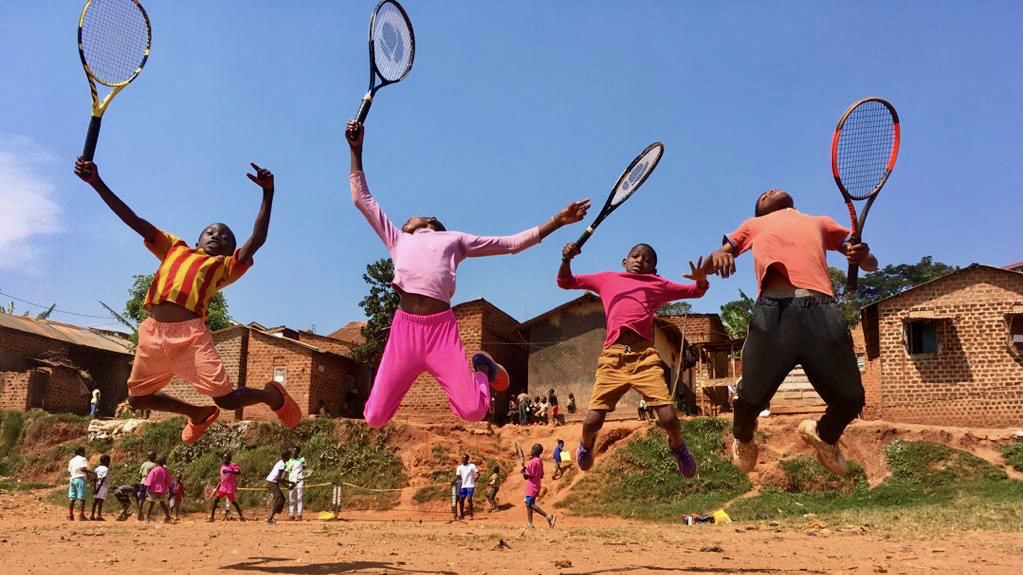
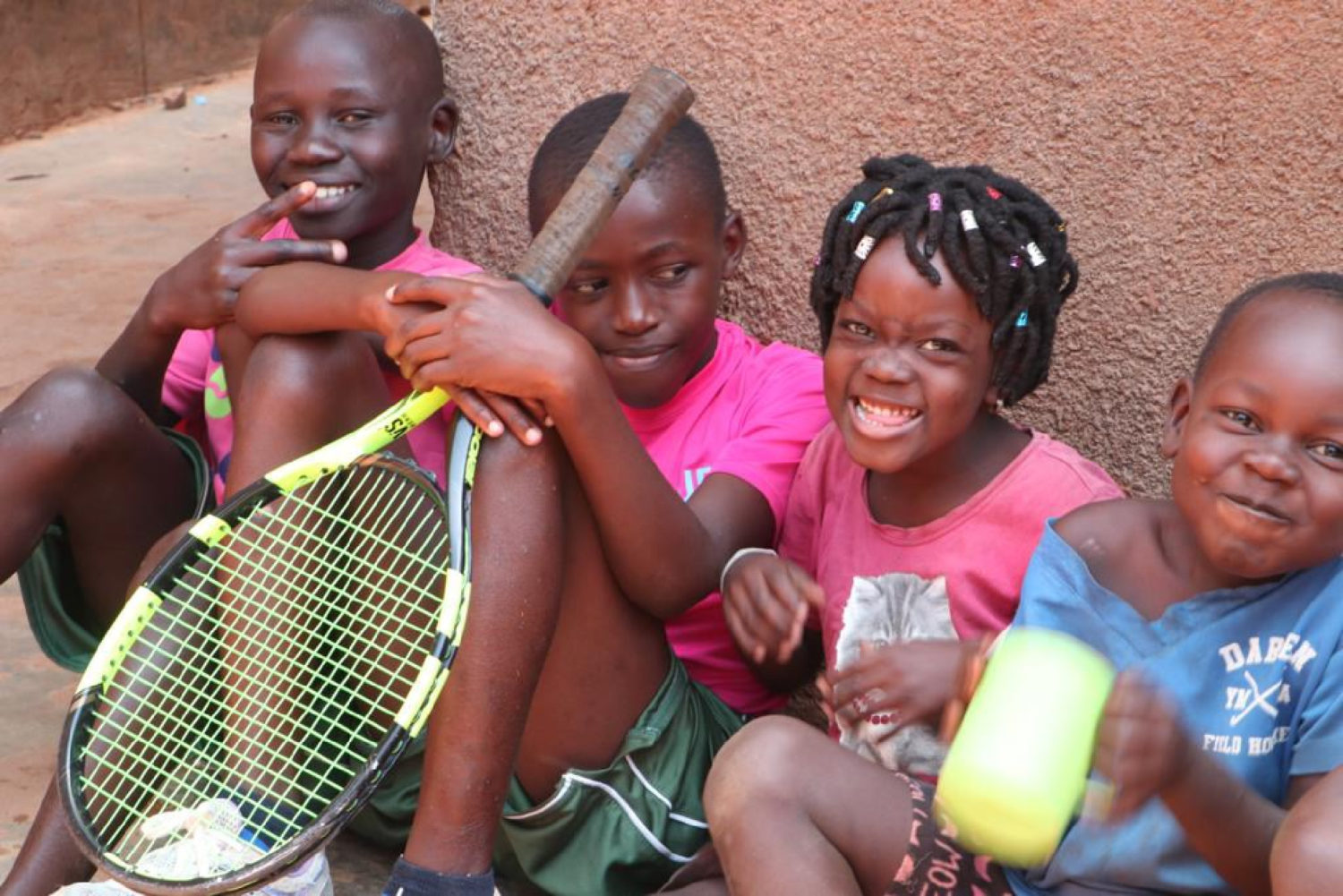
On an unusually chaotic day in the typically clamorous neighbourhood surrounding the red dirt courts of the Acholi Quarters—one of the poorest communities in Kampala—former touring pro Vania King stands among six rows of young children, clasping her racquet while they grab theirs: colourful, plastic prototypes made specifically for young players. She shouts “ready position” and the kids mimic her jumping in place, feet shoulder-width apart, both hands on the handle. Next up: shadowing King on the forehand and the backhand. Out of nowhere, King then grabs a bucket of big red balls and tosses easy hitters, while student after student aims and swings—some of the youngsters get a piece of the spongy, rotating orb used for beginners.

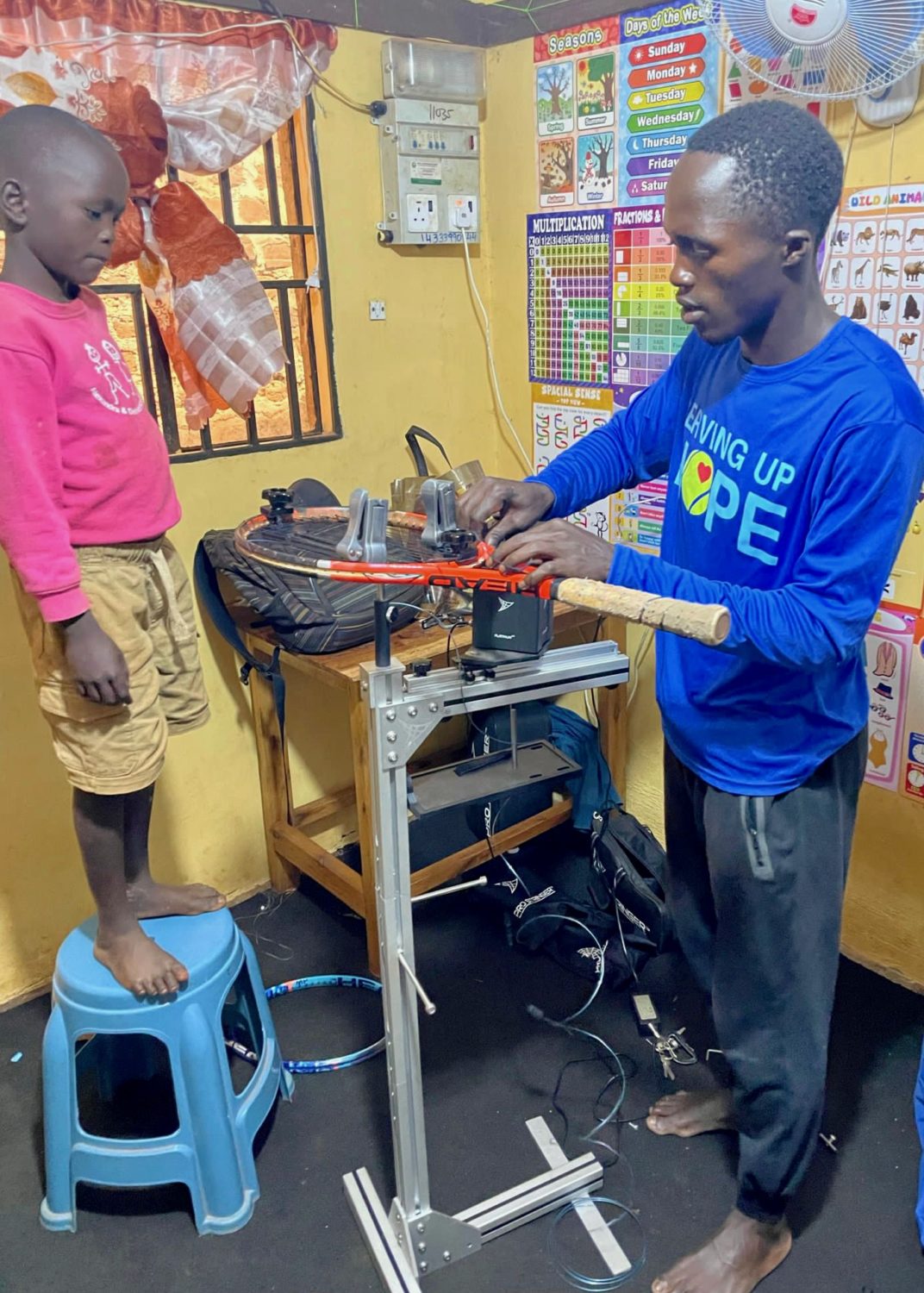
 “Nice try! It’s OK. Keep your eye on the ball!” King shouts encouragement. King had touched down in Uganda just a few days before in July 2022 directly from England, where she had played in the annual Wimbledon Invitation Doubles. She was hauling seven or eight bags stuffed with balls, racquets, shoes and bright-blue-and-pink-t-shirts with the words “Serving Up Hope” on the front—the “o” in HOPE a stencilled tennis ball with a heart in the middle. They promote King’s NGO, founded in 2020, as well as her new passion and career since retiring from the professional tour just two short years ago. 

“I had no idea that this would become what it has,” King says after the session. “Running an organisation is no easy task, but tough enough as it is, tennis has given me so many interesting, intersecting experiences and paths, I wanted to do something. 

“We started this at the smallest scale possible—30 kids playing every week—and now we currently teach 120 students annually.” Last winter, King took two stand-out players to South Africa to play their first international tournaments. 

In her heyday, King played for full stadium crowds at Wimbledon and the US Open, reaching a career high rankings of WTA No 3 in doubles and No 50 in singles, while picking up two Grand Slam Doubles championship trophies—Wimbledon and the US Open—along the way. At age 30, however, hampered by injuries and looking for change in her life, King called it quits at the 2021 Volvo Open in Charleston, South Carolina and returned to Uganda where she had found a mission. “I fell in love with the place and the people and I saw incredible need,” King says. “And I realised that volleying drills can be done anywhere—you just need a racquet and a ball.”

Serving Up Hope is one of several successful efforts to reignite professional tennis in sub-Saharan Africa. Previously led by South Africans in the 1960s and then Kenyans in the 1980s, from around 1995 to 2015, the continent experienced a drought of talented Futures and Challenger-level players, especially juniors, as governments struggled with stability and tennis associations across the region staved off corruption. Africa still has only one professional in the Top 10 of either the WTA or the ATP tours—WTA No 7 Ons Jabeur of Tunisia—and none from sub-Saharan Africa in the top 100, unless you count players whose parents were born in Africa and emigrated. But over the past seven or eight years, beginning with several International Tennis Federation (ITF) interventions, Africa is experiencing a tennis resurgence that could allow several players from previously unrepresented countries finally reach the top echelons of the sport. 
© Vania King

“We have a lot of good players in Africa,” says William Ndukwu, a London-based tennis coach and father of an emerging junior. Ndukwu started out as a ball boy at a Nigerian club and finished his career on the ITF World Tour, and has now coached his daughter, Alisha, 13, to the top 1,000 ITF Juniors in her first year. “But when you’re in a match and think about paying rent by winning the next game or helping your sick mom by getting to the final, you don’t play very well. That’s been the situation for a long time,”

The story of Africa’s emergence and then resurgence in the tennis world actually begins in 1971, when while waiting for the apartheid South African government to approve his visa to play at the South African Open in Johannesburg, Arthur Ashe and his pal Stan Smith went on a 2,500-mile tennis expedition of six African countries—Kenya, Tanzania, Zambia, Uganda, Nigeria and Ghana—giving tennis clinics, granting interviews and playing exhibition matches. Over the course of the next five years, Ashe played the first integrated tournament in South Africa, discovered French sensation Yannick Noah in Cameroon, attempted to set up a pro-tour in sub-Saharan Africa and quickly left that behind when, while playing at a tournament in Lagos, Nigeria, he was marched off court at gunpoint, during a political coup. After that, Ashe turned his efforts to tournaments in the States, Davis Cup and his health. 

More than 40 years later, several players from the Sahel region started gaining the attention of the ITF. Realising their potential, the ITF began its Grand Slam Player Development grants, giving Africa’s top players up to $50,000 to cover touring expenses and coaching. “Sometimes, a city doesn’t even have a sports shop that sells racquets. If you find one, it can ultimately cost three times the price of one in Europe,” says Frank Couraud, the development projects administrator at the ITF’s central office in London. Next, the ITF opened training hubs in Casablanca, Morocco and Nairobi, Kenya, to nurture future professionals’ ability—an effort that was recently relocated to Sousse, Tunisia, thanks to a partnership with the Tunisian Tennis Federation. The African Regional Training Centre will offer state-of-the-art facilities and provide talented players aged 13-18 with full-time training, schooling and competitive development.

It’s a good start, says Wanjuri Mbugua-Karani, the Secretary General of Tennis Kenya and a former top-five player in her home country, but it’s still not enough. “The big corporations… see Africa as a small market and therefore, no need to invest,” she says. 

 Mbugua-Karani estimates the required amount to be about $100,000 a year. “Africa has been able to produce very good junior players, but at the age of 16–18 when they should start playing professional tournaments, they lack the funds for travel and accommodation. “Africa needs to find a source for individual player sponsorship and for tournament sponsorship so we can hold ATP and WTA tournaments on the continent to greatly reduce the amount of travel expenses and foster a tennis culture here.”

Into this situation, King somehow stumbled. Her story starts out rather conventionally: on a break from the Tour, King went on safari to see mountain gorillas in Western Uganda. Following that, she started making a couple transcontinental trips per year to Uganda, always exceeding her luggage allowance. Soon enough, King decided to make her ventures legit, founding Serving Up Hope—one of the few tennis non-profit development organisations led by Grand-Slam-winning professional tennis players. It is currently the only one in Africa to offer both tennis lessons and STEM programming for underprivileged children. 
© Vania King

“Playing tennis, we are so hyper focused on what we are doing—we sacrifice everything for it,” King says, explaining the reasons she is one of the few players to parlay a former tennis career into NGO work. “It’s not really until I stopped that I could try new things. 

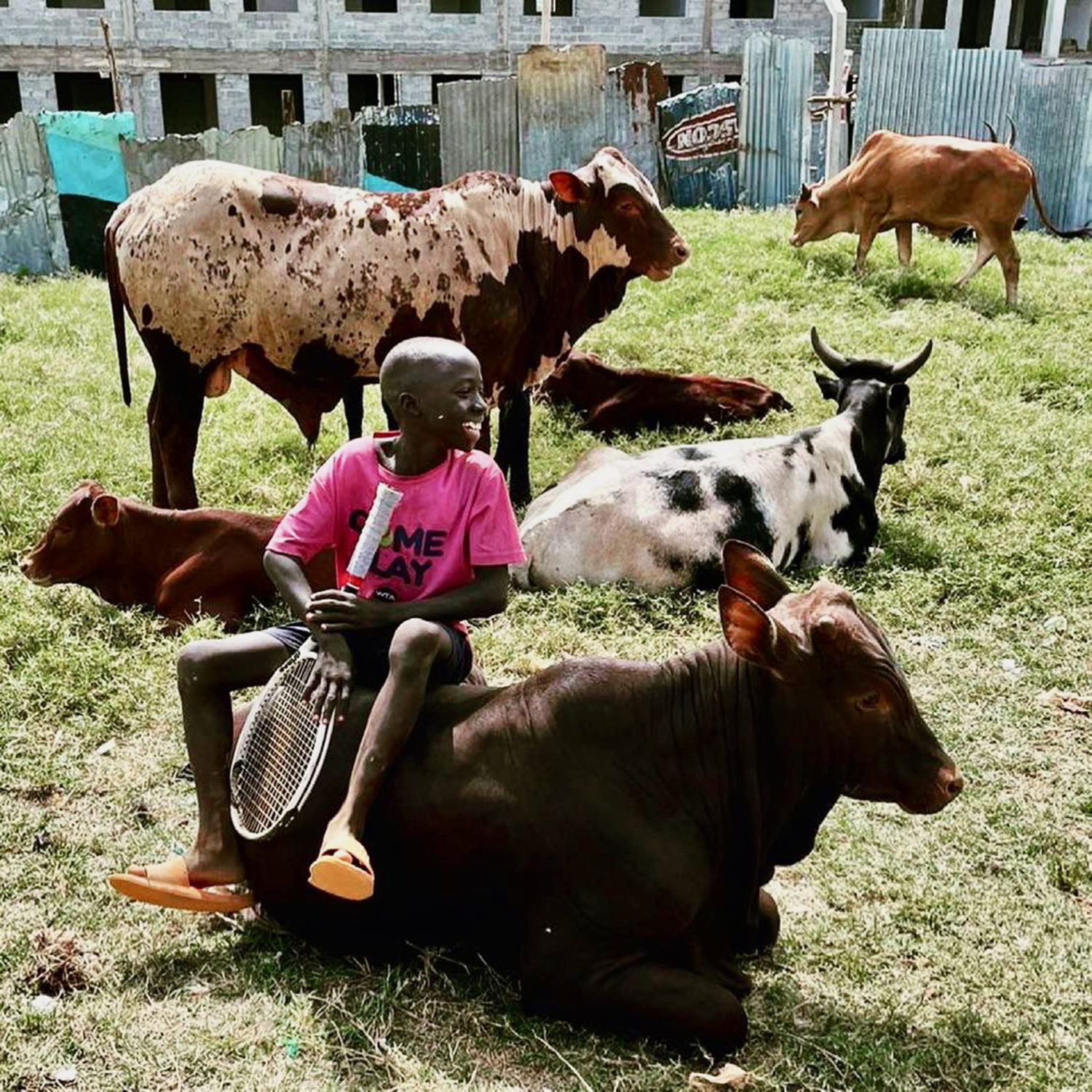
“These are kids whose families make less than two dollars a day. For them, tennis is an opportunity that they otherwise wouldn’t see. That’s our goal—using tennis as a platform to provide opportunities on and off the court.” 

While King takes on Uganda, many other local tennis associations and other patrons, especially Nigeria and Ghana, have started putting more money into tournament and training infrastructure—many with the aim of gaining junior sport scholarships in the States. “Our foundation basically tries to get players ready for these scholarships. We pay for their SATs, ensure they have their O levels and also sponsor them to play tournaments so that they can improve their level of tennis,” Fuad Quadre, the founder of Fusion Tennis Foundation, told Nigeria Tennis Live, a site created to cover local tennis, including juniors.

“Apart from helping them boost their rankings, it will also improve their tennis to a reasonable level that can impress these schools where they will be applying for the scholarship,” added Quadre, the older brother of Oyinlomo Quadre, ranked No 92 in ITF Juniors and a sophomore playing at Florida International University. “These are some of the things the kids are not privileged to have, that’s why our foundation is there to support these kids to help them get these scholarships.”

A few of the main factors that programs such as King’s offer—thanks to her connections to the WTA—are the provision of equipment, which is hard to get shipped to needy players in Africa, exposure abroad and transnational and international visas. The African Union had once looked at scrapping visa requirements for all African citizens as part of its “African passport” campaign, but that has been abandoned until at least 2063. King also provides a discriminating eye in terms of choosing coaches and administrators for her program.

Most of all, the majority of sub-Saharan African countries have one singular problem that the majority of strong tennis nations have overcome: a lack of investment foresight by the sport’s kingmakers. Compared to Europeans who side-step into the U.S., Europe and most other tournament countries, where they can play as many matches and talk to whatever investors they please, “Africa needs the big sports brands to come here,” Mbugua-Karani says. “We need to bridge the gap where they turn pro. This is an area of investment potential in Africa, and I believe that the time of Africa is coming very soon.”

But besides King and former pro Mary Pierce who coaches from Mauritius, few former players want to get into the NGO game. King has currently  put a bit of a halt on expansion into more countries as she makes plans to build a tennis centre in Uganda, but she has found a new passion project. 

“I’ve been working with the Ugandans hand- in-hand for two years now and it’s been challenging, learning and growing through that—I’m not trying to be the foreigner that dictates things but to make this a joint endeavour,” King says. “Seeing the kids transformed and how I have transformed with them has made it incredibly worthwhile.”


Story published in Courts no. 4, Summer 2023.
© Vania King

Marcus Willis: on the Comeback Tour

Most players call it quits at 32, Willis is just getting started

The grounds of the LTA Nottingham Tennis Centre are covered in extra- extra large signs—no matter the time of year—reminding passers-by of the Wimbledon warm-up that takes place there every June. But the place buzzes year-round with up-and-coming ITF Junior and Futures events, in addition to ATP and WTA Challenger tournaments. 

But there is Harriet Dart on the comeback tour, juxtaposed with a gigantic photograph of Harriet Dart clenching her fist in victory on her way to the 2022 semi-finals. Two courts over, another English cause-celebre is practicing his volleys looking to redeem his first-round loss the week before. He’ll go on for his first round directly after Dart with doubles partner, Scott Duncan, and push the match to even with an ace and two unreturnable serves before winning in a tiebreak. 

“When I’m in big moments, I just focus on me. I forget the score. I take myself to that practice court and just hit the serve,” Willis says post-match in the café while having a double-espresso. “It’s very easy to whip through matches and focus on the score and not think about how you’re going to play your best matches.

“I don’t know that there is a huge difference between that match and a challenger match. It’s really hard to get out of these tournaments and I’ve won quite a few. My goal was to be top 500 by July, which is still 100 points. I still have work to do, but my comeback has gone a lot better than expected.”

It’s a comeback that few fans anticipated, however. 

By early 2020, Willis had, admittedly, “fallen out of love” with the sport. The pandemic was in full swing, the British Lawn Tennis Association (LTA) had closed all the courts and Willis—now with a wife and a four-year-old daughter—had been struggling with injuries. He was back in Warwickshire, back at the school where he had taught, back giving lessons as a teaching pro, with no end in sight. 

But Willis had already had his day. In 2016, the then-25-year-old came from seemingly out of nowhere, beat then-unknowns, Andrey Rublev and Daniil Medvedev, in the Wimbledon qualies and ascended to the main draw at the third Grand Slam of the year and England’s premier tennis event. He won his first-round match only to wind up on Centre Court to face none other than Roger Federer. The six-foot, four-inch, No 772 in the world, fell to the man who has been called “The Maestro,” but received a standing ovation despite losing 6-0, 6-3, 6-4.

Nonetheless, the “big dance” followed. Media, agents, sponsorship, World Team Tennis and other perks came and… went. Willis returned to his corner of the world. “One minute everyone wants to speak to you and help you and the next minute they’re all gone. And then you’re injured and maybe not so enthusiastic and then you realize you don’t have that many friends,” he said in mid-May. “A lot of people—they’re not bad people—but they go away. 

“I have to accept if I get where I want to get, things are going to happen and I just have to take it with a pinch of salt and move on—try to do what’s right for me and my family. I don’t analyse it too much because I don’t get anywhere with it. It’s good fun and part of the job, but’s that’s it.”

Lighting rarely strikes twice. Most people seldom get second chances. But Willis seems to be one of those—tall, handsome, charismatic and charming—on which the tennis gods have smiled. Last year, a member of his local club, the Warwick Boat Club where he was teaching for £30 an hour, asked if Willis wanted to leave his job teaching to join the tour again and agreed to put up the money. Willis didn’t have to think long before accepting, but with a twist: instead of singles, he has focused on becoming a doubles specialist with new partner, Scott Duncan. So far, the two have notched victories in France, Spain and all over England. They are aiming for the ATP Challenger Tour and with some luck, a Wimbledon Wildcard. 

“I took a couple years off, got married, had kids and got a couple of injuries. I think I fell out of love with the sport with a little bit. I wasn’t thinking about coming back and then I got this opportunity,” Willis says. “I told him that I’m going to need a few months to train. And he said ‘I’ll look after you, whatever you need.’” But Willis, despite his onetime Wimbledon run, had to start at ground zero, no exception. 

He started in 2022 at an ITF Futures tournament at Roehampton with his partner at the time, current ATP No 556, Mark Whitehouse. But the two couldn’t immediately get on the draw because Willis wasn’t ranked and wildcards were not available. Willis and Whitehouse signed in on site, and went as third alternates. Luck prevailed.
Someone pulled out and two others left the premises. While I’m practicing, I get a text that says, ‘you’re on,’” Willis recalls. Willis and Whitehouse played against his current partner Scott Duncan and won on match tiebreak. Out of nowhere, “I’m on the ATP board again!” Willis says. “Without that piece of luck, I wouldn’t be here now.”

The next week, Duncan and Willis talked and decided to join forces, specialising in doubles. They had early success, winning tournaments in France and Spain before struggling on tour. “I remember thinking, ‘Maybe I’m not good enough anymore.’ I felt like everything was so quick, I couldn’t react to it. I was miles off. In hindsight, I hadn’t played enough tennis.” But Willis’ wife, the former model and NHS dental surgeon he married in 2017 kept the faith, as did Duncan. “I like playing with a guy who is as good and as talented as Marcus,” Duncan said from Barcelona, where the pair has been playing the the MT200-Barcelona Tournament. “He’s got a big serve and great hands around the net. He moves the ball around the court very nicely. I think we can go far.”

But surprisingly, Duncan knew very little about Willis’ past. 

Born in 1990 in Slough, England, to an accountant father and a teacher, Willis began playing tennis at age eight, a bit late for tennis, but with an aptitude gained from badminton. He attended the Forest School in Winnerish, where he later taught tennis, and started playing tournaments at age 14. With a natural ability, Willis ascended the rankings quickly, reaching a high of No 15 in the ITF junior world rankings in September 2008. But Willis didn’t take his calling quite seriously enough. After being sent home from the 2008 Australian Open by the British Lawn Tennis Association (LTA) for his “slack attitude” after missed the bus to a practice session and then arriving without racquets, Willis floundered a bit—a condition he has attributed partly to the LTA’s former attitude toward juniors. 

“The coaching was amazing, but there was no human connection. On a Friday, it would be kind of like, ‘ok everyone, see you on a Monday’—no sort of relationship. And when the results were bad, it was your life, your fault,” Willis says. “ It’s a cutthroat industry. I felt I was given everything or nothing. It was a lot of pressure. At 19, 20 years old, I was by myself traveling all over the world without an idea of how to deal with anything. 

“I wasn’t that lucky when I was younger; I didn’t do the right thing all the time. It’s very easy to forget who you are and what you are doing and get very wrapped up in all of that other stuff.”

Willis considered the U.S. college system and “would 100 percent do it now,” but that wasn’t an option in England in the 2010s. “People who played in college, played and left and went to a nice job on Wall Street,” he says. “They didn’t go to the pros back then.”

That’s changed. But so has the man from Warwick. 

Once known for a bit of a “devil may care” attitude and earning the nickname Cartmann for his rugby-sized body, Willis survived some scuttlebutt in the tennis press for snacking on a Snickers and a Pepsi during matches. Not anymore. “I remember in my mid-20s, I would play tournaments, and I was going out after matches, and just not living the lifestyle that goes with professional sport,” he says. “So now, I am the opposite.” Every day now begins with a cold shower, Wim Hoff breathing, a healthy diet, two or-three hours on court, plus a post-match cool-down and weights. At friends’ houses across England or a cheap hotel, Willis is home at night, usually watching “the footie” on TV. His team: Liverpool. 

“It takes time to shake off that old reputation,” he says. “People still look at you… I won a match last week and a guy stopped me and said, “are you going out on the town to celebrate?” And I said, “No, I don’t drink anymore.”

Doubles partner Duncan was surprised to hear the nicknames and of the previous press. 

“I think we’ve put ourselves in a good spot to achieve something has dreamed about since a kid, and it would be nice for me to share the court with him,” says Duncan, a Scottish player whose “gran used to take me around the tennis club in a pram and I used to pop out and look around at the matches.” “The road is a lot more fun when you’re with someone. Me and Marcus get on well on- and off-court. We share accommodation to keep the costs down, but in those hours, we can also support each other, analyse our matches and run ideas and plans. 

“He’s good as gold as a professional.”

Willis knows, however, that at age 32, he has a time stamp on his back, even if he “doesn’t have to run around and find out on a singles court,” how good the next generation is. 

“I have a young family. I can’t be messing around. I’m finding ways to maximize without overloading pressure on myself,” Willis says. “We lost in the first round last week—didn’t play a great match. But I’m just focused on playing my best tennis every match and then I know how good I’m going to be. No regrets, no looking back.”

Even on the Federer match?

“He’s retired now, and I’ll never have a chance to avenge it. But I wasn’t massively star struck because I wanted to win the match,” Willis says. “I knew it was a big deal and I knew he was probably the best player on grass. I had respect for him, but I wanted to win and when I came off the court I was disappointed that I lost. 

“It’s only now that I look back and think now that it’s pretty cool I got to play him. But I would feel the same if if I played Rafa or Djoke or Andy. He didn’t give me anything that day. And I wouldn’t expect anything else. But when people ask, what’s my best day, it was that Monday when I won the first round or it was winning qualifying. But it wasn’t that day… because I lost.” 


Story published in Courts no. 4, Summer 2023.

The Musketeers

© Marine Corsetti
© Marine Corsetti

I must warn you. The only tension in this story is in the racquet. There are no unexpected twists or sudden turns. No, this is a story about patience and precision. It’s about a group of people who use terms such as swingweight, epoxy resin and carbon fibre. People who, at times, seem to speak in tongues when—eyes burning with a particular kind of fever—they explain to you how adding three grams of weight to this part of the racquet affects its ability to transfer energy to the ball, and how it, in turn, directly correlates to the power of a shot.

In the world of racquet manufacturing, the abundance of choice is enough to make one’s head spin. For the uninitiated, it can be extremely difficult to settle on a particular racquet. Faced with the dazzling selection, quite often we tend to turn towards the trusted brands—the industry heavyweights endorsed by such titans of the sport as Rafael Nadal with his Babolat Pure Aero or Novak Djokovic with the HEAD Graphene 360 Speed Pro. The cost may be steep, but how can you go wrong with a racquet that delivered so many Grand Slam titles? Here’s where the people mentioned in the opening paragraph will disagree. They will smile at each other, a little bit like croupiers in a casino, already knowing whether you won or lost. 

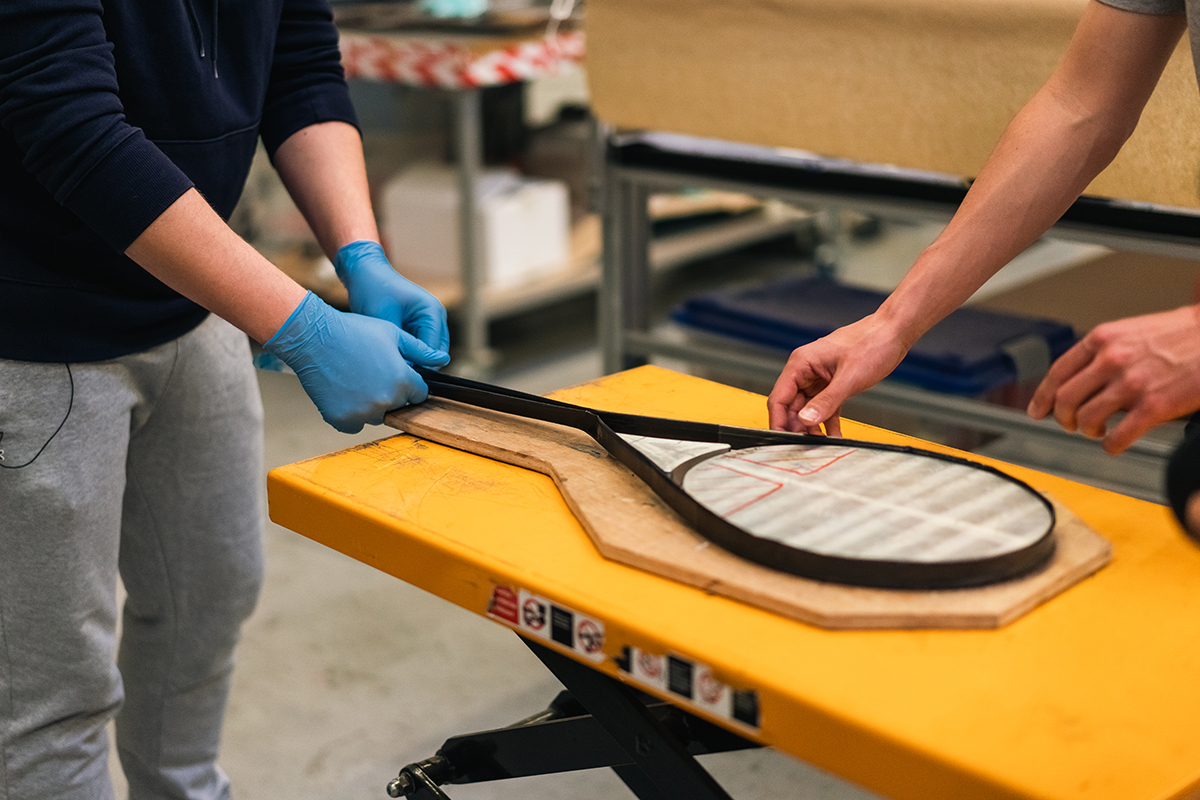
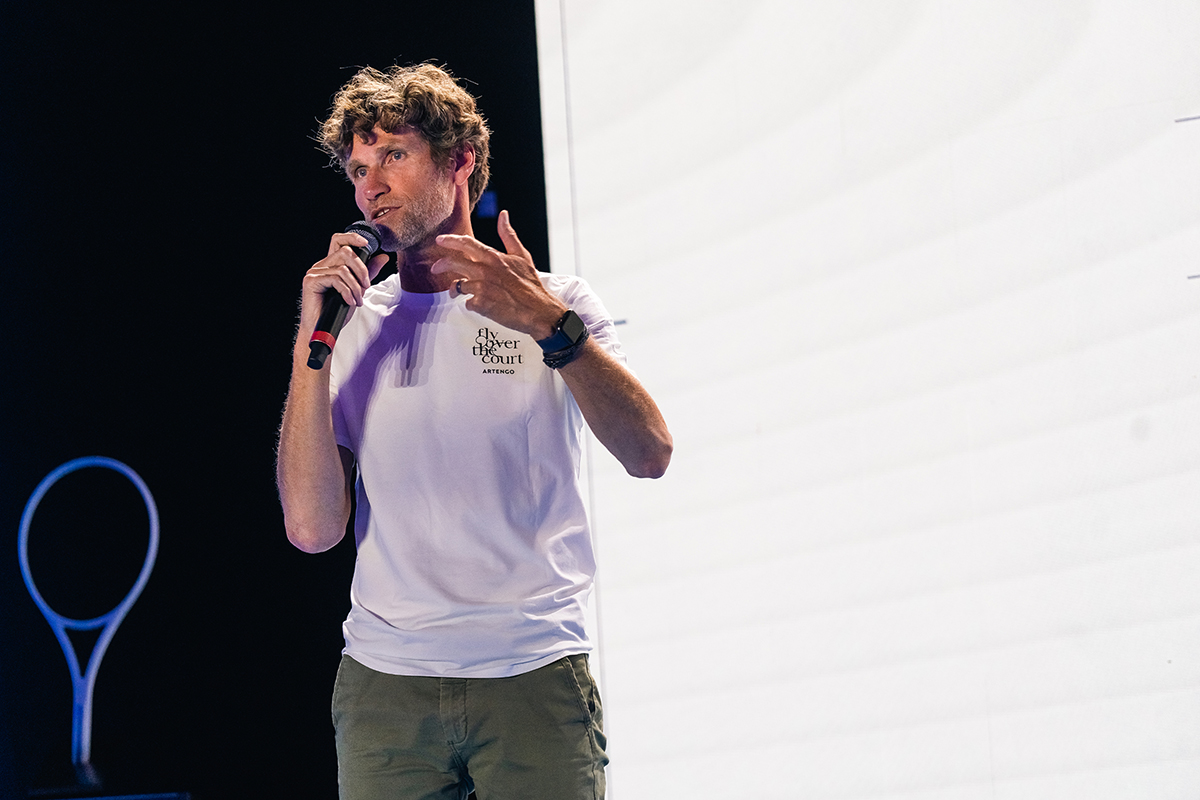
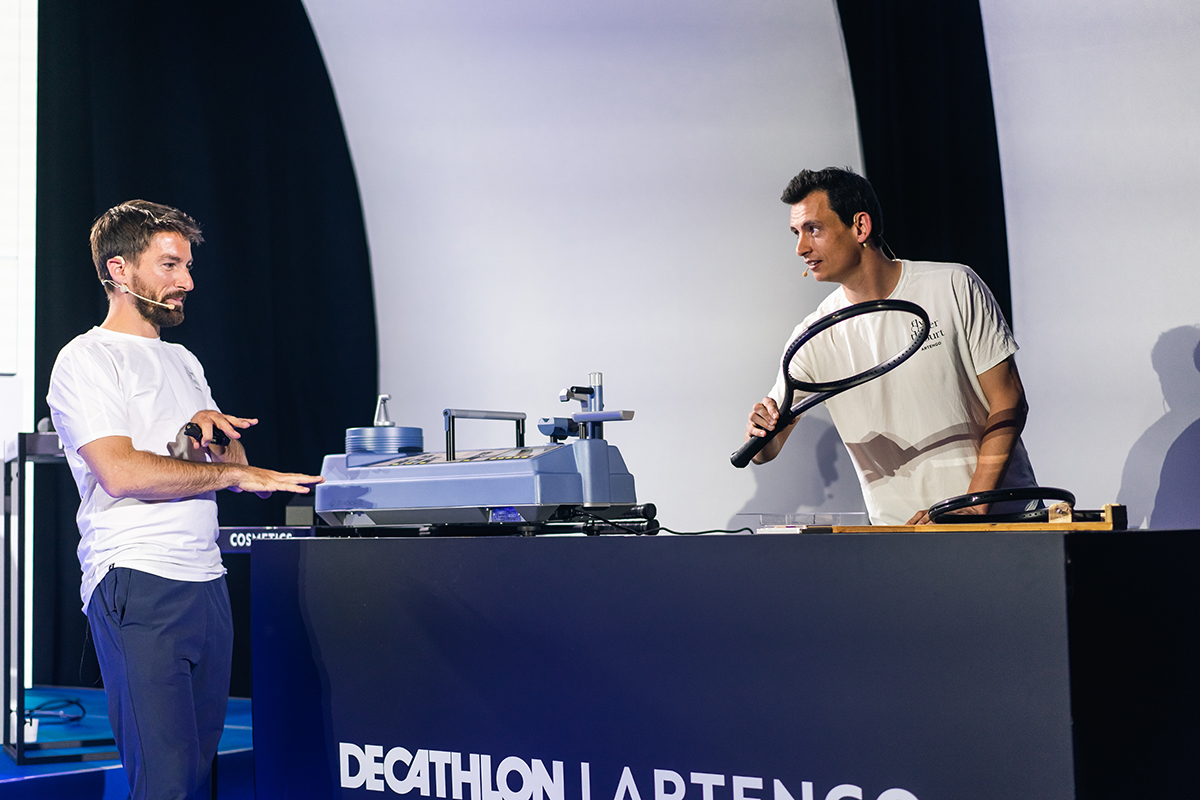
It’s a common enough misconception. And in April of this year, Artengo, Decathlon’s tennis equipment arm, took a surprising and a fairly radical step to dispel it. In Villeneuve d’Ascq near Lille, the brand’s headquarters, a group of engineers, designers and racquet experts gathered to manufacture a piece of equipment in real time. It wasn’t so much a glimpse behind the curtain, but a forceful gesture of ripping it off. “At one point, I showed all the plans and scientific data to the camera. It’s like giving away the code to your safe,” explains Paul Forichon, Artengo’s racquet engineer. “Anyone can replicate our racquet. But we have nothing to hide because we’re proud of what we do. If a competitor wants to copy our racquet, we don’t care because no matter what, they will sell it at a higher price.”

Although racquet technology has enjoyed significant advances over the past three decades, Artengo believes that the models sold currently by the world’s most popular brands don’t justify the price. “A racquet should not cost €300. It’s not worth that much,” says Cyril Perrin, director of Artengo. “Artengo alone cannot revolutionise the industry. Changing mindsets will take time.”

© Gary Romagny

Traditionally, Artengo’s products ranked far below those of its competitors, both in price and in public perception of quality. While the first aspect is considered one of Artengo’s best assets, the second poses a significant problem to its marketability. Recently, Artengo struck a partnership with Gaël Monfils, a leading French tennis player who, as of writing this article, is delighting the French public with his improbable exploits at this year’s French Open. The move, aimed to expand the brand’s popularity and wider appeal, works in the same vein as the sponsorship deals that more established brands, such as HEAD or Wilson, sign with their players. And yet, the stigma of Artengo as a beginner’s racquet prevailed. “We received, and Gaël did too, many messages saying that it was just a disguised racquet, that it’s a Wilson in disguise. Honestly, it bothered us a bit,” says Perrin. 

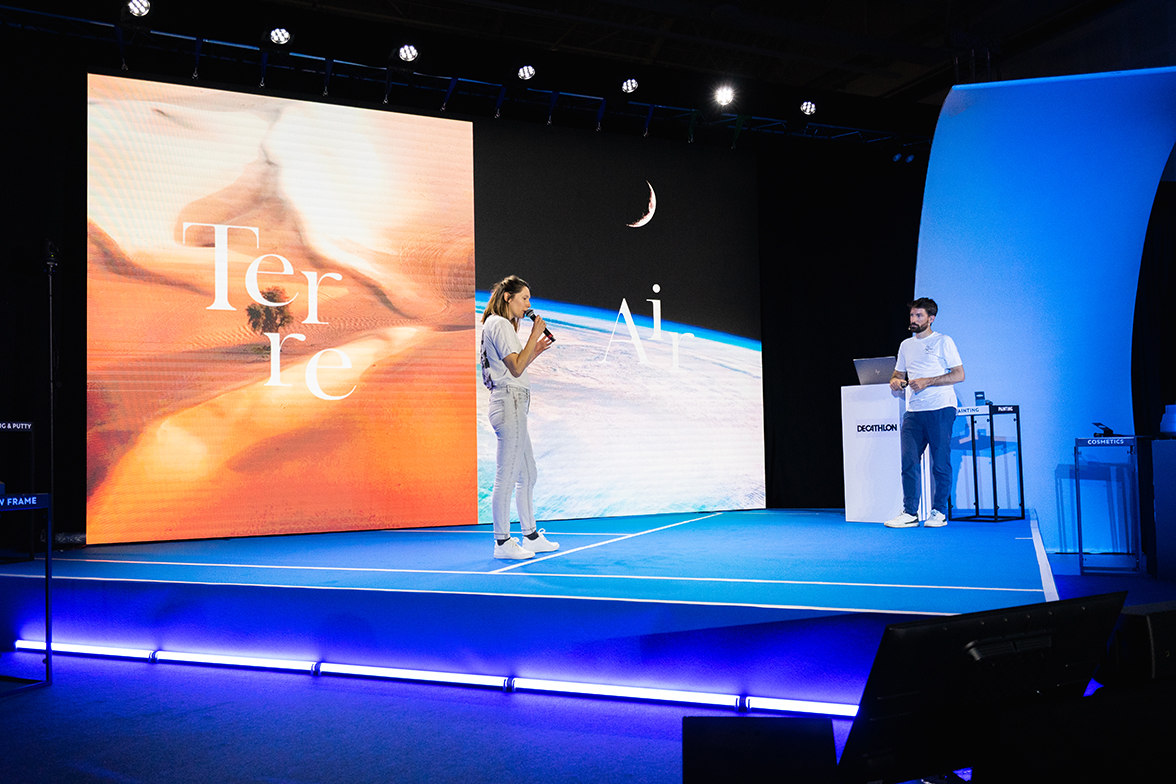
The messages might not have been the main motivation behind ACE, the Artengo Conception Experience event in Villeneuve d’Ascq, but it played a role. “This event is in line with our desire to show that we are true racquet designers,” Perrin says. The company took an extraordinary step. For two hours, Artengo professionals took the stage to fully explain their manufacturing process—from the conception of an idea to the finished product landing on the shelves of Decathlon stores.

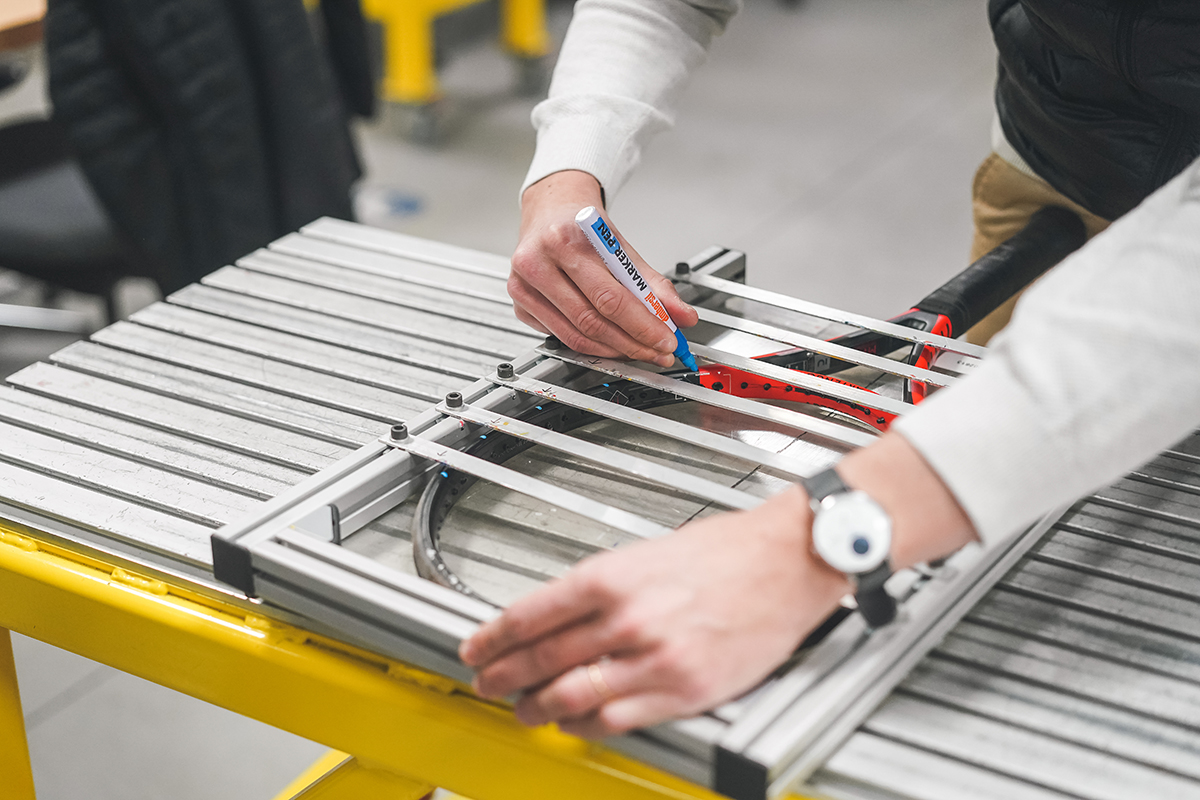
With a live stream from multiple workshops, Artengo presented the many stages of creating a tennis racquet. The intricate process of placing epoxy resin combined with carbon fibre into a racquet-shaped mould, heating it up to 160°C for about half an hour, manually removing imperfections created by the heating process, applying colours and visual details, and finally stringing the racquet. Voilà! The product is ready to hit the shelves. What the demonstration didn’t show, although it explained it in detail, is the three-year long journey of design iterations that a product undergoes before it’s ready to be manufactured. “Currently, I’m working on products that will be available in stores in 2025,” explains Laure Pétré, responsible for artistic direction at Artengo. “I’m anticipating the strong trends that will be present in the tennis market at that time.”

During the evening, Artengo explained the ethos driving the brand and the need to stay on top of recent developments. One of the more visible changes in the game is the spin that players hit the ball with, and Artengo feels the need to be prepared to deliver. “The ability to generate spin, the spin segment, doesn’t necessarily come from the user saying they want more spin,” Perrin says. “But when we look at the evolution of playing styles, we see that people are putting more and more spin. Rafa [Nadal] has obviously contributed to this change.” Observing the trends happens at all levels—from the big, public stages to the smaller, contained ones. The main factor is the game development on both the men’s and women’s professional Tour. But Artengo also have their own secret lab—French Touch Academy in Cap d’Agde, with over 80 players serving as a petri dish of testing innovation. 

Through the partnership with Monfils, Artengo sought to improve their product line, showcasing their credentials as makers of racquets fit for professionals (the company has also added Daria Kasatkina, current world No 9, to their portfolio of athletes). But what the collaboration has resulted in was also a deeper understanding of the relationship between a player and their racquet. “When Monfils joined, we were unsure. We thought about customisation, using his preferences,” Pétré says. “Over time, we decided to find a middle ground and focus more on co-creation.” Monfils’s input improved the viability of Artengo racquets at the highest levels of the game. But it also added nuance to the racquet manufacturing process overall. “By learning from Gaël, we also learn for [the benefit of] a beginner player. The two are completely correlated,” adds Perrin.

© Marine Corsetti

However, Paul Forichon notes that what’s best for the players of Monfils’s calibre, may not be best for a weekend warrior. This is due to a number of reasons from the obvious differences in level (you and I are very unlikely to be facing serves approaching speeds that Monfils does) to the racquet’s technical aspects. “Even though the sensations between professional players and recreational players are completely different, the process of translating sensations into technical characteristics within the different layers of the racquet is the same,” adds Perrin. In the end, it’s all about handing a player a racquet they will feel comfortable playing with. “We want to provide people with the right racquet, not the racquet,” Forichon points out. 

Artengo is a relative newcomer to the racquet manufacturing field, but they are already looking towards the future. In the next few years, the company hopes to have a line of aluminium based, eco-friendly racquets. “Zero waste is not possible,” acknowledges Perrin. “The goal is to minimise waste as much as possible without drastically changing its [the materials] use. However, there may come a point where we are forced to modify the usage by incorporating alternative types of fibres. The game has evolved towards the use of increasingly rigid racquets and carbon materials. Perhaps we need to revert to more flexible options to find alternatives to carbon and reduce pollution.”

The game’s well-acknowledged impact on the environment is something that plays on Artengo’s mind a lot, and the manufacturer is already experimenting with possible alternatives. The aluminium based racquets already have their prototypes within the Artengo lab. “We want to create a product that performs just as well but has a reduced impact,” explains Forichon, who is also responsible for the brand’s sustainability. 

Artengo’s message is clear. Just because a racquet is cheaper than those of the market leaders, it doesn’t mean that it’s in any way worse. A well-known logo attached to the frame, also doesn’t translate to its potential for high-level play, as Monfils’s achievements showcase. Cyril Perrin, Paul Forichon, Laure Pétré and the rest of the Artengo team pour hundreds of hours into development, iteration and testing of the initial product design, hoping that the end result can not only match the current developments in the game, but exceed it. The next time you head to the courts with your trusty racquet—be it Artengo or any other—spare a thought for the trio, probably hunched over this racquet mould or that sample of epoxy resin. They may be far, but they are thinking about you. 


Story published in Courts no. 4, Summer 2023.
© Gary Romagny

Sébastien Grosjean

« on sent l’histoire au moment de pénétrer sur le centre court. »

Sébastien Grosjean © PANORAMIC/beIN SPORTS

À l’occasion de Wimbledon, qui se déroule du 3 au 16 juillet, l’un des consultants vedettes de beIN SPORTS, diffuseur exclusif du Majeur britannique, a livré à Courts Mag son expérience et son expertise sur le tournoi le plus prestigieux du monde. L’ancien numéro 4 mondial, deux fois demi-finaliste en 2003 et 2004, revient sur son rapport privilégié avec cette épreuve mythique et nous dévoile ses pronostics pour cette édition 2023. 


Courts : Depuis 2014, Wimbledon est diffusé sur les antennes de beIN SPORTS. Cette année, le tournoi sera proposé en intégralité sur deux antennes, avec de nombreux journalistes et consultants. Pouvez-vous nous en dire davantage sur le dispositif de cette édition 2023 ?

Sébastien Grosjean : Nous sommes évidemment sur place. Nos équipes se répartissent sur la terrasse, proche des courts N°14, N°15 et N°16, là où se déroulent nos plateaux du matin, ainsi que dans les cabines de commentaire du court central et du court N°1 et sur le balcon, où nous effectuons nos interviews après les matchs. Nous avons également une équipe qui reste à Paris pour les émissions et d’autres commentaires.     


C : Sur place, vous louez une grande maison pour toute l’équipe, comme c’est de tradition pour les joueurs et les médias ?

S.G. : Cette année, on logera dans deux maisons. Il y a quelques années, on occupait une grande maison tous ensemble, journalistes et consultants. Maintenant, on habite dans deux plus petites maisons, de 4 ou 5 chambres chacune, que Frédéric Viard réserve pour tous ceux qui viennent travailler sur l’événement. 


C : Le fait d’habiter ensemble et de vivre en communauté créé une atmosphère différente par rapport aux autres tournois ? 

S.G. : Oui, c’est vrai. C’est une tradition de longue date à Wimbledon. Quand j’étais joueur, c’était déjà le cas. Énormément de joueuses et de joueurs louaient une maison à côté du tournoi pour pouvoir éviter les transports ou venir se reposer entre les matchs, être un peu au calme. Aujourd’hui, cela se fait un peu moins, mais les télés et les médias fonctionnent comme ça. Cela créé une belle ambiance, un état d’esprit sympa. Même si on dispose parfois d’horaires différents, on se retrouve le matin pour le café ou le soir pour le dîner.  


C : Évoquons cette édition 2023. Chez les hommes d’abord, Novak Djokovic, vainqueur à 7 reprises dont les 4 derniers opus, est bien sûr l’immense favori. Voyez-vous un joueur, tel Carlos Alcaraz, récent vainqueur au Queen’s, lui poser des problèmes ou cela paraît encore prématuré ?

S.G. : Pour moi, Novak Djokovic sera très difficile à battre. C’est un joueur qui n’a pas forcément besoin de jouer beaucoup pour s’habituer au gazon. Il commence souvent doucement sur les premiers tours, mais cela lui suffit pour gagner des matchs et monter tranquillement en puissance. Certes, cela lui arrive de connaître quelques difficultés, comme l’année dernière en quarts contre Jannik Sinner qui menait deux sets à zéro, ou encore en finale, où il a laissé échapper la première manche. Mais il est toujours capable de gagner sans bien jouer, ce qui est une grande force. Le format en 5 sets, la surface et l’aura de Novak lui permettent d’avoir un ascendant sur tous les autres joueurs. Sur la durée, ses adversaires se disent que cela va être impossible de prendre le dessus en 3 manches gagnantes. C’est donc clairement le favori N°1. Malgré tout, c’est une bonne chose d’avoir vu Carlos Alcaraz remporter le Queen’s. Je le pense capable de très bien jouer sur herbe, car il se déplace à merveille, il a du pied et il est léger et explosif. Il possède aussi une belle main et il est joueur, il a donc toutes les armes pour s’épanouir sur gazon. On verra si les deux hommes s’affrontent en finale, mais pour moi il reste derrière Djokovic pour le moment. Il y a aussi Nick Kyrgios, mais il n’a pas pu jouer de tournois de préparation. C’est vraiment dommage, car il a tous les atouts sur cette surface pour aller déstabiliser Novak, comme il l’a fait l’année dernière. S’il joue cette édition de Wimbledon, il aura forcément moins de repères, contrairement à la saison dernière où il avait enchaîné les bons résultats avant le Majeur britannique. En tout cas, c’est ce genre de joueurs, puissant, avec un gros service, confiant et imprévisible sur le terrain, qui pose des soucis au Serbe sur herbe. D’autres joueurs qui disposent d’un super service, comme Alexander Bublik, peuvent être intéressants, mais ils leur faudra conserver un fort niveau de jeu durant 5 sets, ce qui me paraît compliqué, surtout face à Djokovic.      

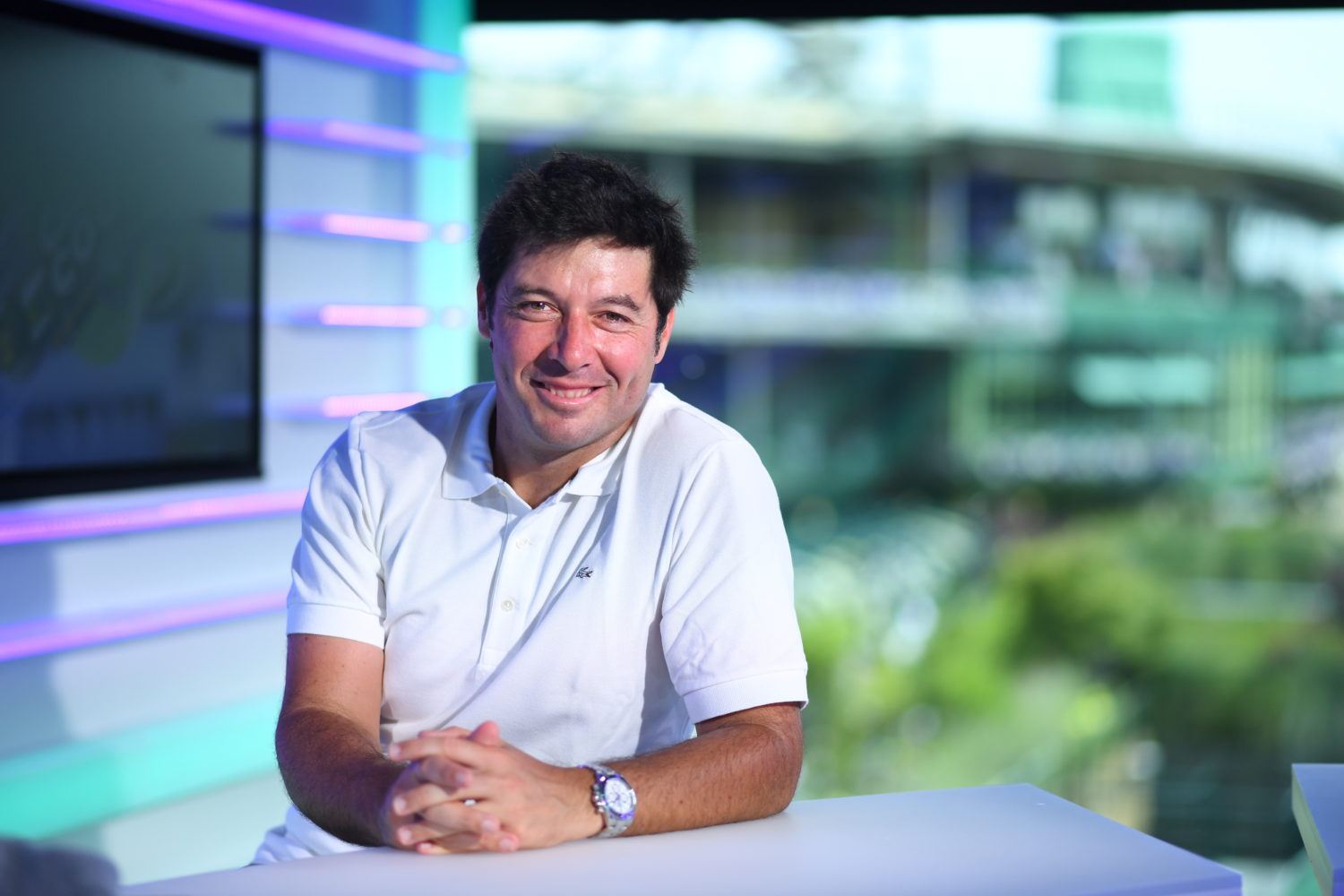
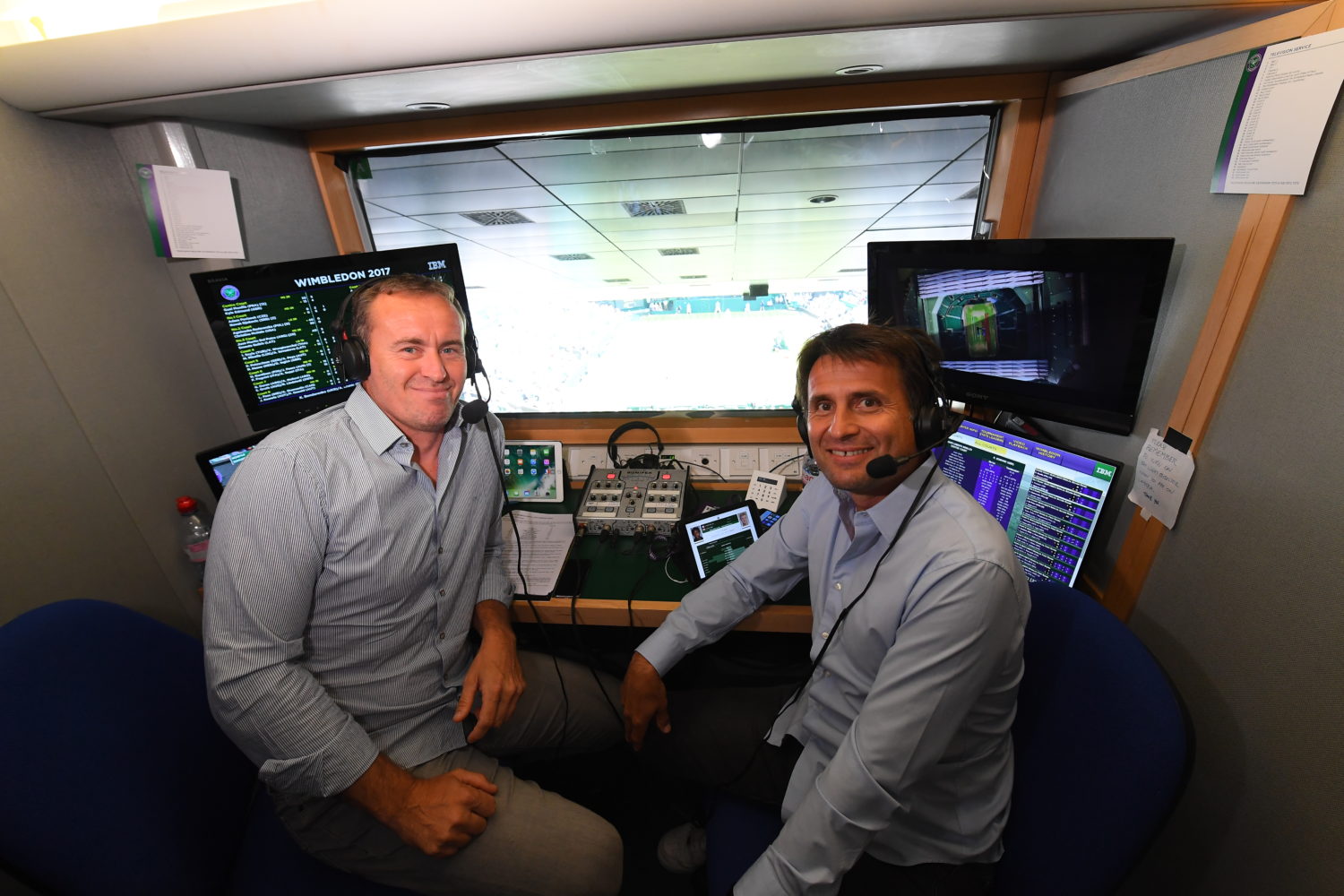
Lionel Buton et Fabrice Santoro © PANORAMIC/beIN SPORTS

C : Quand on regarde le palmarès des 19 dernières éditions, on ne compte que 4 vainqueurs différents, Federer, Djokovic, Nadal et Murray. Pourquoi, encore davantage que dans les 3 autres Majeurs, Wimbledon a été l’apanage de ces 4 monstres ? Est-ce lié à la surface ? Ou à la symbolique que représente un sacre dans le plus grand tournoi du monde ? Ou est-ce tout simplement le fruit du hasard ?

S.G. : La surface doit y être pour quelque chose. Aujourd’hui, tout le monde sait bien bouger sur dur. Même un spécialiste de terre. Sur gazon, c’est plus délicat. L’herbe demande la plus grande adaptation. Dans les déplacements, dans la manière de jouer, les démarrages, les contre-pieds. S’habituer à jouer avec une balle basse. Il se trouve que les tous meilleurs ont réussi à s’adapter à cette surface, encore davantage que tous les autres. Le meilleur exemple étant Rafael Nadal, qui s’est adapté à vitesse grand « V », car il a rapidement atteint des finales, avant de remporter à deux reprises le titre.         


C : Passons aux dames, chez qui c’est tout le contraire, puisqu’on trouve 8 lauréates différentes lors des 10 dernières éditions. Est-ce que vous imaginez une joueuse actuelle sur le circuit capable de s’installer dans les prochaines années comme « la reine du gazon » ?

S.G. : Alors d’abord, il faut préciser que ce roulement existe aussi dans les autres tournois du Grand Chelem depuis quelques années. Mais c’est vrai, depuis peu, trois filles sortent du lot : Iga Swiatek, avec ses 4 Majeurs, Aryna Sabalenka et Elena Rybakina. J’espère aussi qu’Ons Jabeur va revenir à son meilleur niveau. Elle a connu des blessures cette année, mais la saison dernière elle avait quand même joué deux finales de Grand Chelem. En tout cas, ces trois joueuses se dégagent. Je trouve que Swiatek est la joueuse la plus complète et la plus régulière. Elle est N°1, elle est devant les autres.  Et même si son jeu n’est pas le plus adapté au gazon, c’est une travailleuse, donc elle devrait trouver les moyens de progresser sur cette surface.   


C : Côté français, sur qui faut-il compter cette année ? Mannarino, Humbert, Gasquet chez les garçons, Garcia chez les filles ?   

S.G. : C’est bien résumé. Caro dispose des qualités pour très bien jouer sur gazon. Elle a déjà gagner quelques matchs, en simple et en double, avant ce Wimbledon. Cela va lui donner confiance et elle en a besoin avec son jeu offensif. C’est évidemment notre espoir numéro un. Il ne faut pas oublier Varvara Gracheva, qui vient d’être naturalisée. Chez les hommes, les trois que vous avez cité se plaisent bien sur herbe. La grosse différence avec Garcia, c’est qu’eux ne sont pas têtes de série. Ils ne sont donc pas protégés et tout va dépendre du tirage au sort. C’est notre problème actuel. On dispose de 12 joueurs dans les 100 premiers, mais il n’y en a aucun parmi les 35 meilleurs. Du coup, nos chances sur herbe peuvent très bien tomber sur un cador rapidement, ce qui change tout dans l’optique de faire un bon ou moins bon Wimbledon.      


C : On va parler peu d’histoire, avec un grand « H ». On qualifie souvent Wimbledon de tournoi le plus prestigieux du monde. Pour quelles raisons cette épreuve est-elle si mythique ?

S.G. : Déjà, c’est le seul Majeur qui se déroule dans un club privé. À l’époque, c’était également le cas concernant l’Open d’Australie et l’US Open, mais plus maintenant. Et, on le sait, Roland Garros n’est pas un club. Cela signifie qu’à Wimbledon, il y a des membres à l’année. C’est différent. Bien sûr, il y a aussi la tradition, comme le fait de jouer en blanc. Il y a un respect. Un respect pour l’institution. J’ai le souvenir du parcours entre les vestiaires et le Centre Court. Quand on entre, le stade est plein. Même chose pour la tribune présidentielle. Puis, pendant l’échauffement, il y a du bruit, mais au moment où le match débute, il y a un silence de cathédrale. C’est la chose la plus impressionnante qui existe sur un court de tennis. Ce silence nous fait entendre le battement de nos coeurs, nous les joueurs. La pression commence à monter. Là on se dit qu’on est dans un lieu mythique. Il y a aussi le fait de jouer sur gazon, bien entendu. C’est une surface particulière. On ne peut pas jouer trop souvent dessus, pour ne pas abîmer les courts. Donc, il y a des horaires d’entraînement très précis. On utilise aussi des chaussures différentes, aves des picots. Le système d’attribution des vestiaires est également différent. Comme c’est dans un club, il ne peut pas y avoir un seul vestiaire pour 150 joueurs. Donc, on trouve plusieurs vestiaires, en fonction du classement. Voilà, il y aussi les fameuses fraises, ainsi que les Pimm’s, pour ceux qui aiment bien boire. Enfin, il existe cette particularité d’aller acheter son billet le jour-même. On fait la queue pour récupérer le fameux sésame, certains plantent même la tente pour dormir la veille devant l’entrée.    

Fred Viard © PANORAMIC/beIN SPORTS

C : Parlons un peu de votre expérience de joueur à Wimbledon. Vous souvenez-vous de votre première venue ici ?

S.G. : Pas vraiment. C’est surtout ma venue en 1998 qui m’a marqué, pour mon premier tableau principal. J’étais allé jusqu’en huitième de finale et j’avais perdu contre Pete Sampras. Il avait gagné son cinquième trophée cette année-là. C’était quelque chose, un grand moment. Plus tard, j’ai enchaîné deux demies et un quart.


« La base de mon jeu et mes armes étaient encore davantage mis en lumière sur gazon »


C : C’est en effet un tournoi dans lequel vous vous êtes illustré à merveille. De manière générale, vous avez toujours été à l’aise sur gazon, n’est-ce pas ?  

S.G. : J’ai toujours su rapidement m’adapter à cette surface. Mon jeu s’y plaisait bien et je bougeais comme il fallait. J’aimais vraiment jouer sur herbe, je n’avais pas besoin de forcer mon jeu pour y performer. Mon style, mes frappes à plat, tendues, correspondaient bien à la surface. Mon service rebondissait plus fort, mon coup droit partait bien. Mes petites balles courtes et mes amorties fonctionnaient bien. Et puis, je relançais bien. La base de mon jeu et mes armes étaient encore davantage mis en lumière par cette surface.   


C : Votre meilleur souvenir et le plus mauvais à Wimbledon ?

S.G. : Il n’y en a pas vraiment, en réalité. Ce qui m’a le plus marqué, ce sont mes matchs, tout simplement. Et tout ce qui se passait juste avant également. Le fameux parcours entre les vestiaires et le Centre Court. On aperçoit les membres du club dans les tribunes et des personnalités importantes dans la Royal Box. On sent l’histoire au moment où on pénètre sur le court. Ce sont à chaque fois des moments forts.    


C : Il faut ajouter que vous avez joué les tous meilleurs du monde sur gazon à Wimbledon… 

S.G. : Oui, et tant mieux ! Il fallait les jouer. Djokovic à ses débuts. Roddick, qui m’avait battu. Federer,  Sampras, Henman. J’avais aussi battu de sacrés joueurs, comme Thomas Enqvist, qui jouait bien sur rapide. Juan Carlos Ferrero également, qui était un super joueur, même si ce n’était pas sa surface. J’ai connu de grands rendez-vous à Wimbledon, en effet.


C : Un petit mot sur le ralentissement de la surface. Vous avez joué Wimbledon 1998 à 2008. Vous avez donc donc connu le gazon rapide et celui qui a commencé à être plus lent. Que pensez-vous de cette évolution et des conséquences inhérentes sur le style de jeu employé sur herbe à présent ?

S.G. : Il faut effectivement parler de ces deux aspects. La diminution de la vitesse de la surface et le changement dans les styles de jeu. Vers 2002, le gazon est devenu un peu plus épais. L’idée était de faire en sorte que l’herbe se détériore moins vite. Cela a eu pour effet de ralentir la surface. Parallèlement, les styles de jeu ont aussi évolué. Les déplacements sont différents, car les joueurs sont plus physiques. Du coup, les échanges de fond de court durent plus longtemps. Selon moi, on a trop diminué la vitesse des surfaces. Même à New York, la balle n’avance plus comme avant. C’est pour cette raison que tout style de jeu peut convenir sur dur maintenant. C’est un peu différent sur gazon, à cause du déplacement, qui reste particulier. Mais au niveau de la vitesse de la balle, c’est nettement plus lent, donc tout le monde ou presque peut s’acclimater. À mon époque, les différences de vitesse engendraient une multiplicité des manières de jouer au tennis. Aujourd’hui, il y a beaucoup de moins de vitesse dans le jeu, et comme les joueurs sont plus athlétiques, il devient très délicat de monter au filet. 


C : Dernière question, comment parvenez-vous à coupler votre cassette de capitaine de l’équipe de France de Coupe Davis durant la quinzaine à Wimbledon avec votre activité pour beIN SPORTS ?

S.G. : C’est plutôt simple, car je ne vais commenter que la seconde semaine. La première, je suis à 100 % consacré à mon rôle de capitaine, ce qui me permet de suivre tous les joueurs français. Évidemment, si un joueur réalise un gros parcours, je continue à le suivre, tout en travaillant comme consultant pour beIN SPORTS.   

Alexander Zverev : « Je pensais que ma carrière était terminée »

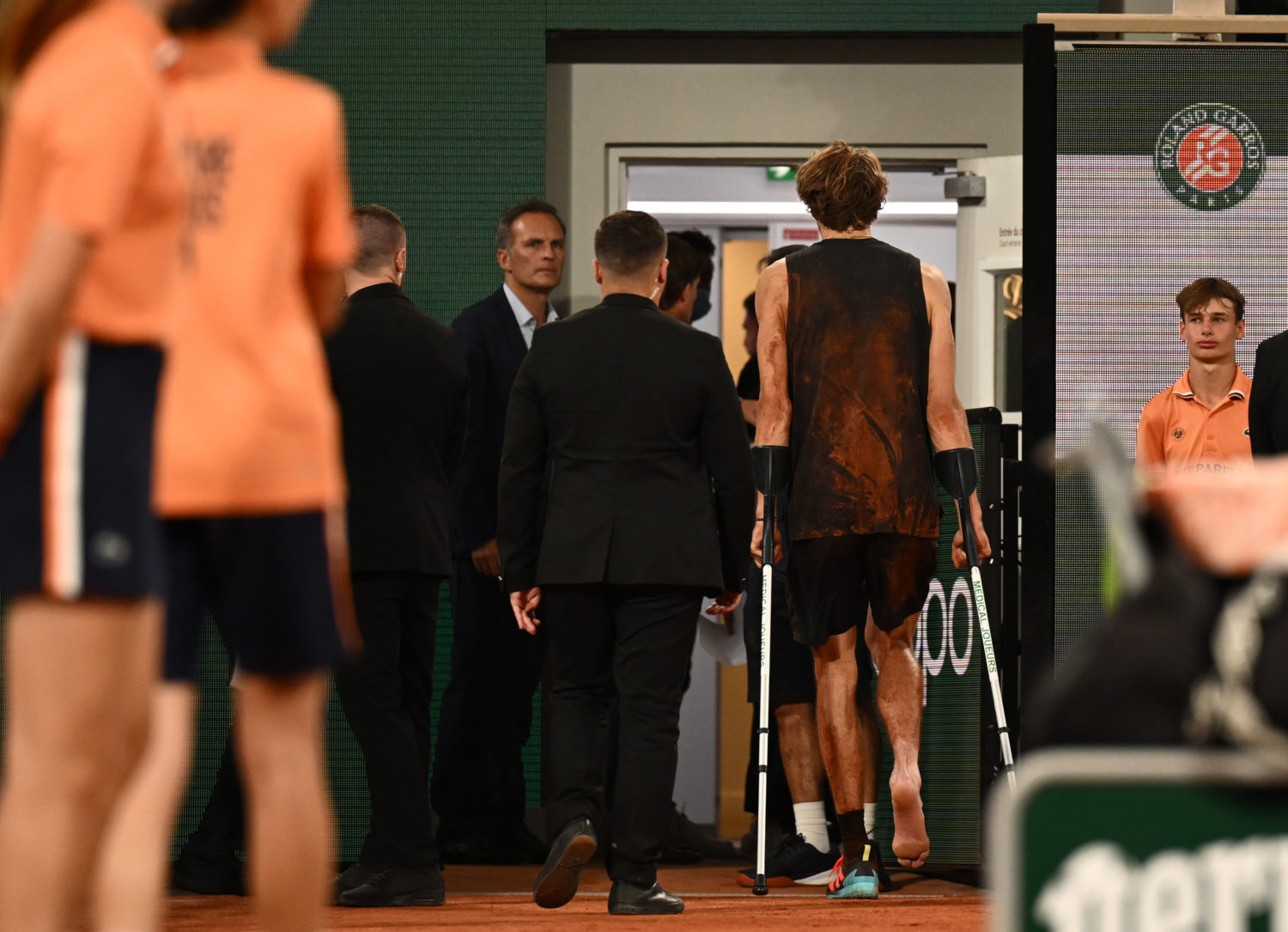
Alexander Zverev, quittant le court en béquilles après sa déchirure de la cheville contre Rafael Nadal en demi-finale de Roland-Garros 2022 (Ray Giubilo)

Le 7 novembre 2022, Alexander Zverev chute à la douzième place du classement ATP. Depuis 2017, jamais l’Allemand n’était sorti du top 10. Sa terrible chute en demi-finale de Roland-Garros 2022 l’éloigne des courts pour le reste de la saison. Zverev : Der Unvollendete, un documentaire diffusé sur RTL+, dévoile le quotidien de l’ancien numéro deux mondial pendant cette période douloureuse.

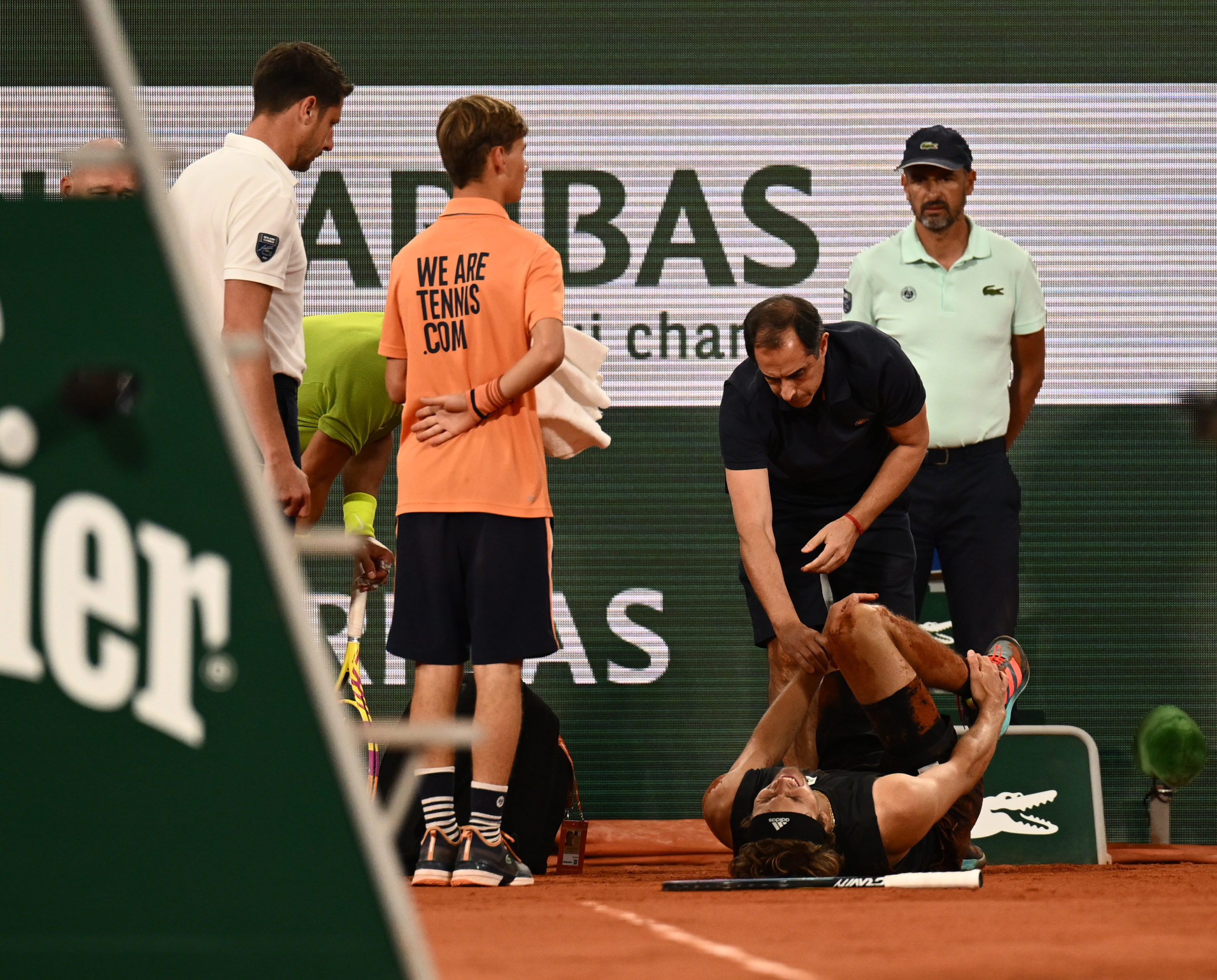
« Il me manque encore deux choses : être numéro un mondial et remporter un titre du Grand Chelem ». Ce sont les premiers mots prononcés par Sascha Zverev lorsqu’il s’assied en face de la caméra. Ces deux rêves étaient à la portée de sa raquette lors de son match contre Rafael Nadal sur le court Philippe-Chatrier. Plus de trois heures durant, l’Allemand égale le niveau de jeu du « Roi de la terre battue ». Ils s’apprêtent à débuter le tie-break du second set, quand tous ses espoirs s’évanouissent : « Ma première pensée était vraiment : ma carrière vient-elle de se terminer ? », se souvient l’Allemand. 

Les dernières images diffusées à la télé sont celles d’Alexander Zverev qui salue l’arbitre de la rencontre en béquilles. Nous le retrouvons quelques jours plus tard à Munich où il apprend que plusieurs ligaments de sa cheville sont déchirés. Néanmoins, l’aspect technique ne l’intéresse pas. Une unique question incessante occupe son esprit : « Je reviendrai à 100% comme avant, n’est-ce pas ? ». Le médecin ne peut lui garantir de tels résultats mais « Sascha » ne lâche pas l’affaire : « Il pose la question encore et encore jusqu’à ce qu’il obtienne la réponse qu’il souhaite entendre », raconte Sophia Thomalla. 

La peur domine les visages du clan Zverev, prisonnier des quatre murs de l’hôpital. Tandis que Mischa se préoccupe de l’état d’esprit de son frère et qu’Alexander senior pense logistique, Sascha s’inquiète d’avoir perdu son tennis pour toujours : « La plupart des gens sont terrorisés par la mort, les serpents, les cambrioleurs […]. Moi, ma plus grande peur est de ne pas réaliser mon rêve d’enfance ». 

Une fois l’opération achevée, l’anxiété laisse place à la détermination. Le médaillé d’or de Tokyo patiente une dizaine de jours avant de se rendre à la salle de gym à Monte-Carlo. Son attèle au pied droit et ses béquilles à la main, obligent son kiné à le porter sur les machines. Même si Sascha Zverev se rend compte du ridicule de la situation, il poursuit ses exercices : « Il y a de nombreuses études qui ont prouvé que lorsque vous entrainez un côté, cela passe directement par le système nerveux vers l’autre. Je garde donc ma jambe gauche complètement en forme ».

Alexander Zverev, au moment de sa blessure à la cheville droite contre Rafael Nadal en demi-finale de Roland-Garros 2022 (Ray Giubilo)

À ces scènes éprouvantes, se mêlent des moments enfantins. Mischa raconte les péripéties de la douche : « La jambe ne doit pas être mouillée mais le petit frère mesure deux mètres et pèse 90 kilos. Bien sûr, c’est moi qui m’y suis collé », tandis qu’Irina baptise la cuisine : « Je vis dans cet appartement depuis deux ans. La cuisinière a été utilisée pour la première fois depuis que ma mère a emménagé », s’amuse Alexander fils. 

Au fil des semaines, la récupération s’intensifie. Le corps se renforce mais le mental résiste. Retrouver confiance en ses appuis après un mois d’immobilisation n’est pas une tâche aisée. De nouveau à la salle de sport, Sascha tente de poser son pied par terre : « Maintenant, je pourrais marcher mais je n’ose pas ». 

Scène après scène, ses efforts portent fruit. Le moment qu’il attendait tant arrive enfin. Le 6 août 2022, le double vainqueur des ATP Finals entre à nouveau sur un court de tennis. Il partage son ressenti face à la caméra : « C’était comme remporter un tournoi, j’ai réussi […]. Je suis là où je devrais être ».  Le travail le plus minutieux peut alors débuter. S’il retrouve vite l’efficacité de ses frappes, les déplacements sur le terrain sont bien plus compliqués : « À chaque pas, à chaque arrêt, à chaque accélération, en avant, en arrière, sur le côté. C’est toujours exactement cet endroit qui est sollicité dans les deux pieds », explique Ulrike von der Groeben. 

Un mois plus tard, Alexander Zverev arrive à Hambourg. Il s’apprête à participer à la Coupe Davis sous le drapeau allemand. Le monde du tennis attend son retour à la compétition avec impatience. Les jours qui précèdent le début du tournoi ne sont pas rassurants. Carlo Thränhardt, le coach fitness de l’équipe, se remémore les premières séances d’entraînement : « On pouvait déjà voir que sa mobilité avec les pieds et les jambes n’était pas optimale ». Malgré cette première alerte, Sascha est décidé à faire son grand retour en Allemagne : « Dans la vidéo tu peux voir que je boite. Tout le monde le savait, sauf moi. J’étais complètement perturbé, je voulais jouer. J’ai été têtu et stupide », se souvient le principal intéressé. 

Le retour de l’Allemand sur le circuit ATP est alors reporté à la saison suivante. Malgré des hauts et des bas durant les premiers mois, son tennis élancé revoit le jour sur l’ocre. Le court Philippe-Chatrier qui a été si cruel avec lui l’an passé, lui sourit lors de l’édition 2023. Un an après sa chute, Alexander Zverev atteint à nouveau les demi-finales de Roland-Garros. Il caresse encore ses rêves du bout des doigts. 

Suzanne Lenglen

« une championne qui a tout inventé du tennis contemporain »

Lorsque la maison d’édition Calype demande à Jean-Christophe Piffaut d’écrire une biographie des Quatre Mousquetaires, il préfère s’atteler à celle de Suzanne Lenglen. Souvent oubliée au profit de ces hommes, la joueuse laisse pourtant une empreinte indélébile sur le tennis. Ses innovations et sa liberté d’esprit révolutionnent notre sport. Dans Suzanne Lenglen et la femme créa le tennis moderne, l’écrivain revient sur le parcours extraordinaire de cette championne. 


Elle naît en 1899 à Paris. A cette époque, les circuits ATP et WTA n’existent pas. Les joueurs ont le choix d’être amateurs ou professionnels. Les premiers participent aux tournois les plus prestigieux avec l’interdiction d’être rémunérés. Les seconds peuvent vivre du tennis mais se voient refuser l’accès aux plus grandes compétitions. L’unique défaite du prodige résume bien son hégémonie sur le circuit amateur. Son palmarès est immense : 80 titres, 341 matchs et 340 victoires. 


Son impact sur le tennis 

Chaque bribe du parcours de Suzanne Lenglen trouve sa résonnance dans le tennis contemporain. Son père, Charles, rêve qu’elle devienne une championne et consacre à cet effet le plus clair de ses jours et de ses nuits à fonder une méthode révolutionnaire. Néophyte dans la discipline, il s’appuie sur ses qualités d’observateur. Charles Lenglen se rend aux matchs des meilleurs joueurs pour comprendre leurs qualités et leurs défauts. Il détermine alors le portrait de la joueuse parfaite – que sa fille deviendra. 

L’entrainement de La Divine conquiert le monde du tennis. Aujourd’hui, ses exercices ont tous été adoptés par les professionnels. Afin de devenir une athlète complète, elle pratique une multitude de sports tels que la boxe ou la gymnastique. Sur le court, Charles Lenglen invente les fameux paniers. Plusieurs heures durant, il lance des balles à sa fille qui vise des cibles disposées sur le terrain. Incontournable de nos jours, cette méthode révolutionne l’entrainement des joueurs. La condition physique de Suzanne, cultivée par son père, lui permet de jouer un tennis explosif. Contrairement aux femmes de son époque qui servent à la cuillère, elle engage au-dessus de la tête. Elle n’hésite pas à conclure ses points au filet lorsque sa puissance de fond de court ne suffit pas. Cette façon de jouer est pratiquée par les hommes à l’époque. Charles considère les femmes comme des êtres fragiles et maladroits donc sa fille amorce alors le processus d’uniformisation du tennis masculin et féminin – une dynamique encore d’actualité.  

Jean-Christophe Piffaut résume en quelques mots l’impact du prodige sur le tennis : « Depuis 1926, il n’y rien de neuf dans le tennis. Tout ce qui est en place aujourd’hui, tout ce qui fait le quotidien d’un joueur, a été pensé par Lenglen. Elle a eu conscience d’inventer quelque chose ».

Au-delà de son jeu, Suzanne Lenglen inspire le monde du tennis par d’autres innovations. Lorsqu’elle devient professionnelle en 1926, elle organise une tournée de matchs d’exhibition aux Etats-Unis. Elle affronte Mary Brown dans diverses villes en Amérique. Pour ne citer qu’un exemple parmi d’autres, Rafael Nadal et Casper Ruud ont entrepris le même projet à la fin de la saison 2022. Ils ont joué l’un contre l’autre dans toute l’Amérique du Sud. La Divine est aussi la première joueuse à participer à un match événement. Elle défit Helen Wills, une nouvelle star montante du tennis, lors du Great Match. Sa victoire est sans appel. Cette rencontre donne des idées à Bobby Riggs quelque décennies plus tard. Le triple vainqueur en Grand Chelem est persuadé que le tennis féminin est inférieur à celui pratiqué par les hommes. En 1973, alors âgé de 55 ans, il affronte la numéro un mondial pour prouver au monde qu’il a raison. Billie Jean King décroche la victoire dans le match aujourd’hui surnommé The Battle of Sexes. Jean-Christophe Piffaut dresse un parallèle entre la fondatrice de la WTA et celle à qui il a consacré son ouvrage : « Elle reprend le combat pour l’égalité entre les hommes et les femmes. Il y a assez peu de champions qui ont œuvré pour le bien des autres. Elle [BJK] va au-delà de l’intérêt personnel et parvient à fédérer les joueuses d’un sport individuel ».

Déterminée à transmettre sa méthode, la septuple vainqueure des Internationaux de France ouvre sa propre académie de tennis en 1932 à Paris. A l’époque, la Fédération Française ne dispose pas de structure propre. Tous les jeunes talents sont envoyés auprès de la championne. Ce centre de formation débouche sur la création de la Direction Technique Nationale (DTN) quelques années plus tard. 


Une star globale 

La célébrité de Suzanne Lenglen dépasse le monde du tennis. Son premier match à Wimbledon le 24 juin 1919 passionne la foule présente au All England Lawn Tennis and Croquet Club pour assister à sa rencontre. Elle est un phénomène avant même d’avoir mis un pied sur le court. Si la presse tennistique n’est pas encore convaincue, les fans le sont.  

Très vite, elle fait de son image une de ses priorités. Dans chaque interview, elle prononce la phrase qu’on attend d’elle. Toujours souriante, elle joue avec les caméras et fascine son audience. Adorée de tous, elle attire également les marques. Malgré l’interdiction des sponsors sur le circuit amateur, la joueuse se rapproche du couturier Jean Patou. Ce dernier crée des tenues pour ses matchs et elle porte les collections lors de ses apparences publiques. La championne profite aussi de cette relation lors des cérémonies de remise des trophées. Dès 1919, elle se vêtit de gilets colorés ou de longs manteaux avant de retourner sur le court. Cette habitude ressemble à celle de Roger Federer qui a enchaîné les entrées remarquées sur le central de Wimbledon. Elle était surnommée La Divine ; on l’appelle Le Maestro. Chacun a révolutionné le tennis à sa façon – et à son échelle. 

Le contrat avec la maison de couture de Jean Patou ne devient officiel que lors de son passage sur le circuit professionnel en 1926. Très vite, les partenariats se multiplient : raquettes, shorts et rameurs. Alors qu’aujourd’hui tous les plus grands joueurs collectionnent les marques dont ils sont partenaires, Suzanne Lenglen était l’une des premières. 


Une personnalité unique et affirmée 

Elle conquiert le monde entier pas seulement grâce à son tennis mais aussi par son état d’esprit. La liberté qui l’habite s’exprime dès ses débuts sur les courts. Alors que les femmes avaient l’habitude de jouer en jupes longues et corsets, La Divine se débarrasse des vêtements qui briment son jeu. Elle entre sur le terrain vêtue de jupes au-dessus des genoux, de hauts qui dévoilent ses épaules et d’un large bandeau qui retient ses cheveux. Jean-Christophe Piffaut écrit : « Ainsi ce qui est exceptionnel chez Suzanne Lenglen, c’est non seulement la qualité de son jeu, mais également sa liberté d’être qui s’exprime jusque dans sa manière de s’habiller ».

Au-delà de son apparence, le prodige féminin profite d’une vie sans secret. Lorsque son passage au circuit professionnel est discuté, elle énonce que ce choix est évidemment motivé par l’argent. Elle ne se restreint pas à cette sortie polémique. Elle enchaîne les relations amoureuses sulfureuses et partage sa vie avec un homme marié entre 1928 et 1932.  

Dès son plus jeune âge, elle s’entraîne aux côtés d’hommes. Les côtoyer, les battre, jouer en doubles, lui permet de se sentir comme leur égale. L’ensemble de sa vie s’inscrit dans une dynamique féministe. Ses actions sont toujours guidées par un besoin de liberté. Ses tenues vestimentaires progressistes sont conçues pour libérer ses mouvements avant de transmettre un message. 


Un héritage bafoué par les quatre mousquetaires 

Pendant une dizaine d’années, La Divine occupe seule la scène du tennis français. Ses exploits sont connus de tous et sa personnalité fascine. A la fin des années 1920, quatre joueurs enchaînent les victoires. Ils gagnent notamment six fois consécutives la Coupe Davis, tournoi le plus prestigieux de l’époque. Cette folle série attribue le surnom des Quatre Mousquetaires à René Lacoste, Henri Cochet, Jean Borotra et Jacques Brugnon. Ensemble, ils cumulent 18 titres du Grand Chelem en simple et 23 en double. 

Ce quatuor de joueurs masculins est bien plus en adéquation avec l’époque que le profil d’une jeune femme sulfureuse. La fédération recentre alors son discours autour de ces quatre champions – laissant Suzanne Lenglen progressivement disparaître des mémoires. Jean-Christophe Piffaut raconte : « Elle a embêté la fédération par ses revendications sur le professionnalisme et son caractère rebelle. En revanche, les Quatre Mousquetaires rentraient dans les clous. C’était le schéma parfait pour la fédération » 

L’oubli de cette joueuse qui a pourtant révolutionné le tennis est symptomatique du XXème siècle. L’arrivée de Pétain au pouvoir opère un « retour un arrière pour les femmes qui sont perçues comme une mère, une épouse, un ventre », explique l’auteur. Suzanne Lenglen et la femme créa le tennis moderne est un premier pas vers la reconnaissance de son parcours. 

The changing face of Queen’s Club through the eyes of a member

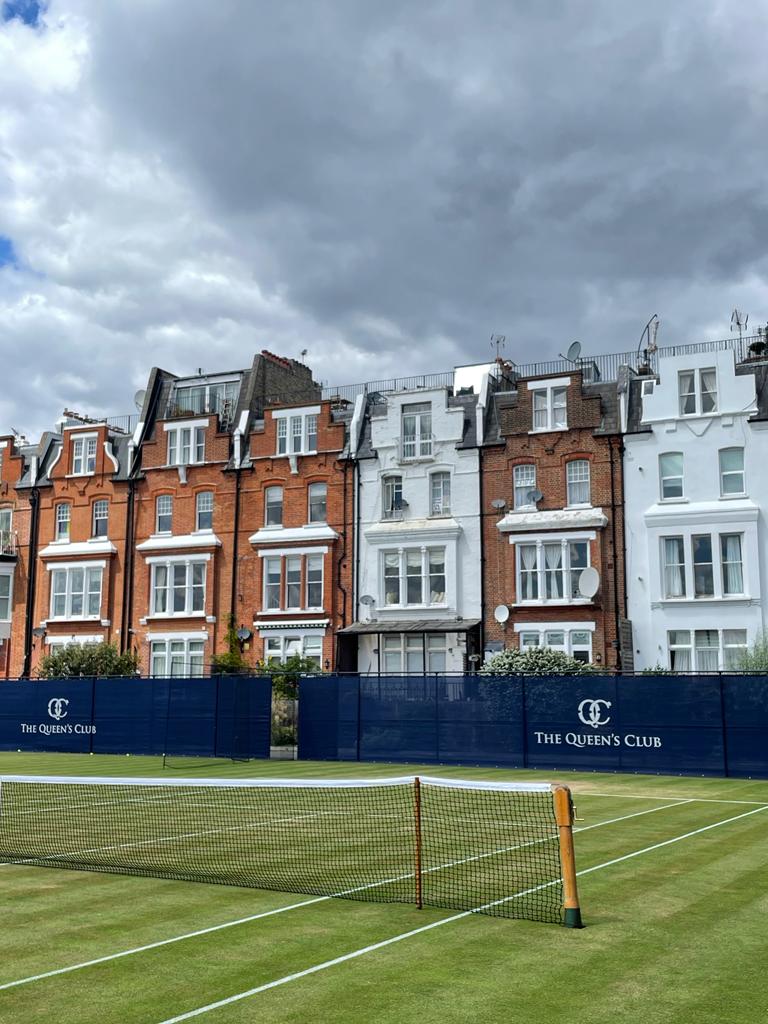
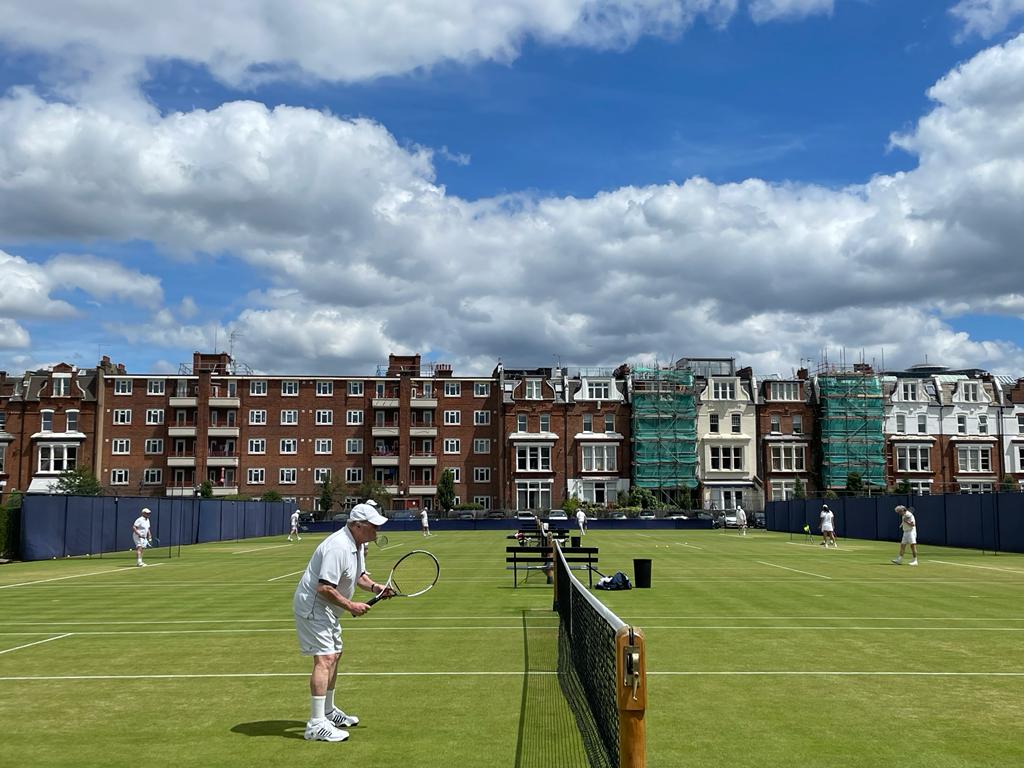
Entering Queen’s Club through the imposing wrought iron gates it’s hard to believe that on this site sits 40 acres of prime land surrounded by residential flats and houses in the middle of affluent West London. Once inside the club’s grounds, the expanse of grass courts are clearly visible as you stroll towards the red brick clubhouse with two artificial grass courts on your right and further two hard courts opposite the clubhouse adjacent to the revered entre Court which is rarely used by members and lies directly in front of the club’s famous Pavilion where members and guests leisurely eat and drinking al fresco during summer months. 

It is these scenes that the hordes of tennis fans who flock to the club each day to watch the cinch Championships are missing. Instead what they see is a sleek well-constructed tournament venue which takes weeks to build and weeks to dismantle where members like myself slowly watch the gnawing disruption of our club’s facilities as soon as the build-up to the tournament begins in late April, and the few weeks after the tournament finishes. You could say members happily tolerate this by having the opportunity to watch first class tennis ‘free’! Naturally, not all members would agree with this statement! 

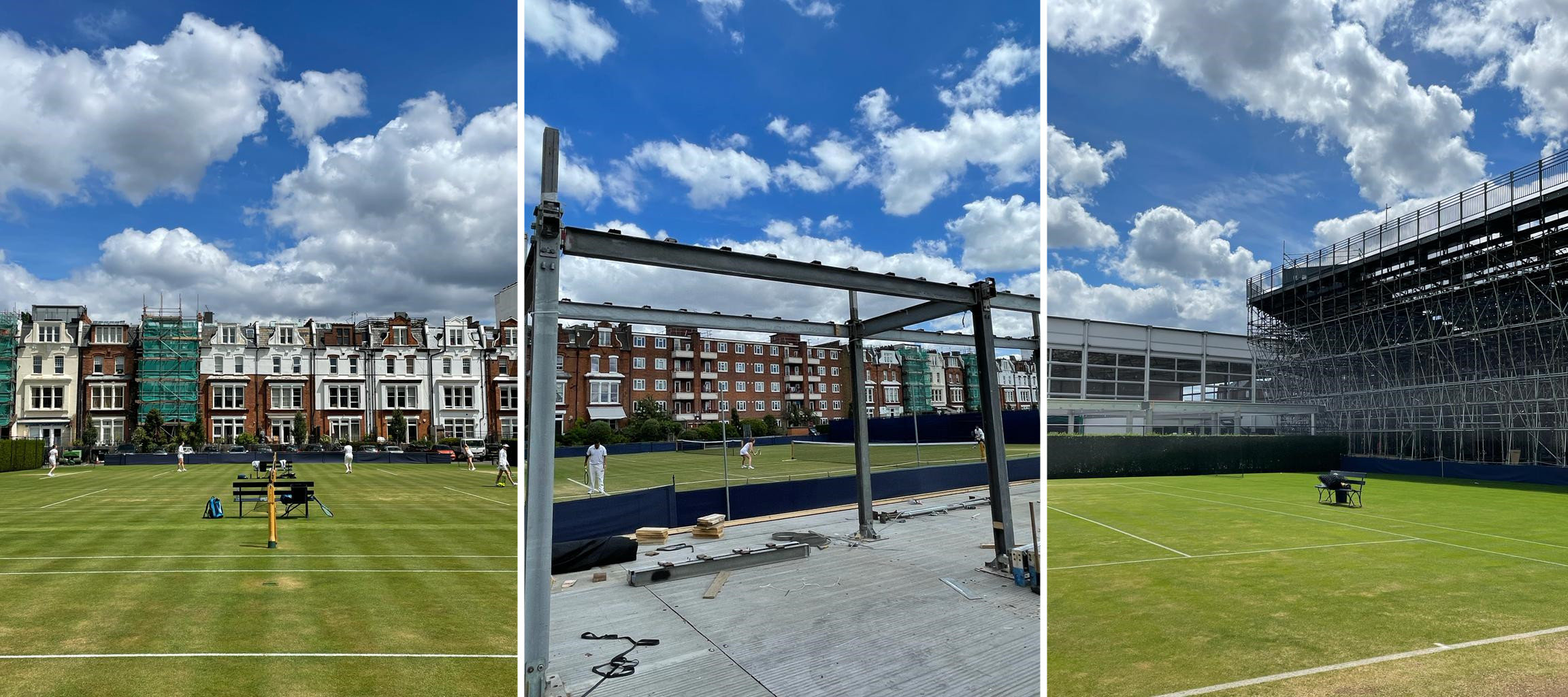
The worst part of the whole saga is, in my opinion, seeing our lovely club become an ugly building site and also accompanied by constant noisy banging and hammering consistent with a building site. For those crucial weeks it’s almost impossible to sit quietly on the terrace and enjoy a morning coffee or read newspapers while a bevy of yellow clad workmen energetically build stands surrounding Centre Court – time is the essence – and everything has to be completed on time. This year due to three Bank holidays during the month of May, work was allowed to continue daily until seven in the evening.

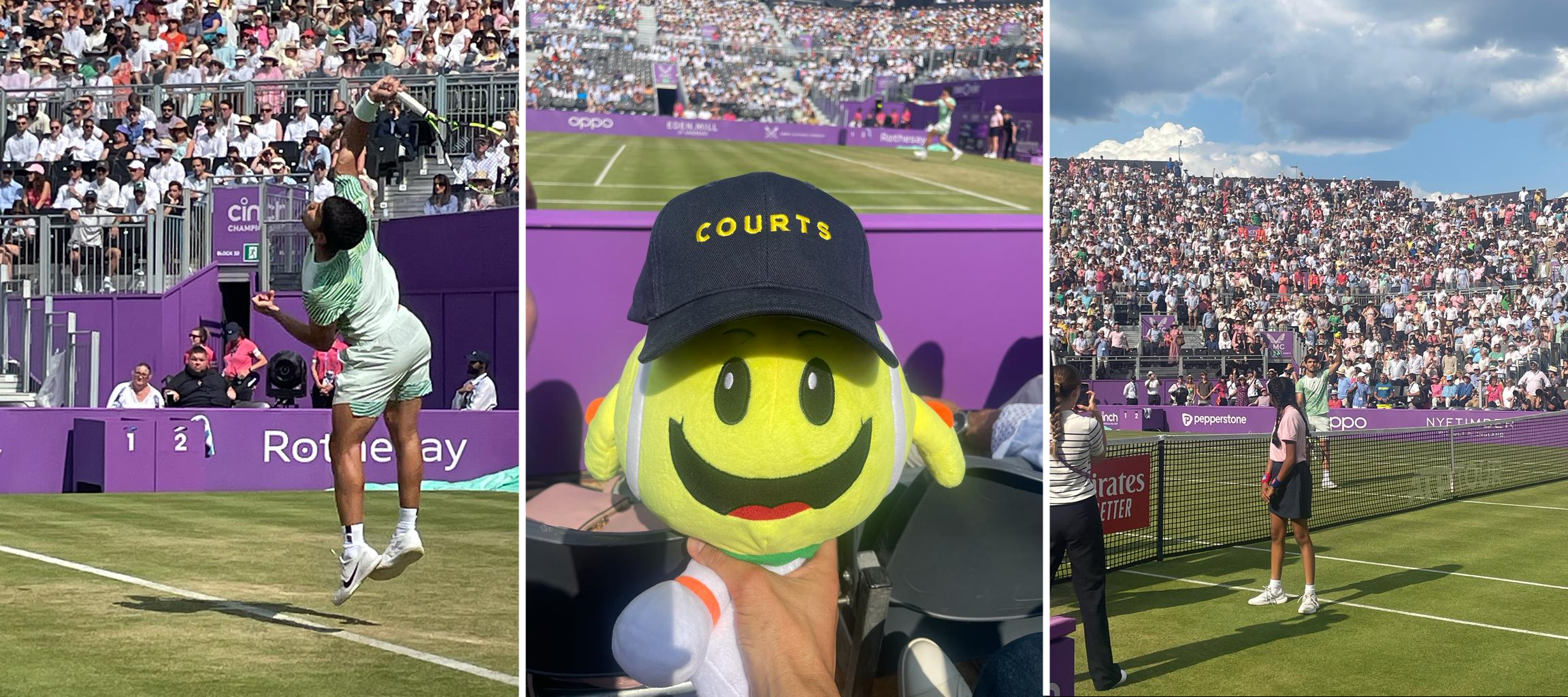
Carlos Alcaraz, gagnant du Queen's en 2023


By the middle of May, indoor facilities are taken away from us as every spare inch of the club is utilized for the tournament excluding the grass courts, they are only off limits once players start to arrive at the club to practice on grass the week before the start of the tournament. Even the club’s bar temporarily closes while the restaurant is taken over for corporate entertainment. However, this year the LTA, owners of the tournament, organised a charity tennis event on the Sunday before the start of the tournament which allowed members to watch ‘free’ but sadly after forty-five minutes it was interrupted by a heavy deluge of much needed rain much to the delight of Graham Kimpton, the club’s much praised head groundman.

It is during this build-up time that is the most difficult to endure for members wanting to use the club’s facilities. Many simply don’t bother to turn up during this period as piles of scaffolding, wooden boards and plastic seating are scattered everywhere and parking limited to only twenty spaces. But it’s this debris that eventually forms the backdrop of the tournament.

For those lucky to have tickets to the cinch Championships, few would have had the privilege of seeing the club as it is used by members. Instead, what immediately catches the eye when entering the club, is the imposing huge and iconic 9,000 seated stadium, and the many large smartly designed corporate entertainment facilities alongside shops and cafes all of which have been specially designed and built for the occasion, and all disappear once the finals are over.


To many untrained eyes, these constructions appear almost permanent, and quite sad that all the work and effort that goes into the tournament is eventually removed from the premises. To say the least, members are quite used to tolerating these weeks of disruption but it is difficult to comprehend just how much this affects our regular games of tennis and exercise classes as we all but forced to put up with the club transitioning from a private members club to an open public facility when thousands of tennis fans turn up to watch matches and mill around the club’s grounds. 

As a member I have watched in awe how the tournament’s structure slowly grows from its embryonic chrysalis into a beautifully, well designed butterfly created by expert designers and architects and comparable to an artist’s painting taking shape. 

The actual cost of building the tournament is unknown but these days the financial investment is a lot more than when for example, Rawlings sponsored the event in the 70’s which was followed by the Belgium beer company, Stella Artois who in those early days of sponsorship was an almost unknown brand. Wisely the company spent thousands of pounds upgrading the tournament facilities and was soon to become a household name in the UK. 

No-sooner is the last ball been hit when workmen, already waiting in the wings, start dismantling the site that took the best part of six weeks to build and will take another three to four weeks to pull down before the club transforms itself back into its familiar quiet oasis of a private members club.  

Most members quietly tolerate these disruptions but admittedly restoring the club back to normality is always something everyone looks forward to  – at least for another nine months!

From Rags To Bags

Life works in mysterious ways. Have you ever heard a more overdone cliché? And yet, it’s true. It’s never straightforward, never the way we imagine it would be. A girl smiles at you on the train, and a moment later you imagine yourself 20 years down the line with two grown up kids. You spend the next few months taking the same train, hoping to catch a glimpse of her. Fast forward those 20 years, however, and you’re in a happy marriage with a train conductor. You met on Platform 3. 

When Jack Oswald swung his first child-sized tennis racquet, he began fostering dreams of becoming a professional tennis player. And while he embarked on a journey that, in another life, could have led to him squaring up against Stefanos Tsitsipas on Philippe Chatrier, what he couldn’t at the time imagine was that—fast forward 20 years—he would find himself stitching tennis bags at three o’clock in the morning. And he had never been happier.

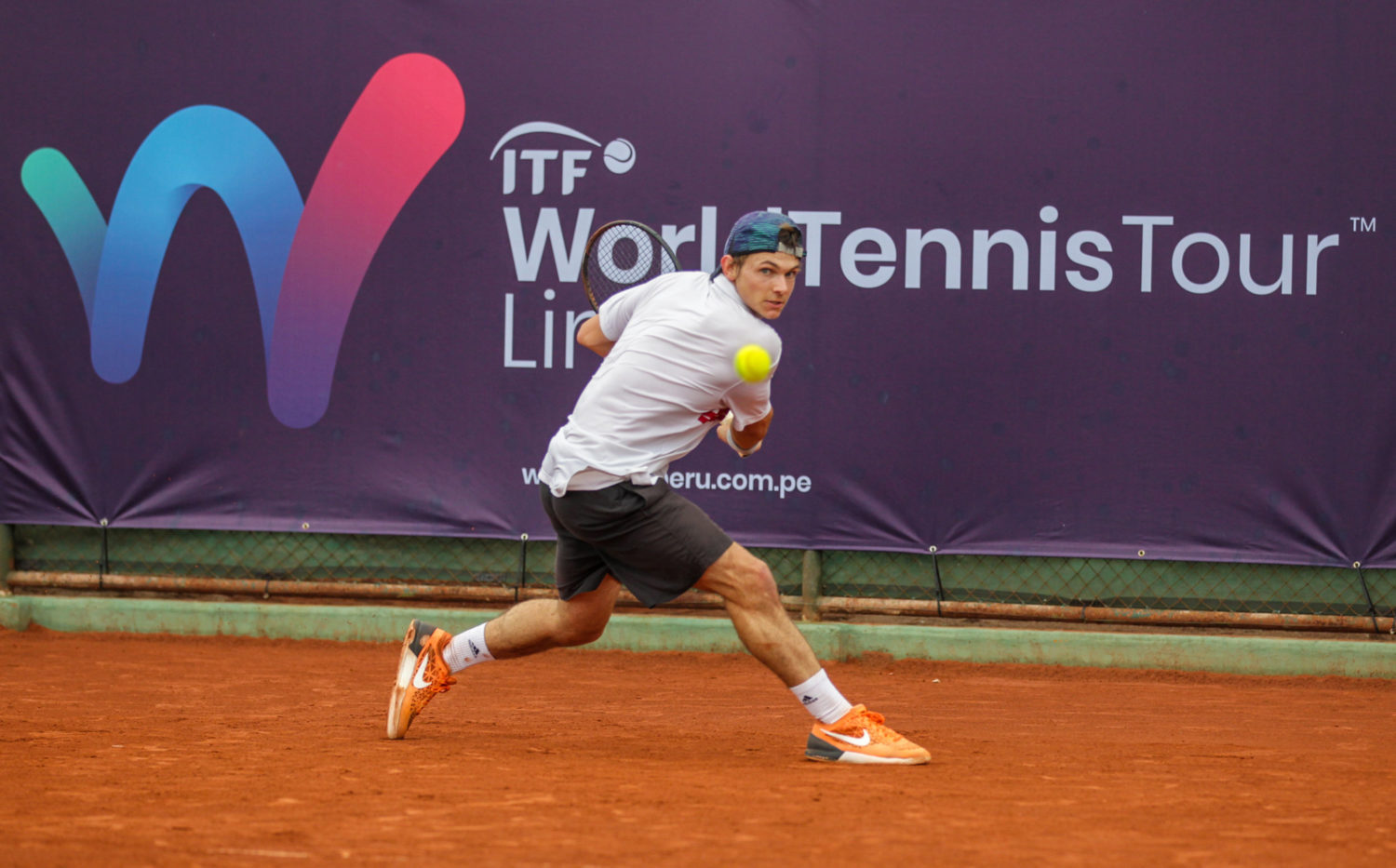
Born to British parents, Oswald grew up in the US. A large chunk of his childhood was spent on tennis courts, honing his skills with the racquet. “I have always been a hard worker, and wanted to try and get as good as I possibly could,” Oswald tells me over the phone. “I really love the idea of getting that one percent better and better every day, and trying to see where it could take me.” As his tennis abilities grew, Oswald’s dreams started to take on a shape of reality. When he was 13, he made the difficult decision to leave his parents behind and embark on a journey to Europe, all in pursuit of his tennis dream. The choice represented a significant sacrifice at a young age, one that would go on to shape the young player’s unwavering commitment and dedication to his tennis career. Over the following six years, he spent his teenage years living in France, Spain and the UK, with limited opportunities to see his family. At the age of 17, Oswald felt confident enough to try his luck on the professional Tour. It was a tough life, and by Oswald’s own admission, he was never an exceptional player. “I only really made it to the lower levels of the professional tennis circuit,” he says. “I was playing on the Futures circuit mainly—10k, 15k, then eventually 25k events—but those were really the maximum I got to.”

Playing with a one-handed backhand, Oswald always admired the aesthetic aspects of the game—the hidden beauty of a perfectly executed stroke. “I loved watching Gasquet,” he tells me. “And on the women’s side, Justine Henin. I’m a fairly small tennis player and not like Del Potros of this world, and the way that she was able to take on players, who were much bigger and taller than her, with so much more firepower, really inspired me.” Eventually, the financial and logistical demands of the sport took their toll on Oswald, and he decided to hang up his racquet. Despite the difficulties, he loved the experience. “I was just enamoured with everything,” he says. “I tried to play all the satellite tournaments, spending my time in Europe, Africa, Asia, and back in the US again. I had the most amazing time.”

While Oswald did not get to reap a great deal of the benefits afforded by the tennis life at the highest level, he did experience many of its downsides. For a while, travel was a constant in his life, and with it, packing. Criss-crossing the world on a weekly basis in search of results, he developed an intimate relationship with his luggage. “I was travelling a lot on the Tour. With a lot of luggage and bags—on flights, on trains, on buses, in hotels, across cities,” he lists. “And I became very aware of all the difficulties that travelling athletes encounter.” 

©Gino Salinas, Tenis al Máximo

Out of the frustration was born an idea. During downtime between matches, he began toying with the possibility of creating his own luggage. “It started back in 2018,” Oswald says. “I was just trying to design better tennis and travel bags for myself, and it became a sort of side project. I was becoming so interested in the innovation side of things, and in textiles, trying to come up with a way that would make it easier for athletes to travel with their tennis gear.” The switch from a tennis player to a tennis bag designer was dramatic. But Oswald threw himself into the world of sports equipment carriers with the same zeal that set him off on his journey to becoming a budding tennis professional. “I knew absolutely nothing about product design,” he admits. “I knew nothing about business but I took to it with the same ethos as with my tennis. I just worked on getting that one percent better at it each day.”

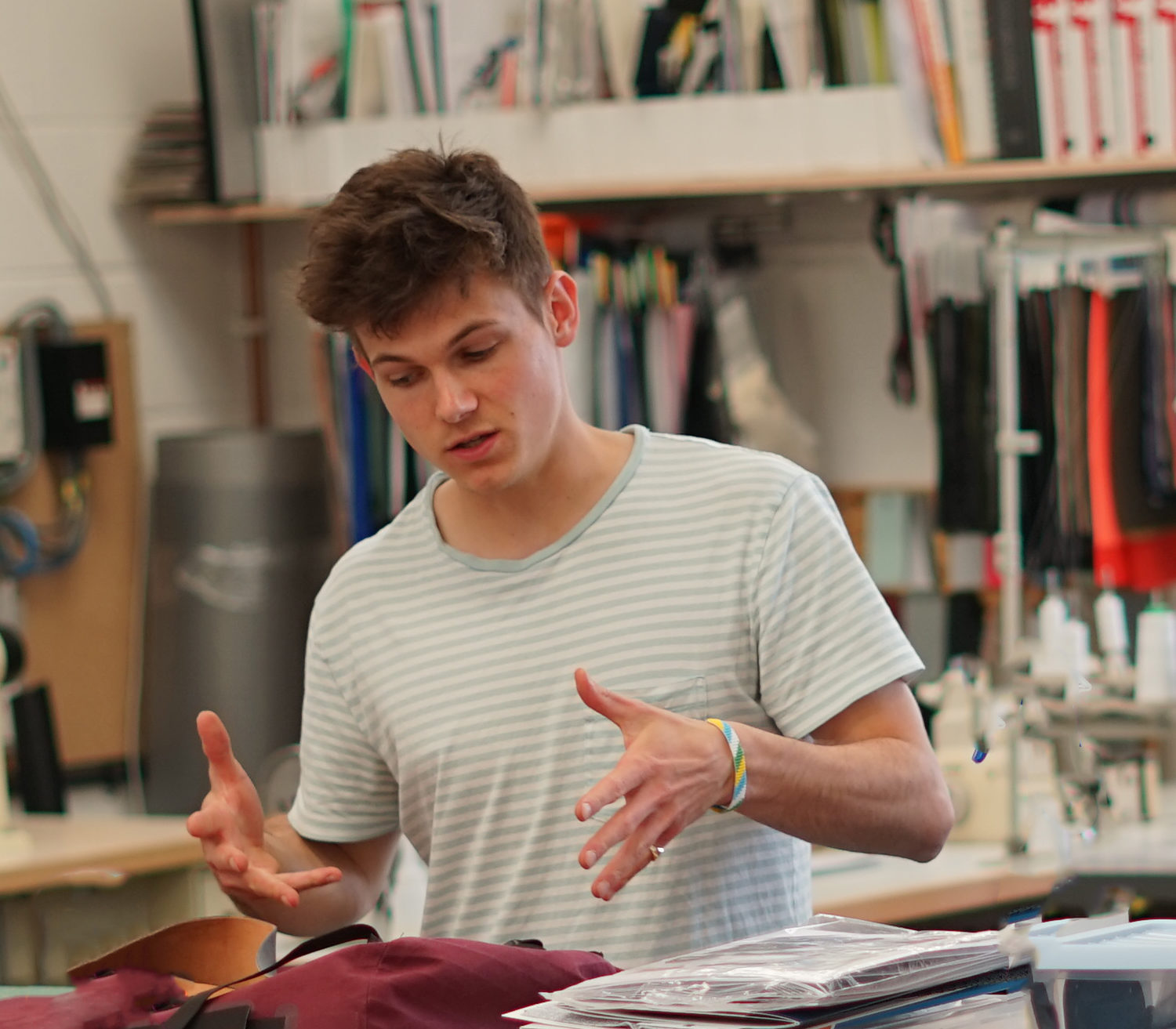
By then, his interest in tennis bags becoming a full-blown passion, the budding entrepreneur was introduced to a soft goods designer—a person who, as Oswald puts it, “made sure I didn’t stitch my fingers together.” What followed was countless hours spent in a workshop—stitching, laser cutting, bonding fabrics, sanding down—a sharp turn from the kind of precision required on a tennis court. “It was a lot of trial and error,” Oswald remembers. “We probably went through well over 50-100 prototypes to get to where we were with the first version of our bags that we started to sell.” Just as on the tennis court, he was looking for the perfect blend of functionality and beauty, and with a lot of dedication, hard work, “learning on the job and a huge amount of mistakes,” the project blossomed into Cancha. “The name came to me while I was playing a Futures event in Peru,” Oswald explains. “It means court in Spanish, but, also, ‘to have a cancha’, means someone who is a go-getter. It became the essence of our brand.”

Oswald went on to obtain an MBA to help him with the business side of his project, as well as meeting scores of different industry professionals to learn all there was about textile manufacturing and design. “I find it interesting how aligned my tennis days are to life in business. There are so many similarities in terms of the mentality and the mindset that any tennis player and any entrepreneur must have,” he says. “It’s the patience, and the long term vision but still [being] focused on the short steps towards that vision.” Looking back with the benefit of time, Oswald admits the overwhelming scale of the task. “I wasn’t prepared for it,” he says. “I don’t think anyone is at the beginning. But it’s all about the way you approach it.”

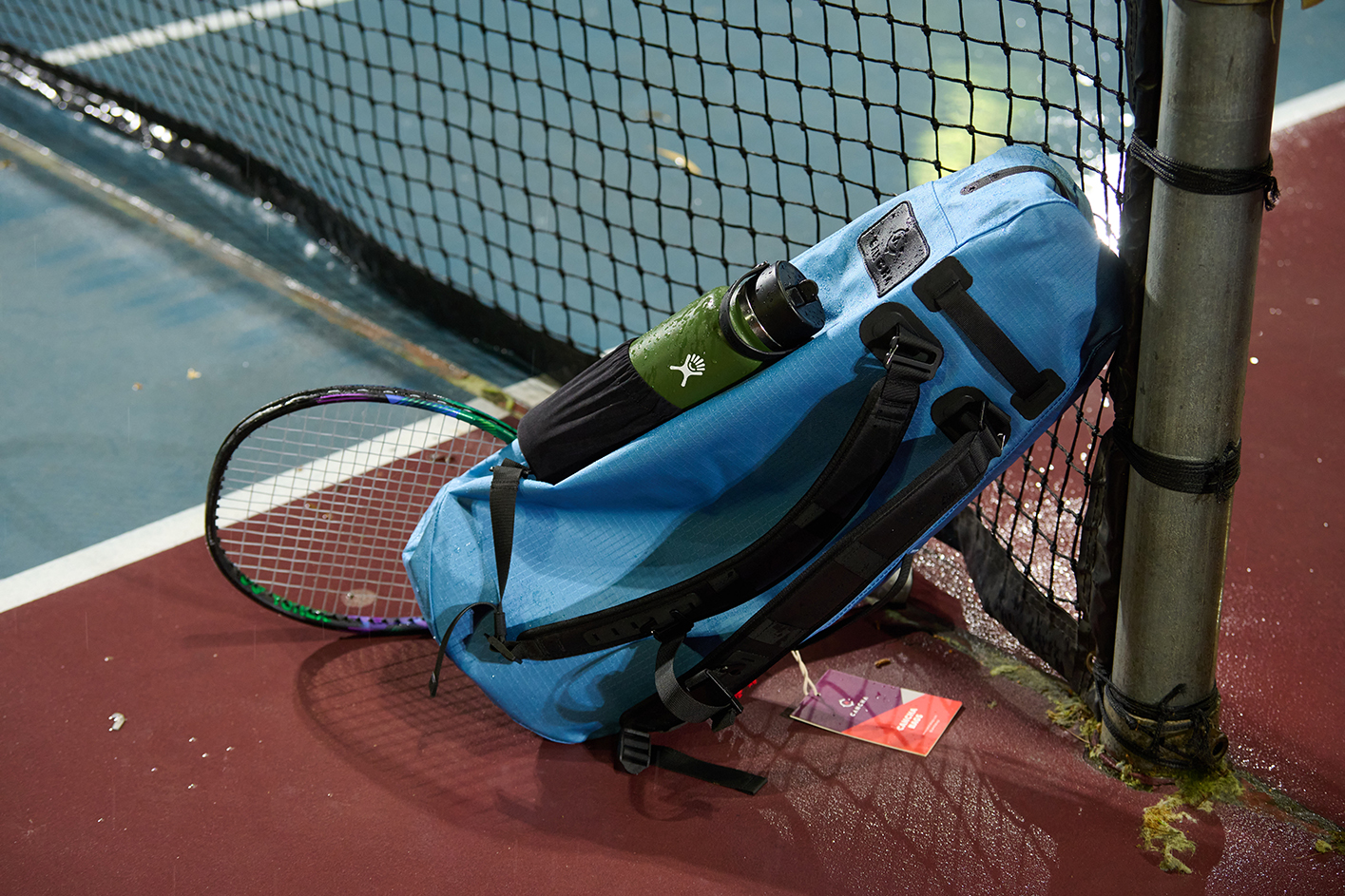
Today, Cancha is a fully-formed business. A look on the brand’s website reveals products for tennis, padel, pickleball as well as day to day bags in different colours. All Cancha bags are customisable—the modular aspect being one of the main selling points. “At the end of the day, everyone’s travel needs are different,” Oswald says. “They carry different things, they have different daily routines and needs. So for us, a one-size-fits-all bag didn’t make sense.” 

I lightheartedly ask him to convince me to switch from my old Babolat bag to a Cancha one. I expect an aggressive sales pitch but what comes is a matter-of-fact statement. “There is nothing wrong with your bag,” Oswald replies. “But if you want a durable one that will fit all your gear, keep it dry, and can accommodate other day-to-day accessories such as your laptop, you will like a Cancha bag.” 

Oswald’s passion is as evident as it is infectious. He talks about different designs of his bags with the kind of affection people afford their pets. This one is for a casual player. And this one has a larger capacity, holding up to six racquets. This one has an attachment for your wet clothes. And this is a mini version for padel or even pickleball. Surprisingly, the man behind Cancha is still not pitching. He doesn’t try to convince me that Cancha is more than a product—he believes in it. “We work with non-profit organisations as well as the tennis sector,” he says. “We’re trying to get behind the sport in terms of the idea of travelling for tennis, and seeing new places, exploring new cultures, and sharing experiences over a shared passion, which is tennis. “And this is what our brand has been built on over the last couple of years.”

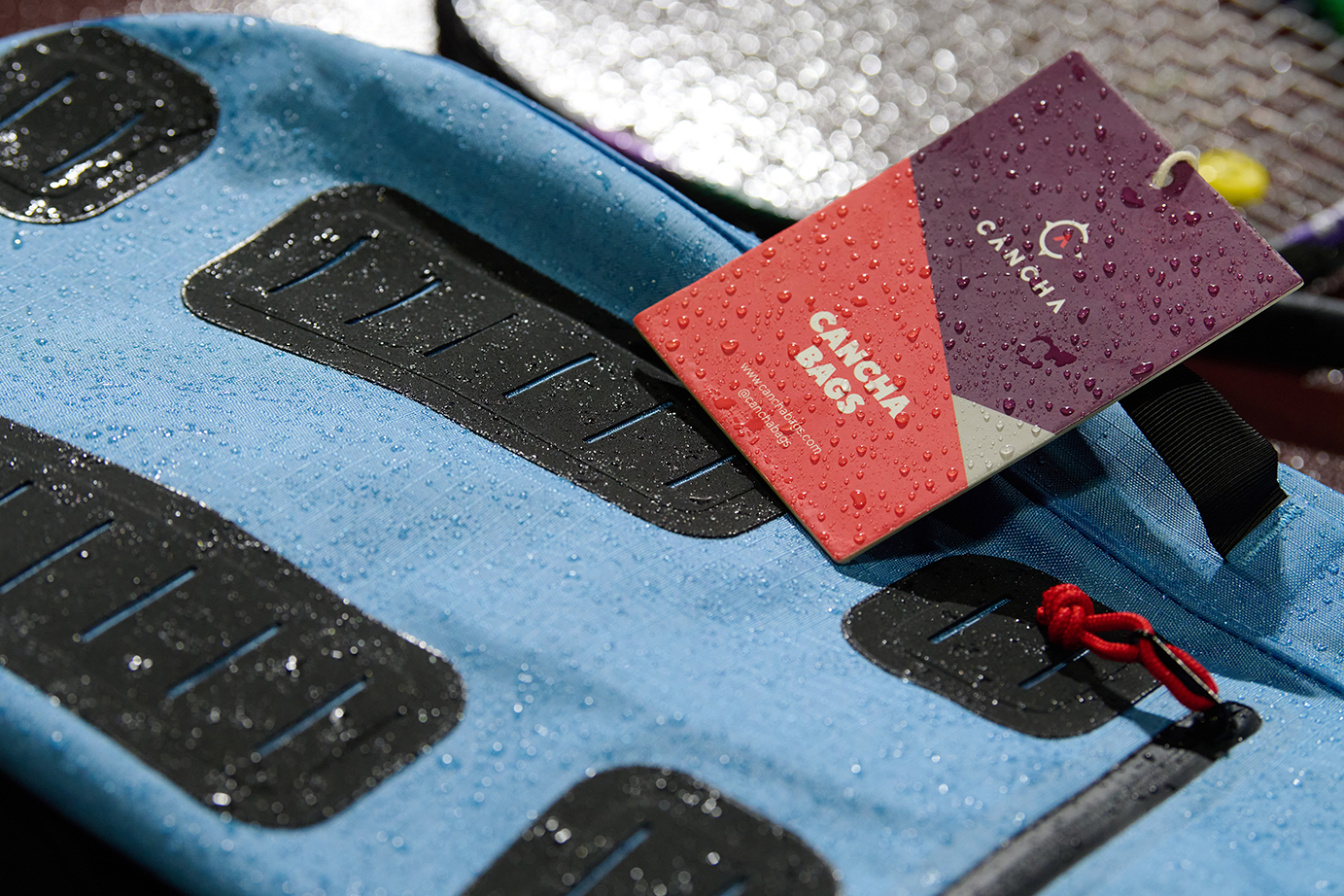
Cancha aims are high, and the aspirations go beyond being just another tennis accessory company. “We’re members of ‘1% for the planet’ so we donate one percent of our annual revenue to environmental non-profit organisations. Our fabric is Bluesign certified, too. It’s all sustainable,” Oswald says. 

From the start, Oswald’s idea was to listen. He is open to feedback, both good and bad, through email, Instagram posts or in-person interactions. “We are going to have a presence in the Wimbledon Village with the team during the Championships, and we will be speaking to customers,” he says. “You can’t please everyone, but over the years, we’ve had some amazing customer reviews. And I think that is because we hear the customers. We approach every day with the mindset of trying to make our bags that little bit better every time.”

I ask Oswald about his goals for Cancha. I float the idea of the perfect tennis bag—one to displace all bags. In response, he again draws parallels between his business venture and his playing days. “Tennis is one of those sports where you are just entirely responsible for yourself and your own success, but also your own happiness as a tennis player. It’s all about your mindset,” Oswald says. “Perfection has to be the aim. But it doesn’t mean that you’ll ever get there. Even if you’re Roger Federer,” he adds. “But it’s that kind of mindset that will get you 90% of the results.”


canchabags.com


Story published in Courts no. 4, Summer 2023.
FILA at the French

Fashion and tennis seemingly go hand-in-hand on the world tour today, with nearly every major brand — and even some player start-ups — releasing a new collection for two out of four Grand Slams (Roland Garros and the U.S. Open). For inspiration, some reach back into the closet to recycle trends of old, while others look to the courts for color palettes and even lines. The Italian brand, FILA, however, did a bit a both, while devising a new look to carry its ambassadors through the summer. 


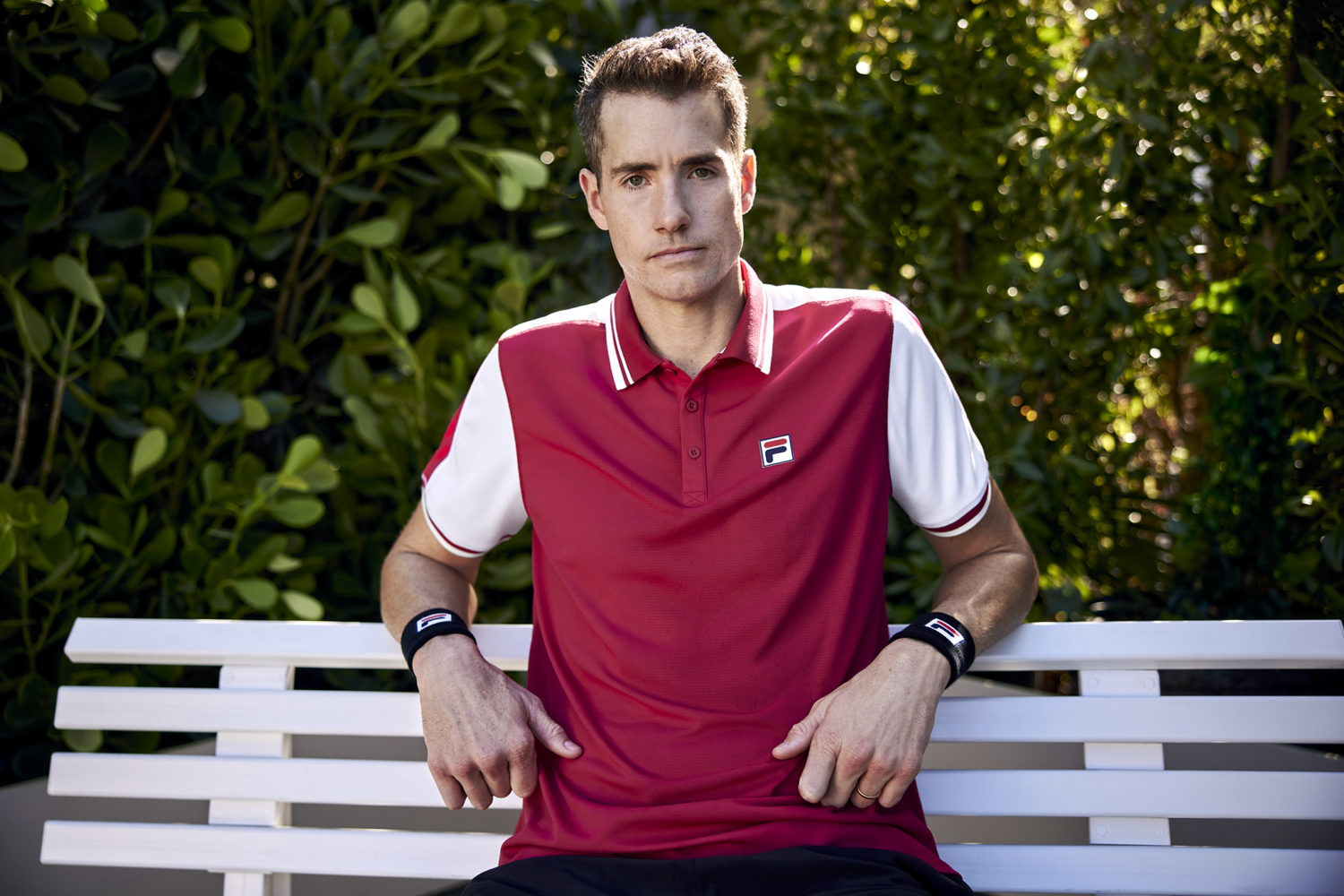
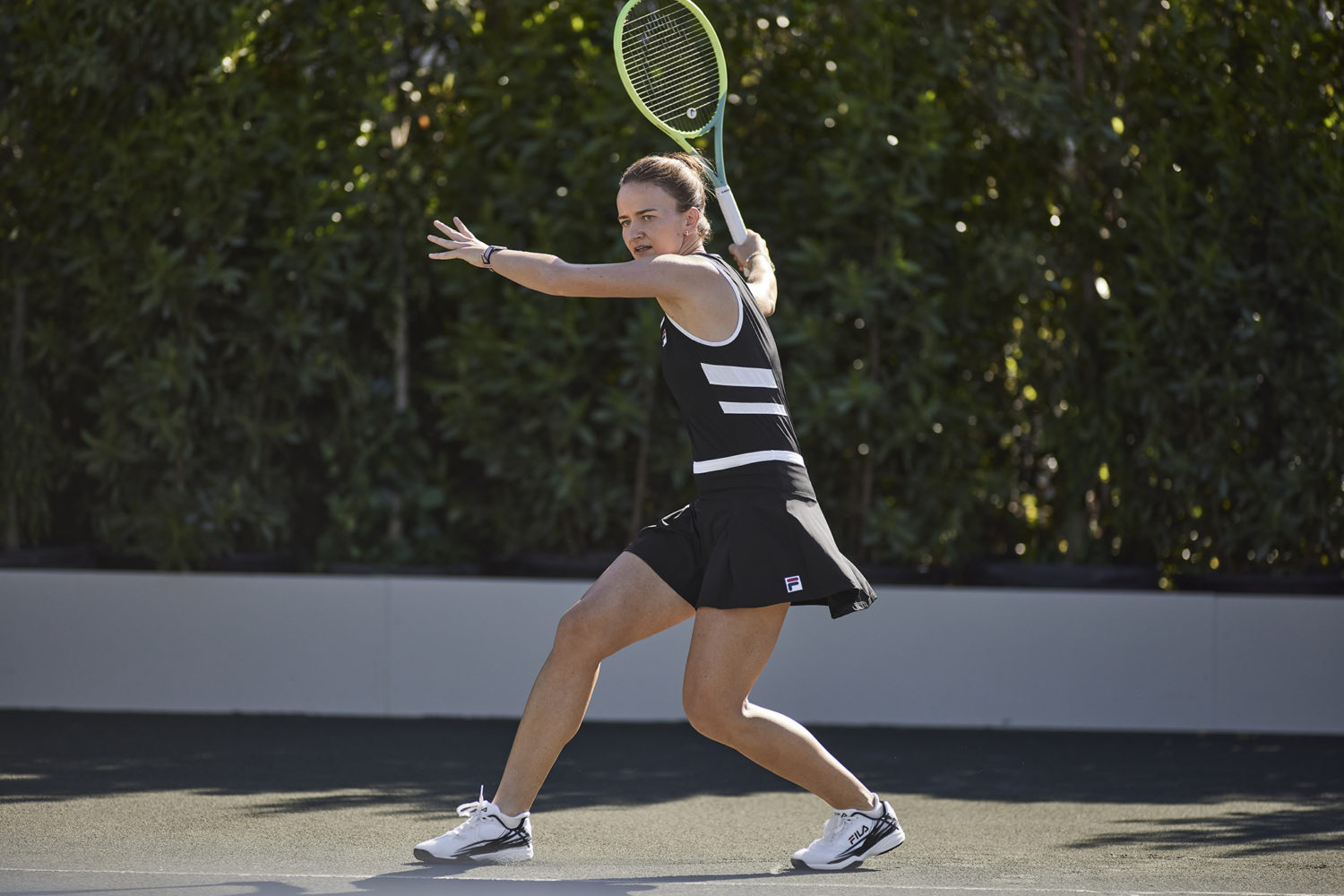
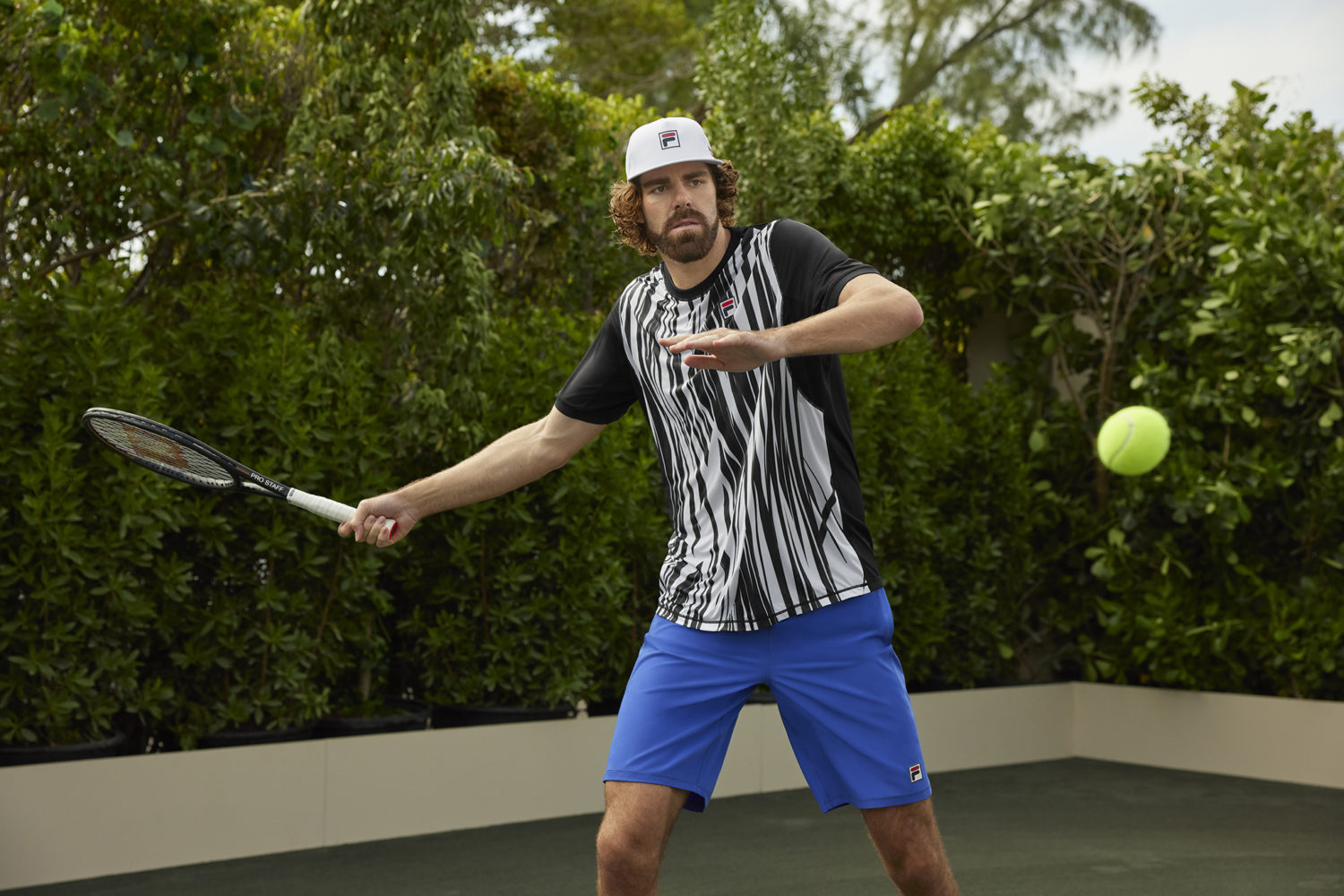
FILA’s newest collection, “La Finale”, debuted at Roland Garros, giving players Barbora Krejcikova and Karolina Pliskova, John Isner and Diego Schwartzman classic FILA® color schemes laid over designs that mimic the lines and curves of the court. 

As part of her Paris ensemble, WTA No. 13 and 2021 Roland Garros singles champion Krejcikova donned the La Finale Racerback Tank, Pleated Skort and Pleated Dress featuring the line’s signature white and deep lake color scheme, as well as the all-black Full Coverage Tank and Pleated Skort. World No. 14 Pliskova debuted her own set of player-exclusive outfits that combine elements of the La Finale collection paired with two monochromatic pleated skorts. Both featured the La Finale Full Zip Hoodie and Long Sleeve V-Neck to complete their look.


The La Finale men’s collection presents two unique short sleeve polos, two short sleeve crew shirts and one woven short — rounded out by an off-court track jacket and track pants. John Isner sported the La Finale Short Sleeve Printed Polo in shattered black, as well as the traditional Short Sleeve Polo in the signature Persian red colorway, paired with a black woven short. Diego Schwartzman, who had the deepest Grand Slam run of his career back in 2020 in Paris, wore the La Finale Short Sleeve Crew in the collection’s dazzling blue with white trim along with the Printed Crew in the shattered black colorway.

FILA®-sponsored player Reilly Opelka, who remains side-lined with an injury, is featured in  the La Finale Short Sleeve Printed Crew in the shattered black colorway.


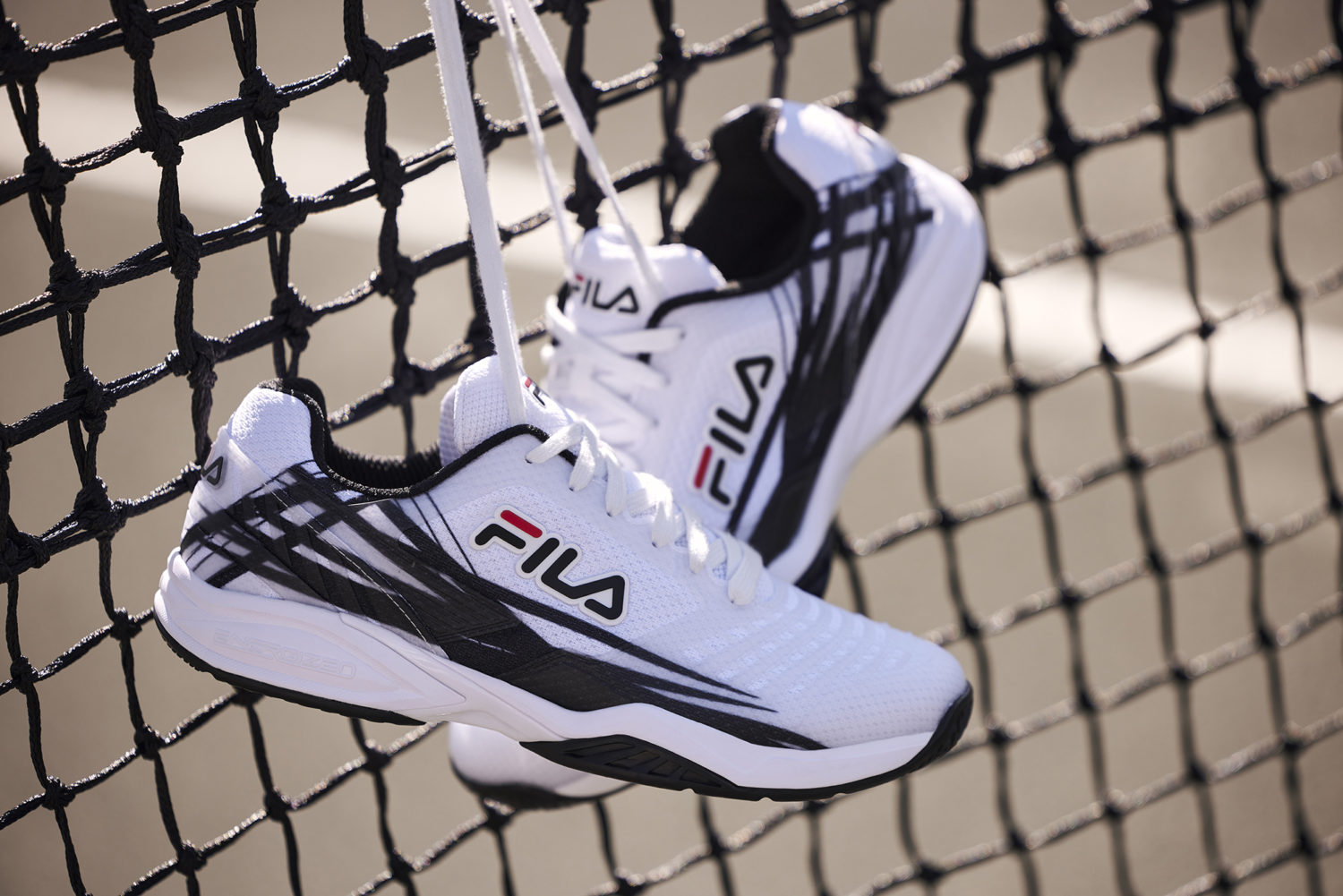
FILA®-sponsored players wear two of the brand’s most popular performance tennis shoes — the Axilus 2 Energized and Speedserve Energized —for quick, balanced and agile movement as they look to conquer the Europe and England swing of the tour..

ASICS : à chacun son style (de jeu) !

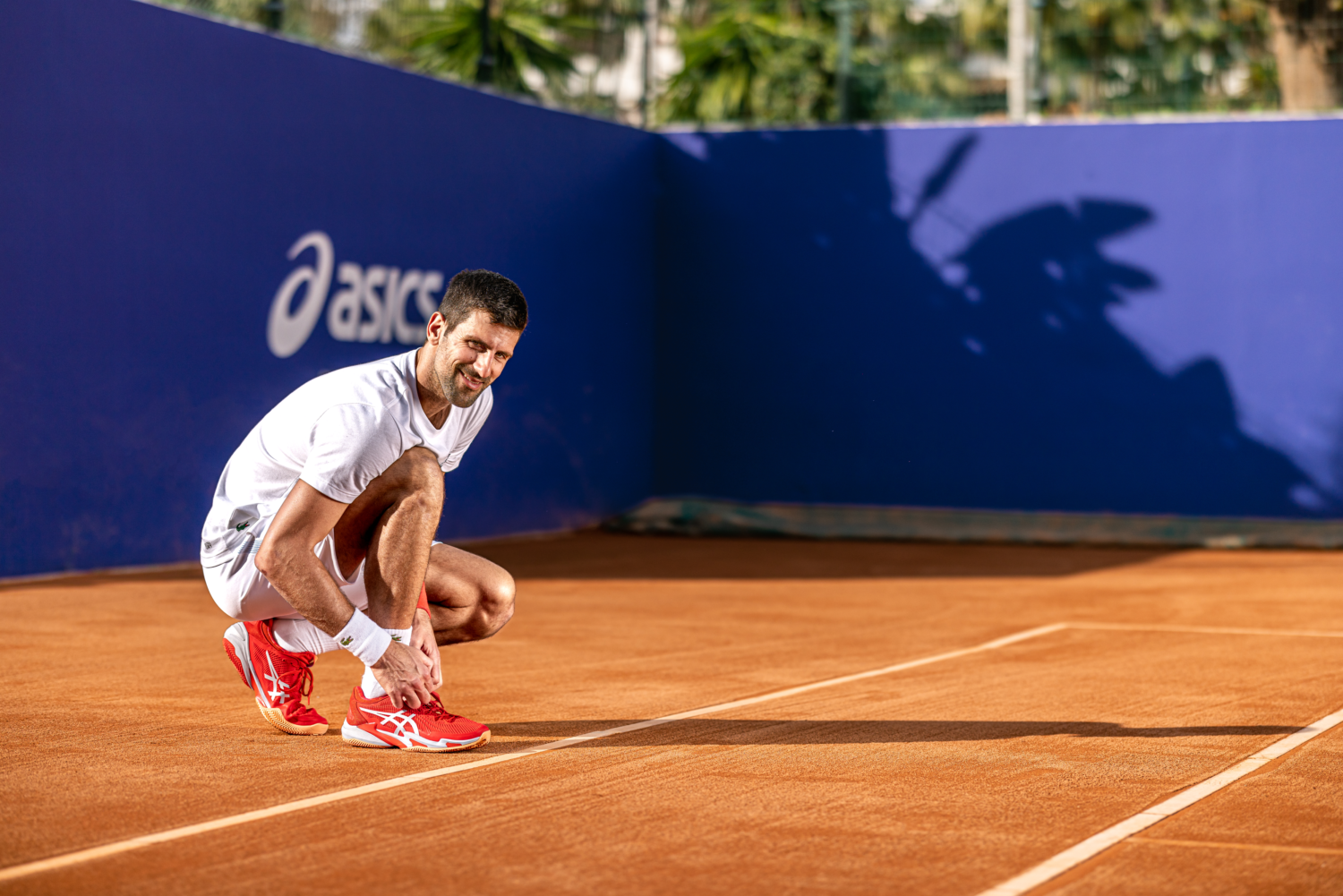
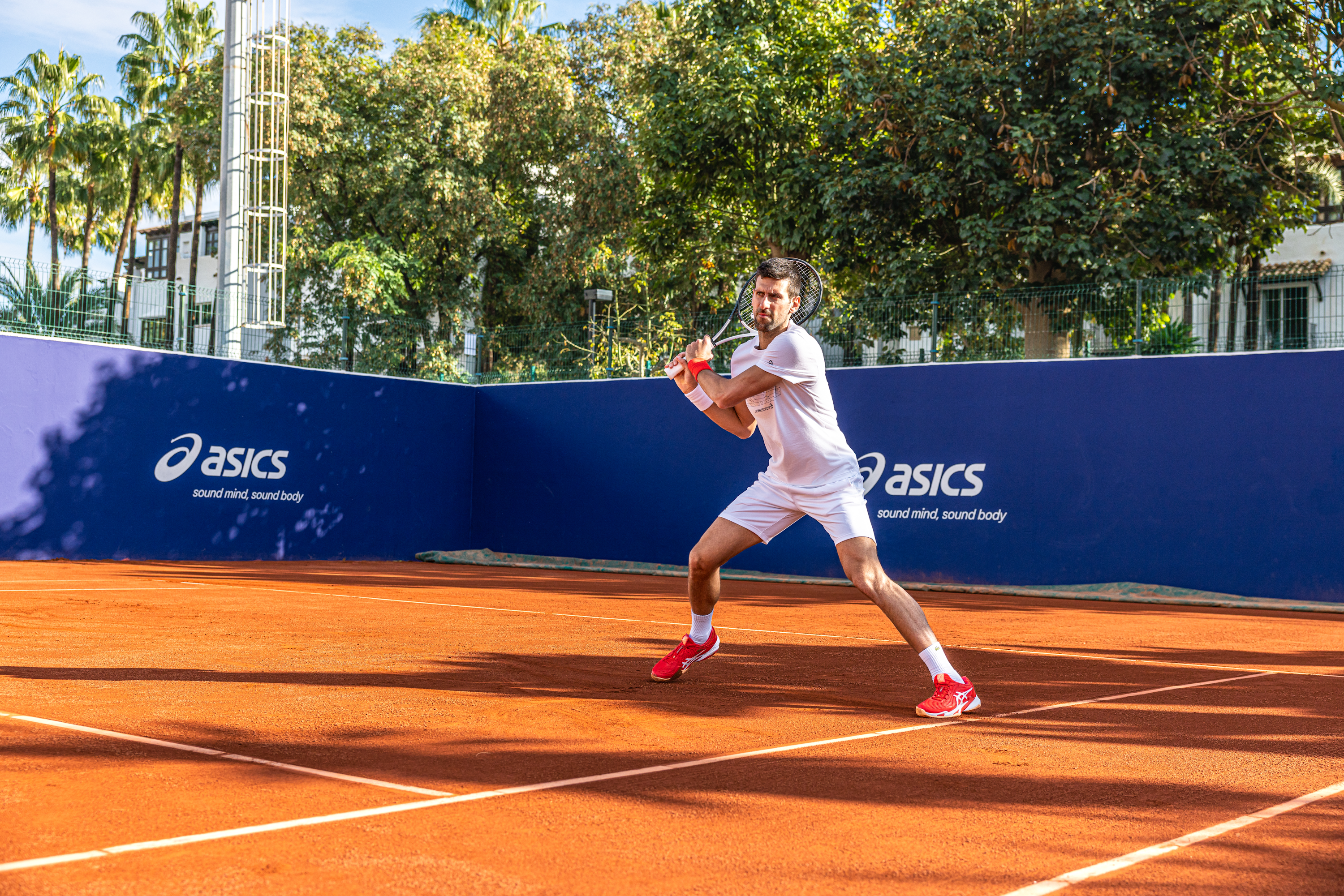
Novak Djokovic, laçant ses Asics COURT FF3 NOVAK (© Asics)

Attaquant de fond de court, puncheur ou plutôt défenseur, chaque joueur de tennis choisit son propre style de jeu en fonction de ses points forts et de ses points faibles. Face à cette diversité de profils, la marque ASICS a choisi une approche innovante : concevoir spécifiquement un modèle de chaussure pour chaque style de jeu. 

Le tennis est un sport trompeur où la raquette, prolongement du bras, accapare toute l’attention du spectateur au moment de frapper la balle. Pourtant, pour que le bras réussisse son spectacle, les jambes doivent assurer en coulisse. Sans jeu de jambe, pas de placement et sans placement, pas de frappe de balle maîtrisée… D’où l’importance d’être bien dans ses baskets, pour se déplacer en toute confiance, améliorer son placement, sa frappe de balle et, in fine, son niveau de jeu. Le choix des chaussures de tennis constitue la première étape pour enclencher ce cercle vertueux. Mais encore faut-il trouver chaussure à son pied. Fidèle à son esprit d’innovation, la marque japonaise ASICS a donc opté pour une nouvelle approche : guider le choix du joueur en lui proposant la chaussure la plus adaptée son profil et donc à ses déplacements, grâce à trois modèles conçus spécifiquement pour trois styles de jeu. 


Gel RESOLUTION 9 : pour les longs échanges de fond de court

Gel RESOLUTION 9 (© Asics)

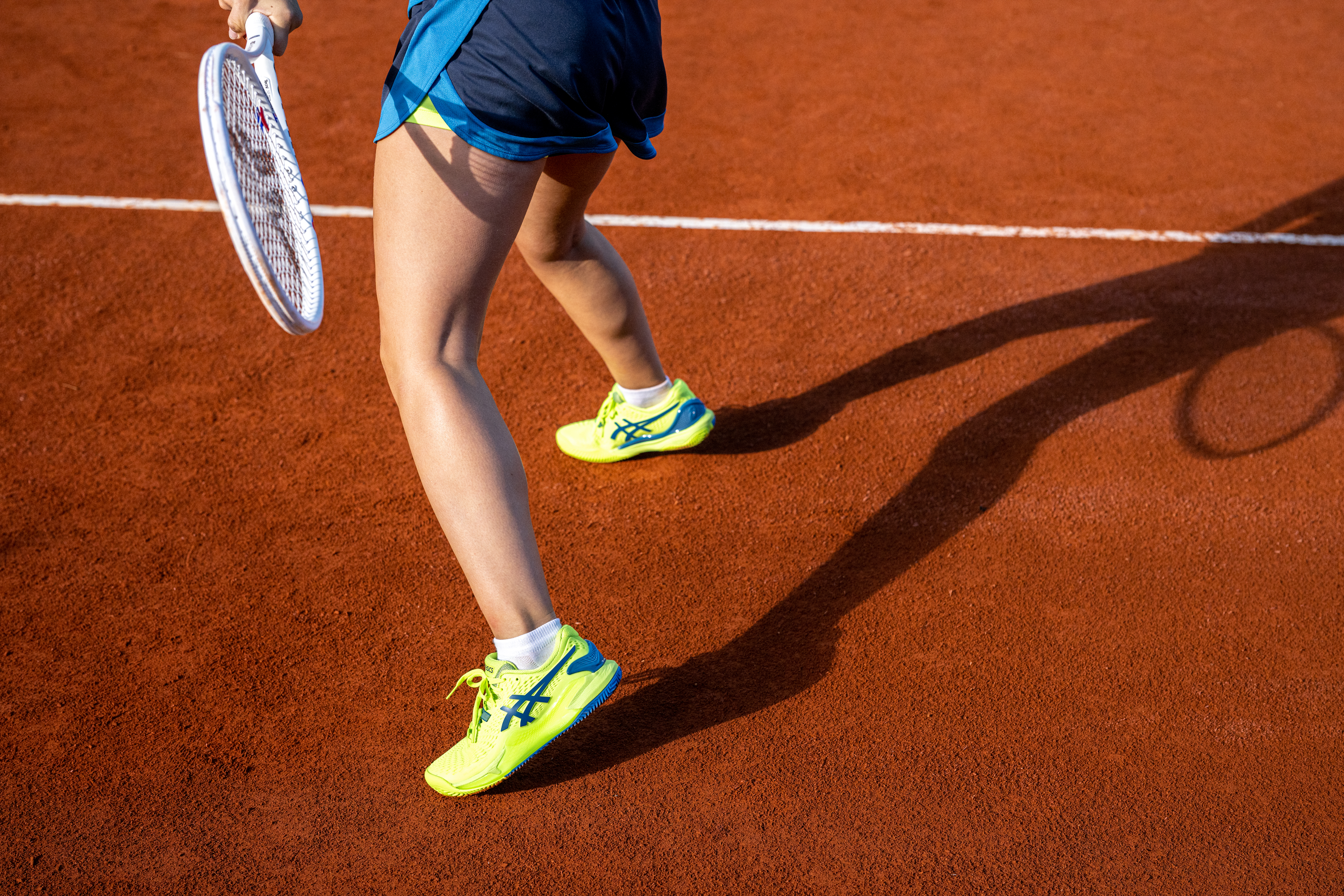
« Le rose, pourquoi pas ? », telle a été la réaction d’Alex Molčan à propos de la couleur rose bonbon de la collection Roland-Garros de ses Gel RESOLUTION 9. Avec ses chaussures, le joueur slovaque n’est pas passé inaperçu en session de soirée sur le court Philippe-Chatrier de Roland-Garros. Au-delà du style, il a trouvé le modèle idéal pour son jeu de spécialiste de terre battue. « Dans ces chaussures, on a un contact complet avec le sol ce qui assure beaucoup de stabilité. La chaussure est profonde, le pied est bien tenu ce qui me permet de me sentir très en sécurité au niveau de la cheville », détaille-t-il. Avec la technologie DYNAWALLL pour optimiser les déplacements latéraux, la Gel RESOLUTION 9 sied à merveille aux joueurs qui ont plutôt l’habitude de construire leur point lors de longs échanges en fond de court, comme Borna Ćorić. Mais elle peut aussi convenir à des joueurs au profil plus offensif. La preuve, les puncheurs Matteo Berrettini et Arthur Fils l’ont aussi adoptée. 


SOLUTION SPEED FF2 : timing et légèreté 

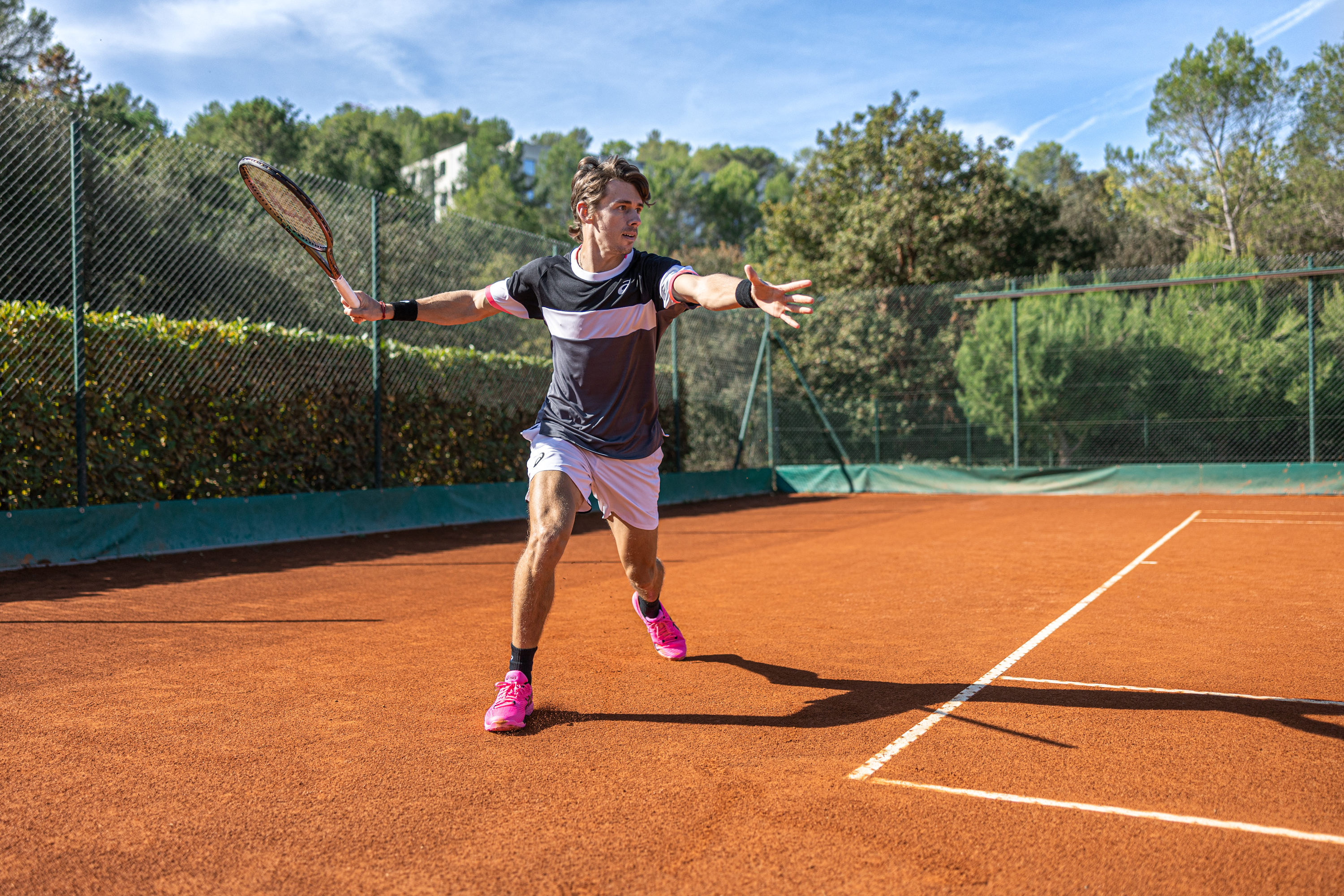
Alex De Minaur, Asics SOLUTION SPEED FF2 aux pieds (© Asics)

« J’ai l’impression de jouer sur un nuage », tels sont les mots de Belinda Bencic pour décrire ses sensations avec la SOLUTION SPEED FF2 aux pieds. Légèreté, vitesse, et confort sont les principaux atouts de cette chaussure qui conviendra bien aux joueurs et aux joueusesF portés vers l’offensive. Adepte des prises de balle précoce, David Goffin brille par son timing et sa capacité à couper les trajectoires adverses. Et la SOLUTION SPEED FF2 est un allié précieux. « Avec mon style de jeu, le jeu de jambe est une des clés de ma réussite. Car mon jeu consiste à prendre la balle tôt et à jouer vite », explique le Belge, grand adepte de ce modèle tout comme l’Australien Alex de Minaur, un des joueurs les plus rapides du circuit. Le secret de la légèreté réside en partie dans cette semelle extérieure en deux parties. Le confort, lui, résulte de la combinaison parfaite des mousses ASICS FLYTEFOAM et FLYTEFOAM Propel sur toute la longueur de la semelle intermédiaire. 

À Paris, les joueurs et les joueuses ASICS ont arboré la collection Roland-Garros de ce modèle avec des couleurs « flashy » mises en valeur par l’ocre de la terre battue : le rose pour les hommes et le vert fluo pour les dames, comme la française Diane Parry, une autre adepte de la SOLUTION SPEED FF2. « Elle est très légère et plus flexible que les autres modèles. Je me suis senti très bien. En plus j’adore les couleur flashy », s’est quant à lui réjoui Corentin Moutet, tout heureux d’avoir lui aussi trouvé chaussure à son pied. 


Court FF Novak 3 : pour Novak… et pour les autres !

Novak Djokovic, avec ses Asics COURT FF3 NOVAK (© Asics)

La Court FF 3 = la combinaison parfaite de stabilité et flexibilité pour le joueur polyvalent (si ce n’était que de la stabilité pour des appuis puissants lors de mouvements latéraux ce serait la Gel Résolution 9).

Si la Court FF 3 Novak a été conçue spécialement pour Novak Djokovic, elle s’adresse tout autant aux joueurs moins chevronnés. L’homme aux 22 titres du Grand Chelem avait activement participé à la création de la première FF Novak, et challengé les ingénieurs pour avoir une chaussure qui s’adapte parfaitement à son style de jeu unique. Principe fondamental de la marque, le « Kaizen » (l’amélioration perpétuelle en japonais) a été appliqué à ce modèle phare pour concevoir la troisième et dernière version, la Court FF Novak 3. « J’ai eu un déclic en regardant Novak à l’Open d’Australie. J’ai entendu le son de l’impact des ses chaussures sur certains appuis. Je me suis rendu compte qu’il était primordial d’amortir cet impact en changeant la structure de la chaussure, tout en garantissant un replacement rapide. En parlant avec Novak, nous avons compris l’importance d’optimiser ce premier pas de replacement », raconte l’ingénieur Tatsuta Ishikawa. Ainsi est née la Court FF Novak 3.

Ce modèle s’adresse aux joueurs qui, comme Novak Djokovic, sont à la recherche d’appuis stables pour optimiser leur puissance au service et dans les échanges. En augmentant la zone de contact de la semelle extérieur, la chaussure crée une suspension plus stable. Et qui dit meilleurs appuis dit meilleur « swing » et donc gain de puissance… Cette chaussure se démarque aussi par sa semelle extérieure innovante en trois parties, taillée pour les joueurs ultra mobiles sur le court, comme Novak Djokovic qui brille par son élasticité hors-norme. « J’ai une façon de bouger sur le court qui est très dynamique et agressive, je glisse beaucoup. Cette technologie me donne de la stabilité et de l’équilibre pendant la glissade, mais aussi au moment de repartir », se félicite-t-il tout en se gardant bien de conseiller aux joueurs amateurs d’imiter ses acrobaties…